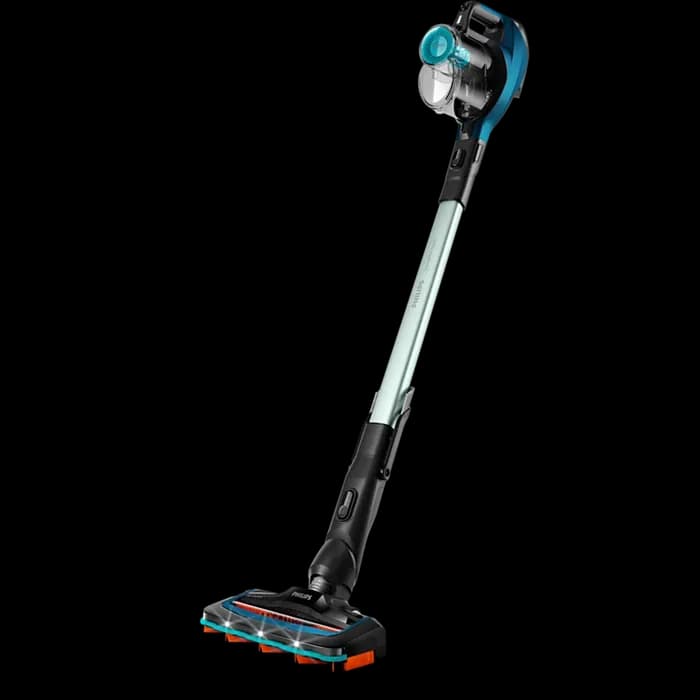
The suction engineering of this device centers on a 120 W brushless DC motor capable of spinning at high RPMs to create a vacuum pressure of 21000 Pa. Achieving this level of static pressure in a 0.5 kg chassis requires a precise motor-to-airway ratio, where the internal diameter of the suction path is optimized to minimize air turbulence. This high static pressure is particularly effective at dislodging heavy particles like sand or fine road dust from carpet fibers. However, the trade-off for such high pressure in a compact frame is a lower total airflow volume compared to large upright units, making it ideal for spot cleaning rather than entire floor coverage.
The filtration architecture employs a 3-stage HEPA system designed to maintain suction performance while capturing 99.97% of particles as small as 0.3 microns. The first stage involves a mesh pre-filter that traps large debris and hair, preventing the primary HEPA material from clogging prematurely. The second stage is the high-density HEPA layer itself, and the third is a foam exhaust filter that prevents carbon dust from re-entering the room. This washable construction is vital for the Indian environment, where high ambient dust levels would otherwise necessitate monthly filter replacements. Regular washing maintains the structural integrity and airflow efficiency of the filtration media.
Power is managed by a lithium-ion battery array delivering consistent voltage to the brushless motor. The 7.4 V cell configuration is balanced by a CC-CV (Constant Current-Constant Voltage) charging protocol, which prevents cell degradation during the 3-hour recharge cycle. With a 20-minute runtime at full load, the engineering focus is on high-intensity bursts rather than sustained low-power operation. Users should note that the motor draw is substantial to achieve peak suction, so allowing the device to cool between charging and usage sessions can extend the battery's overall lifecycle. This power system is tuned specifically for quick, effective interventions in daily household cleaning.
The wet and dry separation mechanism utilizes a baffle design within the 0.18 L bin to divert liquid away from the motor assembly. While the capacity is optimized for small spills, the internal sensors and physical barriers prevent moisture from entering the impeller housing. This is a critical engineering feature for Indian kitchens or dining areas where small liquid accidents occur frequently. Post-wet usage requires the user to thoroughly dry the filter and bin to prevent mold growth, as the airtight seals necessary for suction can trap residual moisture. The bagless design facilitates quick rinsing and drying, maintaining a hygienic internal environment.
The dual-function blower mechanism leverages the motor's exhaust air by redirecting it through a narrowed nozzle at the rear of the device. Unlike models that only offer suction, this technical design uses the existing kinetic energy of the motor to provide a high-velocity air stream. This is particularly effective for cleaning AC vent grime or dislodging dust from intricate keyboard switches that suction alone might miss. By integrating both functions into a single drive shaft, the engineering team has maximized the utility of the 120 W motor without increasing the total weight or complexity of the internal components for the user.
Structurally, the chassis is constructed from high-impact ABS plastic, providing a balance between durability and a low 0.5 kg weight. The ergonomic handle is positioned at a 45-degree angle to the suction axis, reducing wrist strain during extended use on mattresses or car upholstery. The internal layout places the heaviest component—the battery and motor—directly over the grip to improve the center of gravity. This thoughtful weight distribution allows for better maneuverability in tight spaces like under car seats or between sofa cushions. The result is that the Actrovax USB Air Blower Vacuum Cleaner offers professional-level performance in a highly mobile and user-friendly form factor.