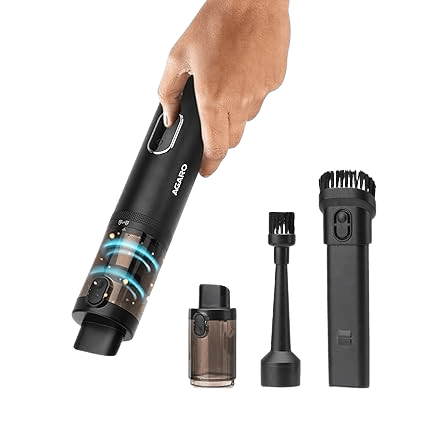
The suction engineering of the unit relies on a 100 W universal motor designed to generate a peak static pressure of 13 kPa. This specific pressure rating is achieved through a high-RPM turbine assembly that optimizes air velocity at the nozzle interface. In the context of handheld cleaning, this motor-to-airway ratio ensures that the device can lift heavier debris like road grit and small pebbles from car floor mats while maintaining a compact form factor. While it sacrifices some total airflow volume compared to larger corded units, the concentrated static pressure makes it ideal for extracting dust from dense upholstery fibers and crevices.
The filtration architecture features a Dual-stage-stage HEPA system that is critical for maintaining indoor air quality in dusty Indian urban environments. The primary stage acts as a mesh barrier for larger debris and hair, preventing the core HEPA element from clogging prematurely. The secondary HEPA stage is engineered to capture 99.97% of microscopic particles, including PM2.5, pollen, and dust mites. A significant engineering advantage is the washable construction of these filters, which prevents the gradual loss of suction caused by fine dust accumulation. This design ensures long-term operational efficiency without the recurring costs associated with disposable filter cartridges.
Power management is handled by a lithium-ion battery array configured to provide a consistent discharge rate for 20 minutes of runtime. The 100 W motor draw is balanced against the cell capacity to ensure that suction does not taper off as the battery depletes. The charging system utilizes a standard CC-CV charging protocol, requiring 3 hours for a full recovery cycle. For the Indian user, this runtime is sufficient for cleaning a standard sedan interior or a set of sofa cushions in one session. The internal battery management system protects the cells from thermal stress during the intensive suction phase, ensuring longevity over hundreds of charge cycles.
The dust management system utilizes a 0.5 L bagless bin engineered for rapid disposal and minimal maintenance. While the unit does not include a wet-use baffle, its dry-separation mechanism relies on a high-integrity seal between the motor housing and the canister to maintain the 13 kPa pressure. The transparent walls allow users to monitor the fill level, which is crucial for preventing airflow restriction. Post-use maintenance is simplified by the one-click release, allowing for the hygienic disposal of road dust and pet dander. Maintaining the silicone gaskets ensures that no suction loss occurs during high-draw cleaning sessions on sofas or car interiors.
Technical efficiency is further enhanced by the specialized pet hair tool, which serves as the primary additional feature for textile cleaning. Unlike models with a blower function, this device focuses entirely on suction concentration. The pet tool utilizes a mechanical agitation surface that works in tandem with the airflow to lift static-charged hair from upholstery. This mechanism is particularly effective for Indian households with fabric sofas where fine pet fur often becomes embedded. By optimizing the nozzle geometry for suction rather than blowing, the 100 W motor energy is directed entirely toward debris extraction, ensuring a deeper clean for mattress surfaces and AC vent grilles.
The chassis is constructed from high-impact ABS plastic, contributing to the extremely low weight of 0.65 kg. This material choice provides the necessary structural rigidity to house the 100 W motor while remaining light enough for extended overhead use, such as cleaning curtain rods or wall-mounted fans. The ergonomic handle design places the center of gravity directly beneath the palm, reducing wrist strain during 20-minute cleaning sessions. Every component, from the washable filter to the noise-dampening motor mounts, is integrated to provide a quiet operation under 75 dB. Consequently, the royal mini(34218) represents a balanced engineering solution for modern, fast-paced Indian households.