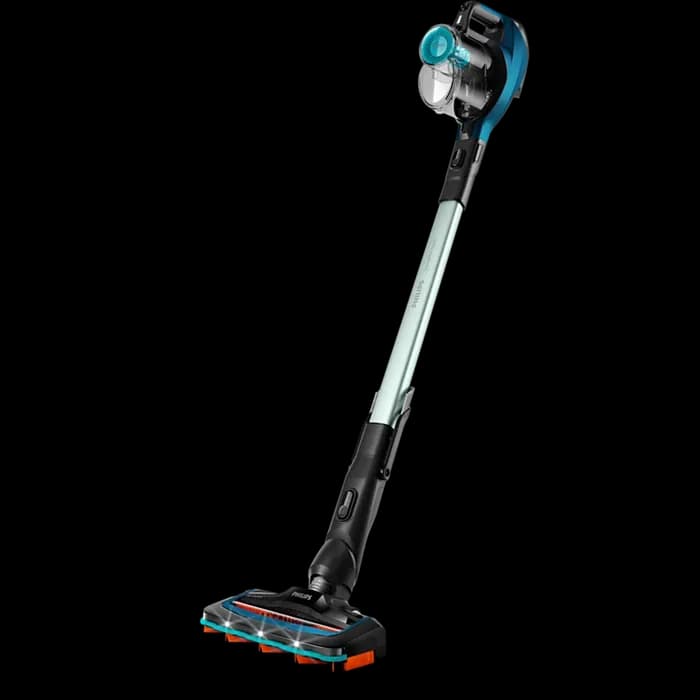
The suction pressure of this device is generated by a 1000 W universal motor, which is specifically calibrated to produce 8000 Pa of static pressure. This motor-to-airway ratio is optimized to balance high-velocity airflow with the torque required for lifting heavier debris from carpets and floor tiles. Unlike smaller motors that lose vacuum pressure under load, this configuration maintains consistent suction across various surface types. This makes it particularly effective for Indian homes where fine road dust often settles deep into porous surfaces. The engineering focuses on sustained pressure rather than peak bursts, ensuring deep cleaning efficiency.
The filtration architecture relies on a 1-stage FOAM system designed for maximum airflow permeability while capturing larger particulate matter. This foam structure is engineered to trap dander, pollen, and dust mites before they reach the motor housing, which extends the operational lifespan of the internal components. For the Indian consumer, the washable construction is a critical engineering feature, as it eliminates the recurring cost of replacement filters. Regular washing of the foam element maintains the 8000 Pa suction performance by preventing pore blockage from fine particles typically found in urban environments.
Powered by a specialized battery system, the unit provides a consistent 30-minute runtime by managing energy discharge through a CC-CV (Constant Current-Constant Voltage) protocol. This ensures the motor maintains full power until the final minutes of the cleaning cycle, preventing the suction drop-off common in lower-tier cordless models. The electrical system is designed for 220V compatibility, suiting standard Indian power outlets. While the charging time is not specified as a rapid-charge feature, the battery chemistry is selected for longevity over hundreds of charge-discharge cycles, providing a reliable power source for daily apartment maintenance.
The 1.5 L bagged system is a deliberate engineering choice for users who prioritize hygiene and dust containment. By utilizing a bagged collection method, the device ensures that captured allergens and fine dust are not released back into the air during the emptying process. This large capacity is rare for a device weighing only 1.9 kg, offering a superior volume-to-weight ratio. The internal bag chamber is sealed to maintain negative pressure, which prevents suction leaks. This architecture is especially beneficial during post-renovation cleaning where the volume of plaster dust would quickly clog bagless cyclone systems.
A standout technical feature is the integrated blower function, which reverses the airflow through a dedicated exhaust port. This mechanism utilizes the full 1000 W motor power to generate a high-velocity air stream, useful for clearing AC vent grime and WFH keyboards where suction brushes cannot reach. In the Indian context, this dual-mode engineering replaces the need for separate compressed air cans. The transition from suction to blower mode is achieved through a mechanical baffle that redirects the motor's exhaust without compromising internal cooling, ensuring the unit remains thermally stable during extended use.
The chassis is constructed from high-grade ABS plastic, achieving a lightweight profile of 1.9 kg while maintaining structural rigidity against drops. The ergonomic handle is positioned to align with the device's center of gravity, reducing wrist strain during high-reach tasks like cleaning curtains or ceiling fans. Additionally, the sound-dampening insulation around the motor housing limits noise output to 40 dB, an engineering feat for a 1000 W power plant. This quiet operation makes it ideal for apartment living. Ultimately, the Gusto is built as a rugged, multi-functional tool designed to survive the rigors of heavy-duty Indian domestic work.