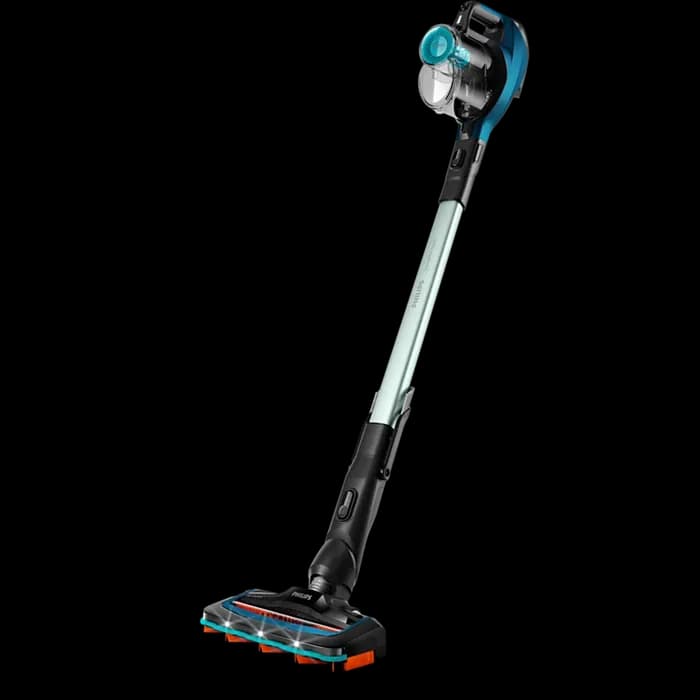
The engineering behind the 8000 Pa suction rating is a result of the high-torque 130 W brushless DC motor. Unlike brushed motors, this DC variant minimizes internal friction, allowing for a more efficient motor-to-airway ratio. This configuration prioritizes static pressure, which is essential for lifting fine Indian dust from grout lines and textured tile surfaces. While it may not match the raw airflow of a 2000 W mains-powered canister, it excels in high-velocity localized cleaning where focused pressure is required. This makes the device particularly adept at surface-level extraction on hard floors and upholstery where heavy-duty industrial suction is often excessive and cumbersome.
The 3-stage HEPA filtration architecture is specifically designed to handle the high particulate matter common in Indian metropolitan areas. The first stage utilizes a cyclonic separator to remove large debris and hair, protecting the inner filters from clogging. The second stage consists of a high-density mesh for mid-sized particles, while the final HEPA stage captures 99.97% of particles as small as 0.3 microns. Because the system is entirely washable, it prevents the accumulation of odors and maintains peak performance without the recurring cost of replacement bags. This multi-layered approach ensures that the exhaust remains clean, protecting respiratory health in dusty environments.
Powering the 130 W motor is a sophisticated 25.2 V lithium-ion battery pack configured for optimal discharge rates. The engineering team employed a CC-CV (Constant Current-Constant Voltage) charging protocol to ensure the 4-hour charge cycle maximizes cell longevity. During operation, the battery management system balances the current draw to sustain the 30-minute runtime even as the 1 L bin fills. For Indian users, this runtime allows for the completion of specific zones like a car interior or a living room suite in a single session. This balance between weight and battery density is crucial for maintaining the 1.6 kg ergonomic profile.
The 1 L bagless dust bin utilizes a transparent polycarbonate chassis, allowing for immediate visual monitoring of debris levels. Its engineering focuses on a quick-release mechanism that minimizes contact with dust during disposal, a critical feature for allergy sufferers. The internal baffle design prevents collected dust from migrating back toward the motor intake, maintaining consistent suction as the bin reaches capacity. In the context of Indian homes where road dust is prevalent, this larger-than-average 1 L capacity for a handheld unit ensures that users can clean multiple rooms before needing to empty the contents, thereby streamlining the overall maintenance workflow.
Versatility is engineered into the unit through its specialized attachment interface, including a motorized floor brush and a 2 in 1 crevice nozzle. The motorized brush head features independent bristles designed to agitate dust from thin carpets and rugs, compensating for the compact motor size. For reaching elevated areas like AC vents and ceiling corners, the extension pipe maintains an airtight seal to prevent pressure drops. This modular approach allows the unit to adapt from a floor cleaner to a precision tool for keyboard and mattress cleaning. Each attachment is friction-fitted to ensure durability and ease of swap during active cleaning sessions.
The chassis is constructed from high-impact ABS plastic, providing a balance of structural integrity and low mass for the 1.6 kg total weight. The pistol-grip handle is ergonomically positioned at the center of gravity, reducing wrist strain during extended use on vertical surfaces like curtains or walls. A dedicated parking position or storage bracket ensures the unit occupies minimal floor space in compact 1BHK apartments. Every interface, from the power switch to the bin release, is designed for tactile feedback and long-term durability. Ultimately, the Kardia represents a refined engineering solution for those prioritizing mobility and specific-task efficiency in modern Indian residences.