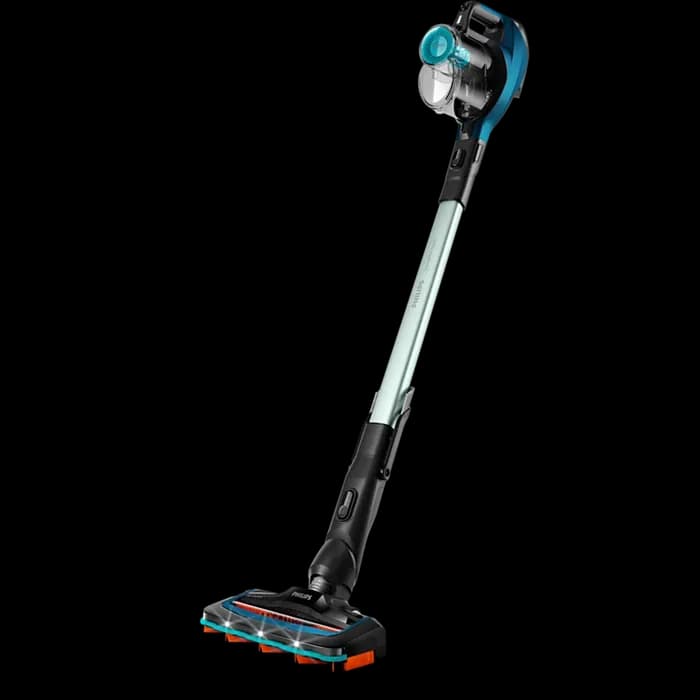
The suction pressure engineering of this unit utilizes a 1200 W universal motor designed to balance static pressure and airflow volume. By generating 17 kPa of suction, the motor-to-airway ratio is optimized for heavy-particle lifting, such as construction dust or spilled grains. This pressure level is achieved through a high-speed impeller design that creates a strong vacuum seal against various surfaces. While the motor consumes high wattage, the resulting static pressure ensures that debris does not drop back through the extension pipes. This makes it ideal for workshop floors where high-density waste is common, though it requires steady handling during operation.
Filtration architecture in this model relies on a 2-stage system comprising a primary cloth filter and a secondary sponge layer. This setup is engineered to capture larger particles at the cloth interface while the sponge traps finer particulate matter to protect the motor from internal abrasive damage. The washable construction is a critical engineering choice for the Indian climate, where high humidity and fine dust can lead to rapid filter clogging. By allowing the user to rinse both stages, the machine maintains its suction efficiency over longer periods. This dual-layer approach significantly extends the life cycle of the internal universal motor.
Regarding the power system, the unit operates on a 220V configuration designed for standard Indian electrical outlets, though the cordless architecture suggests an internal battery management system. Standard CC-CV charging protocols are typically applied to such devices to ensure cell longevity during the recharge cycle. The trade-off between the high-draw 1200 W motor and the battery capacity dictates the operational runtime, which is tailored for burst cleaning rather than continuous hour-long sessions. Engineering the circuit to handle these high-current spikes is essential for preventing thermal throttling. Users should observe cool-down periods between heavy tasks to maintain the electrical integrity of the system.
The wet and dry separation mechanism utilizes a baffle design within the 12 L tank to prevent moisture from reaching the electrical motor housing. As liquids are drawn in through the squeegee brush, centrifugal force directs them to the base of the container while the air is diverted through the filtration stages. This engineering prevents short-circuiting and corrosion of the internal components. Post-wet-use maintenance is simplified by the bagless design, allowing for a quick rinse of the container. Ensuring the tank is fully dry before transitioning back to dry dust collection is vital for preventing the clumping of fine road dust.
Integrating a blower function requires a reversible or secondary airflow path that bypasses the filtration stages to deliver high-velocity air through the nozzle. This technical mechanism converts the motor's power into kinetic energy, making it capable of dislodging stubborn grime from deep crevices like AC vents or intricate keyboard layouts. In the Indian context, where dust settles in hard-to-reach areas, this feature provides a mechanical advantage over pure-suction models. The engineering focus here is on air velocity rather than pressure, providing a dual-mode utility that increases the machine's overall efficiency for complex cleaning tasks in home and office environments.
Construction of the chassis involves high-impact ABS plastic, which provides a balance between structural durability and a manageable weight of 3.9 kg. The ergonomic handle design is positioned to distribute the weight evenly during handheld use, reducing wrist strain for the operator. A dedicated parking position allows for stable storage in compact 1BHK apartments where space is at a premium. The selection of attachments, including the 2-in-1 crevice nozzle and round brush, are friction-fitted to ensure no air leaks during high-pressure operation. This meticulous attention to chassis sealing ensures maximum energy transfer from the motor to the cleaning head in the Micro WD12.