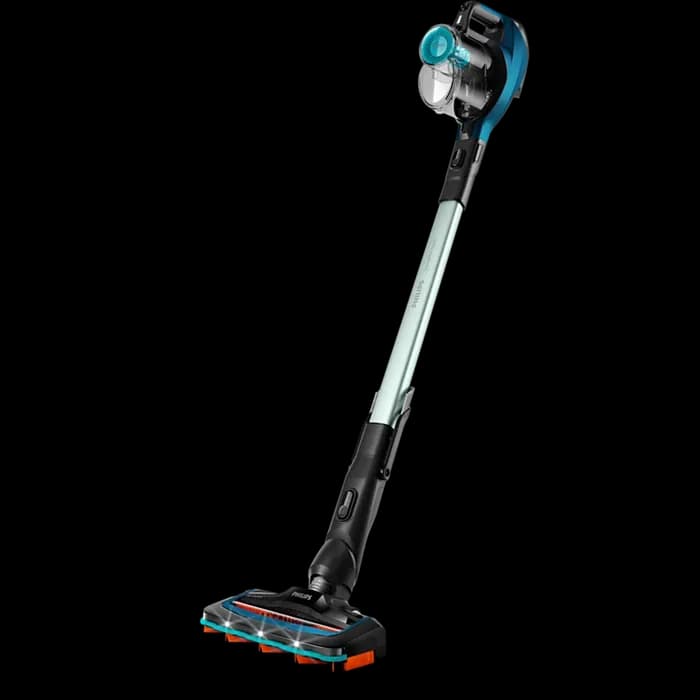
The suction pressure of this cordless handheld vacuum cleaner is generated by a high-velocity 1000 W universal motor. Engineering 8000 Pa from a compact power plant requires a precise motor-to-airway ratio that minimizes internal friction while maximizing static pressure. Unlike larger canister models that focus on high airflow volume, this device optimizes air speed to lift dense particles from crevices. This design choice makes it exceptionally effective for localized cleaning on hard surfaces and upholstery, though it is not intended for deep-pile carpet extraction which typically requires higher pressure. The motor housing is insulated to manage the thermal output generated during operation.
The filtration architecture utilizes a 3-stage FOAM system specifically designed for the high levels of particulate matter found in Indian urban environments. The initial stage captures larger debris like hair and grit, preventing them from clogging the secondary layers. The middle and final foam stages trap finer particles, including pollen and dust mites, ensuring that the exhaust air remains clean. Because the FOAM filter is fully washable, it prevents the suction drop-off typically associated with disposable paper filters. This construction is vital for maintaining consistent performance over cleaning cycles, especially when dealing with the fine road dust common in city apartments.
The battery and power system are engineered to provide a steady 20-minute runtime, which is optimized for the power draw of the 1000 W motor. Utilizing a specific cell configuration to provide performance in a cordless form factor, the system employs a Constant Current-Constant Voltage (CC-CV) charging protocol to protect battery longevity. For Indian users, this runtime allows for the targeted cleaning of a 5-seater sofa set and two mattresses on a single charge. The trade-off between motor power and battery endurance is carefully balanced to ensure the device remains lightweight at 1.9 kg while still providing enough force to tackle stubborn debris.
The wet and dry separation mechanism within the 1.5 L bagged system is a critical engineering feature. A specialized internal baffle design prevents moisture from reaching the universal motor during liquid pickup, ensuring electrical safety and mechanical durability. While the bag primarily collects dry dust, the internal housing is treated to withstand damp debris. Post-wet use, it is essential for the user to dry the attachments and the filter compartment to prevent microbial growth. This dual-purpose capability is particularly useful in Indian kitchens or dining areas where both dry spills like flour and wet spills like tea occur frequently on tiles.
Airflow optimization is further enhanced by the included attachment suite, which includes a 2-in-1 crevice nozzle and an upholstery brush. The floor cum carpet brush uses a narrow-venturi design to increase effective suction at the point of contact, compensating for the 8000 Pa limit. By concentrating the air stream, the attachments allow the user to clean deep into sofa seams or the intricate slats of AC vents. The absence of a blower function is compensated for by the high-velocity intake, which effectively pulls dust out of keyboards rather than pushing it deeper. This makes the tool highly effective for delicate electronics and WFH equipment maintenance.
The chassis is constructed from high-grade ABS plastic, providing a balance between structural rigidity and a lightweight 1.9 kg total mass. The ergonomic handle is positioned to align with the center of gravity, reducing wrist fatigue during overhead tasks like cleaning curtain pelmets or ceiling fans. The modular design allows for quick swapping of the extension pipe and flexible hose, transforming the unit from a floor cleaner to a handheld car vacuum in seconds. Every component is designed for durability in tropical climates, ensuring the housing does not become brittle over years of use. Ultimately, the QuickVac represents a well-engineered solution for targeted cleaning in India.