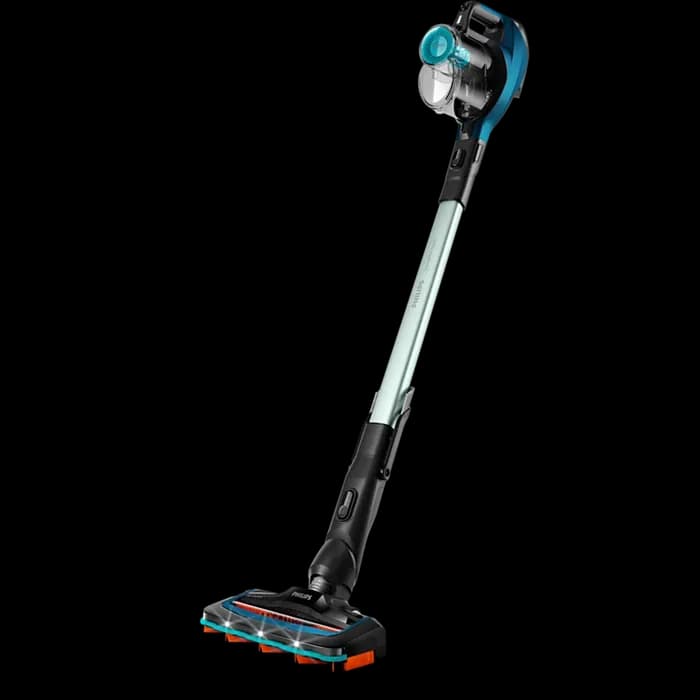
14000 Pa suction is generated by a high-velocity brushless DC motor spinning at high RPMs. This creates a significant pressure differential at the intake, allowing for the extraction of dense particles like sand and road grit. The engineering focus here is on the motor-to-airway ratio, where the intake diameter is optimized to maintain peak static pressure without choking the airflow. This balance ensures that while it excels at surface debris and hair, it also pulls fine dust from deep within fabric weaves. Such performance is ideal for heavy-duty spot cleaning tasks in Indian homes where external dust ingress is high.
The multi-level-stage HEPA system is designed to prevent motor clogging while maintaining air purity. It starts with a primary cyclonic separator that flings larger debris into the 0.75 L bin using centrifugal force. The second stage consists of a mesh filter for medium particles, followed by the HEPA element that captures 99.97% of particles as small as 0.3 microns. This architecture is vital in Indian urban environments to trap PM2.5 and allergens. The washable nature of the HEPA filter is a critical engineering choice, allowing users to restore airflow performance manually after heavy usage sessions.
Power is managed by a lithium-ion pack designed for a 30-minute runtime under constant load. The internal electronics utilize a CC-CV (Constant Current-Constant Voltage) charging protocol to ensure the cells reach full capacity in 2.5 hours without overheating. There is a calculated trade-off between motor draw and runtime; the system is tuned to provide maximum 14000 Pa suction without causing rapid voltage sag. For the Indian user, this means consistent performance from the first minute to the last, provided the unit is kept within its optimal thermal range during the charging and discharge cycles.
Unlike wet-dry hybrids that often compromise on pure suction power to accommodate moisture-handling baffles, this unit is engineered as a dedicated dry suction system. This allows for a more direct airflow path and a larger 0.75 L dust bin without the risk of water ingress damaging the brushless motor. The engineering priority is on dry particulate management, ensuring that fine Indian dust does not mix with moisture to create sludge within the internal components. This dedicated dry design ensures the motor maintains high rotational speeds and longevity, which is a significant advantage for daily maintenance routines.
While some models include a blower function that can disperse dust, this device focuses exclusively on a high-integrity vacuum seal for superior dust containment. The engineering of the seals around the dust cup and the attachment interface ensures no air leakage, which would otherwise drop the effective suction below 14000 Pa. By omitting the blower, the designers have optimized the internal chassis for a streamlined exhaust path, reducing backpressure on the motor. This results in more efficient debris pickup from difficult areas like AC vents and keyboards where localized, high-velocity suction is more effective than blowing.
The chassis is constructed from high-grade ABS plastic, achieving a lightweight profile of 1.5 kg while maintaining structural rigidity. The ergonomic handle is positioned to balance the center of gravity near the wrist, reducing user fatigue during extended cleaning of ceiling fans or curtains. The inclusion of a metal telescopic tube and a flexible hose demonstrates an engineering focus on reach and versatility without adding significant weight. This careful selection of materials and weight distribution ensures that the Vactidy 2 in 1 Handheld remains maneuverable for all household members, providing a high-torque cleaning solution in a compact form factor.