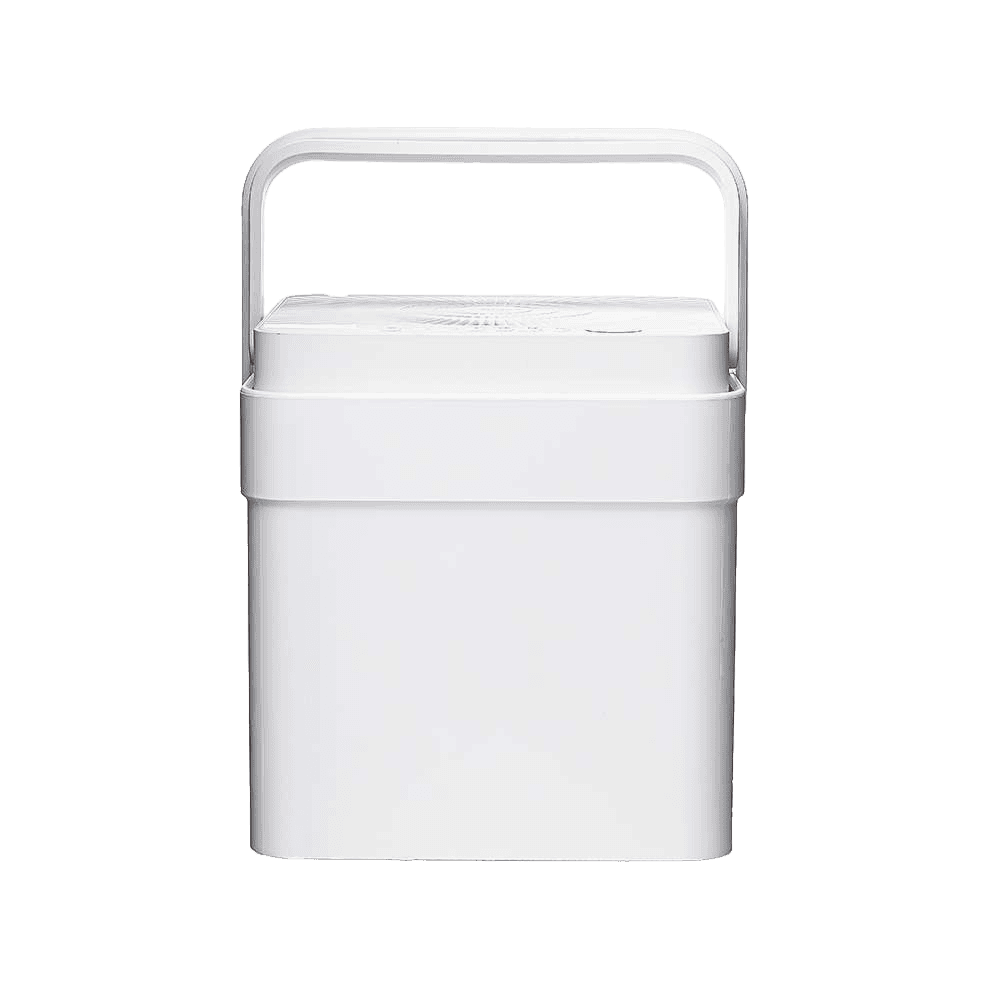
The MAD50PS1QWT utilizes a specialized refrigeration cycle centered on a high-efficiency rotary compressor designed for continuous operation. As humid air is drawn across the evaporator coils, the temperature drop causes water vapor to reach its dew point and condense into the collection tank. Achieving 50 pints/day (~23.7 L/day) requires precise calibration between the refrigerant flow and air velocity. In the context of the Indian monsoon, where ambient temperatures often exceed 30 degrees Celsius, the compressor must work harder to maintain the temperature differential required for condensation. This unit’s thermal management system ensures that the heat generated by the motor does not significantly raise the exhaust air temperature, maintaining a stable indoor environment while maximizing moisture extraction in high-load scenarios.
Selecting R-410A as the primary refrigerant provides several thermodynamic advantages for the MAD50PS1QWT when operating in India’s coastal climate. R-410A operates at higher pressures than older refrigerants, allowing for a more compact heat exchanger design without sacrificing the latent heat capacity needed for dehumidification. This is critical for the cube-style form factor where internal space is at a premium. In high ambient temperature environments like Chennai, the refrigerant maintains its stability and cooling efficiency, ensuring the evaporator remains cold enough to pull moisture from the air even during the hottest hours of the day. The use of this specific refrigerant also aligns with modern environmental standards, providing a reliable and durable solution for multi-year usage in demanding tropical conditions.
Precise humidity control is managed by an integrated digital humidistat within the MAD50PS1QWT, which allows for a setpoint range between 35% and 85%. This granularity is vital for diverse Indian applications, such as keeping a home cinema in Kochi at a crisp 45% RH to protect projectors or maintaining a bedroom at 55% for respiratory comfort. The sensor continuously monitors the return air, triggering the compressor only when the ambient humidity exceeds the user-defined threshold. This logic prevents short-cycling, extending the life of the internal components. The ability to handle such a wide range ensures the unit is just as effective during the peak humidity of a Goa monsoon as it is during the milder dampness of the post-monsoon transition period.
Operating in varied Indian geographies necessitates an auto-defrost mechanism, which is a standard feature in the rotary compressor model. In hill stations like Shimla or during winter nights in Bangalore, the temperature may drop below 41°F, causing frost to accumulate on the evaporator coils. If left unmanaged, this ice layer would insulate the coils and halt the dehumidification process. The auto-defrost sensor detects this buildup and temporarily shuts off the compressor while the fan continues to run, melting the ice. This feature ensures that the unit can operate safely and efficiently even in cooler, damp conditions without the risk of mechanical failure. It provides peace of mind for users who leave the unit running unattended in varied microclimates across the subcontinent.
The this 50-pint unit features a 4 gallons (nested cube reservoir) water tank, which is substantial for a portable residential unit. In an environment with 80% relative humidity, the unit will fill this reservoir multiple times a day if the continuous drain port is not utilized. The internal air circuit is supported by a 2-speed fan that balances air change rates with noise levels. Operating at the higher fan speed maximizes the volume of air passing over the coils, which is necessary during the initial moisture drawdown phase in a saturated room. Once the target humidity is reached, the lower speed maintains the environment while keeping noise to a minimum. This mechanical versatility allows the unit to adapt to both large open halls and quiet bedrooms.
Maintenance of the MAD50PS1QWT is streamlined by the inclusion of a washable mesh filter, which prevents dust and airborne particles from clogging the condenser fins. Given the high dust levels in Indian urban centers like Kolkata, regular cleaning of this filter is the primary requirement for maintaining the 50 pints/day extraction efficiency. The 18.64 kg chassis is supported by durable caster wheels & handles, allowing for easy maneuverability across different floor surfaces. The build quality reflects an engineering focus on longevity, with corrosion-resistant coatings applied to the internal plumbing. By prioritizing accessible maintenance and robust mechanical design, the MAD50PS1QWT serves as a reliable long-term asset for moisture control in the most demanding high-humidity zones across the Indian landscape.