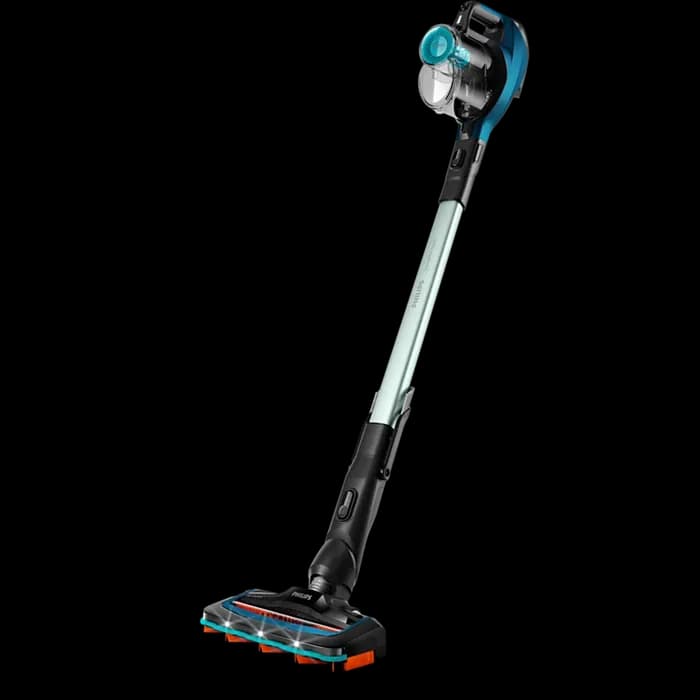
The 8000 Pa suction capacity is generated by a 120 W DC motor designed for high-velocity air movement within a compact housing. In engineering terms, achieving this pressure requires a precise motor-to-airway ratio where the fan blades rotate at high RPMs to create a vacuum seal against surfaces. While corded units offer higher static pressure, this device balances airflow and lift to handle common household debris like biscuit crumbs or dry mud. This specific power-to-weight ratio makes the unit ideal for quick pickups on hard surfaces and upholstery where heavy-duty suction is required without the bulk of a full-sized motor.
The filtration architecture relies on a 1-stage HEPA system that acts as a primary barrier against airborne pollutants. This washable HEPA filter is engineered to capture particles as small as 0.3 microns, including fine road dust, pollen, and PM2.5 particles prevalent in Indian cities. The washable construction is a significant engineering advantage, as it prevents the pore-clogging typically seen with paper filters, maintaining airflow over long-term use. For Indian households facing daily dust ingress, this design ensures the motor does not overheat due to restricted exhaust, thereby extending the mechanical lifespan of the internal components and ensuring consistent performance.
Powering the 120 W motor is a sophisticated 12 V cell configuration that manages energy discharge to ensure a consistent 30-minute runtime. The charging system utilizes a CC-CV (Constant Current-Constant Voltage) protocol, allowing the battery to reach full capacity in just 2 hours. This rapid turnaround is essential for users who may need to clean their car and home within the same day. For Indian users, the thermal management of the lithium cells is crucial, as the system prevents overheating during the fast-charging cycle. Practical energy management ensures that suction does not drop significantly as the battery depletes toward the end.
The wet and dry separation mechanism is designed with an internal baffle that prevents moisture from entering the motor chamber. With a 1 L bagless capacity, the bin can accommodate significant volumes of liquid spills or wet kitchen waste before requiring a manual empty. The engineering ensures that the heavy droplets are spun out of the airflow by centrifugal force, settling at the bottom of the container. Post-wet-use maintenance is simplified by the detachable bin, which should be rinsed and dried to prevent odor buildup. This robust moisture-handling capability makes the unit a versatile tool for cleaning spilled tea or bathroom surfaces.
Although this model lacks a blower function, its engineering focus remains strictly on maximizing vacuum pressure for extraction tasks. By omitting the blower circuitry, the design prioritizes a direct-path airway which reduces turbulence and noise, measured at a remarkably low 10 dB. This low noise floor is an engineering feat for a 120 W motor, making it suitable for cleaning AC vents or keyboards without disturbing others in a quiet apartment. Compared to dual-function models, this pure-suction approach ensures that every watt of power is dedicated to lifting heavy debris from carpets and upholstery, providing more effective deep-cleaning results on textile surfaces.
The chassis is constructed from high-grade ABS plastic, contributing to the ultra-lightweight 0.45 kg build which minimizes wrist fatigue during overhead cleaning. The handle design follows ergonomic principles, placing the center of gravity near the palm for better control when navigating car interiors or high shelves. The parking position and attachment points for the crevice tool and brush are integrated into the body for streamlined storage in small 1BHK apartments. Every aspect of the frame is designed to withstand minor impacts while maintaining a tight seal for the 1 L dust bin. Ultimately, the EV 126 represents a pinnacle of compact, efficient suction engineering.