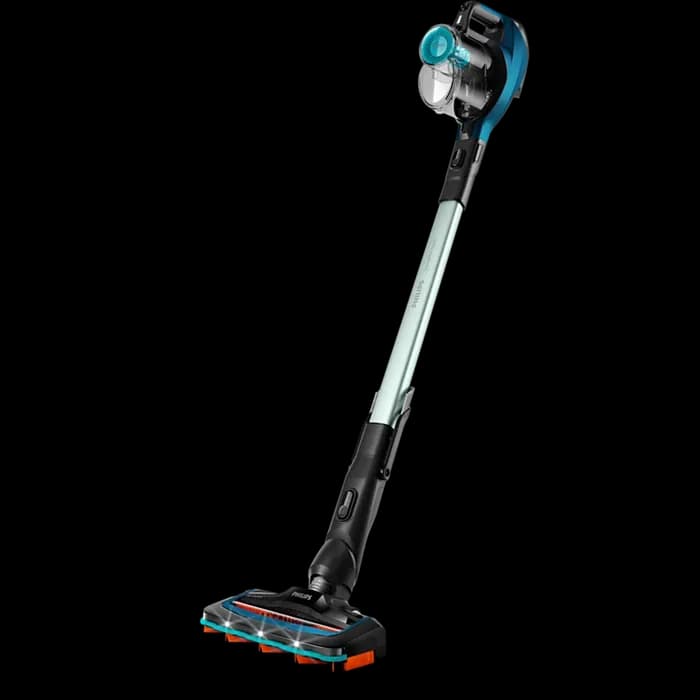
The suction pressure engineering of this cordless handheld vacuum cleaner is centered around a high-torque 120 W DC motor that generates a calibrated 8000 Pa of static pressure. This motor-to-airway ratio is optimized to provide high-velocity airflow through a narrow aperture, which is essential for lifting dense road dust commonly found in Indian homes. While high-wattage corded units offer more raw power, the engineering here prioritizes energy efficiency and thermal management to prevent the motor from overheating during its 30-minute operational window. This makes the unit ideal for targeted spot cleaning rather than heavy-duty flooring tasks where massive volumetric airflow is required for larger debris.
The filtration architecture utilizes a single-stage HEPA system that is engineered for high-density particle retention. This filter is designed to capture microscopic pollutants down to 0.3 microns, including pet dander and fine particulate matter. For the Indian user, the washable construction of the HEPA element is a critical engineering choice, as it prevents the pore-clogging typically caused by high humidity and heavy dust loads. By allowing users to rinse the filter, the unit maintains its 8000 Pa performance over longer cycles without the suction drop-off associated with disposable paper filters, ensuring consistent pneumatic efficiency during every cleaning session.
Power delivery is managed by a 12 V battery configuration that supports a rapid 2-hour charging cycle using CC-CV (Constant Current-Constant Voltage) protocols. This engineering approach balances the 30-minute runtime against the 120 W motor draw, ensuring that voltage sag is minimized as the battery depletes. For practical use in Indian households, this runtime is sufficient for cleaning two car interiors or multiple sofa sets on a single charge. The electronics are shielded to prevent surges during the charging phase, which is vital for longevity in areas with fluctuating power grids, making the power system both resilient and efficient.
The wet and dry separation mechanism is built into the 1-litre bagless container, utilizing a baffle design to prevent liquids from reaching the motor housing. With a 0.45L effective wet capacity, the unit can safely aspirate liquid spills like spilled milk or rainwater tracked into the house. Post-wet-use maintenance is simplified by the modular chassis, allowing for quick disassembly. The seals are engineered from high-grade elastomers to ensure that moisture does not compromise the internal circuitry, providing a durable solution for mixed-media cleaning tasks that would typically damage a standard dry-only handheld vacuum cleaner.
While the unit lacks a blower function, it compensates with specialized mechanical attachments including a crevice tool and a nylon-bristled brush. These tools are engineered to concentrate the suction force, which is particularly effective for cleaning the deep grime found in AC vents or the tight gaps in mechanical keyboards. The lack of a blower is an intentional design choice to maintain a compact form factor and reduce noise levels to a quiet 65 dB. This engineering trade-off ensures that the vacuum remains focused on debris extraction rather than dispersal, which is more effective for maintaining hygiene in enclosed 1BHK or 2BHK apartments.
The chassis is constructed from high-impact ABS plastic, achieving a remarkably low weight of 0.45 kg without sacrificing structural integrity. The ergonomic handle is positioned to align the center of gravity with the user's wrist, reducing fatigue during extended overhead cleaning of curtain rods or ceiling fans. The parking position is stable, allowing for easy storage in small cabinets. Every component, from the translucent dust bin to the reinforced attachment ports, is designed for high-frequency use in demanding urban environments. This robust build quality ensures that the EV 225 remains a reliable tool for long-term household and automotive maintenance.