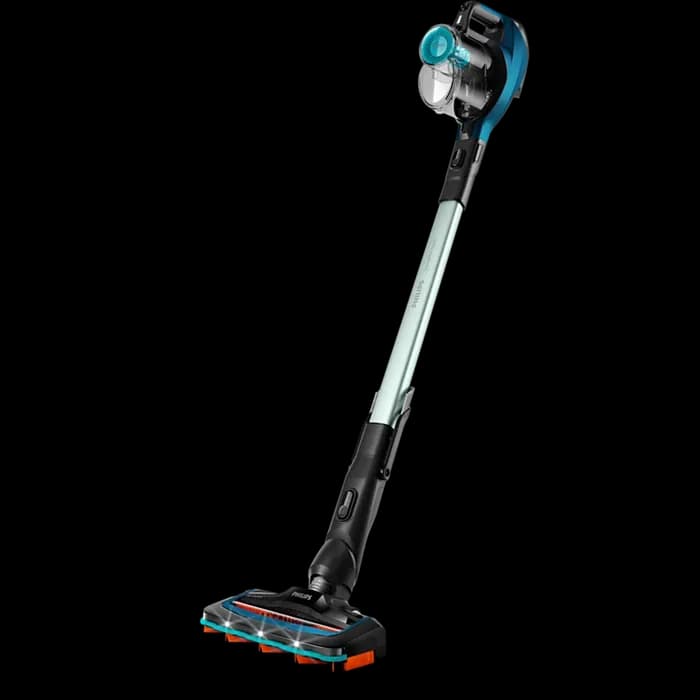
The 120 W DC motor in this unit is engineered to maximize static pressure, achieving 8000 Pa by optimizing the internal impeller pitch for high-velocity airflow within a compact housing. Unlike high-wattage corded motors that rely on brute force, this system balances current draw from its battery cells with the mechanical resistance of the turbine. This specific motor-to-airway ratio is tuned to lift fine sand and road dust from hard surfaces while maintaining enough airflow to prevent overheating during continuous use. Such an engineering profile is ideal for surface-level debris removal rather than deep-pile carpet extraction.
The filtration architecture utilizes a 1-stage HEPA system that acts as both the primary barrier and the fine particle capturer. By using a washable high-efficiency particulate air media, the device filters out particles as small as 0.3 microns, including pollen and common urban pollutants. The washable construction is a critical engineering choice for the Indian climate, where high humidity and fine dust can quickly clog disposable filters. This design ensures that the user can maintain consistent suction levels by simply rinsing the element, preventing the pressure drop associated with saturated filter pores in dusty environments.
Powering this system is a high-density battery configuration that supports a 30-minute runtime, a significant duration for a device weighing only 0.45 kg. The internal circuitry manages the 120 W load through a CC-CV (Constant Current-Constant Voltage) charging protocol, which enables the 2-hour rapid recharge time. This thermal management system prevents the cells from throttling during the final minutes of a cleaning cycle, ensuring that suction power remains stable until the battery is nearly depleted. For Indian households, this allows for multiple quick-cleaning sessions across a single day without requiring frequent trips to the charging station.
The wet and dry separation mechanism is built around a specialized internal baffle that protects the motor from liquid ingress. The 1 L bagless bin includes a physical barrier that directs air through the HEPA filter while allowing heavier liquid particles to settle at the bottom of the container. While the capacity is ample for dry dust, the engineering dictates that the unit should be emptied promptly after liquid suction to prevent moisture from affecting the motor bearings. This dual-purpose design is particularly effective for kitchen spills or cleaning condensation from car windows during the monsoon season.
While this model lacks a blower function, it compensates with a dedicated pet hair tool that leverages mechanical agitation to lift fibers from textile surfaces. The attachment nozzle is engineered with a narrow orifice to concentrate the 8000 Pa suction, increasing the velocity at the point of contact with the fabric. This focus on suction density allows the user to remove stubborn hair and dander from car upholstery and sofa cushions where a standard brush might only shift the debris. The engineering focus here is on targeted extraction rather than broad-area sweeping, making it a precision tool for upholstery hygiene.
The chassis is constructed from high-grade ABS plastic, which contributes to the exceptionally low weight of 0.45 kg while maintaining structural integrity against minor impacts. The ergonomic handle design places the center of gravity directly over the palm, reducing wrist fatigue during extended cleaning of high-reach areas like AC vents or curtain rods. Even with the internal motor vibration, the noise dampening materials keep the output at a remarkably low 10 dB, which is an engineering feat for a 120 W motor. Ultimately, the EV 267 represents a refined approach to handheld vacuum engineering, prioritizing portability and specific task efficiency.