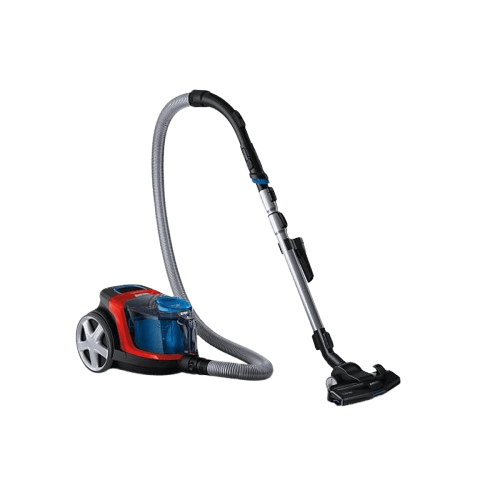
The suction architecture of this unit is driven by a 1900W universal motor that converts electrical input into 370 W of actual suction power at the nozzle. This high motor-to-airway ratio ensures that the static pressure remains high even when the multi-clean nozzle is in full contact with heavy fabrics or carpets. In the Indian context, where fine silt and road dust often settle deep into floor crevices, this pressure is vital for displacement. The engineering focuses on maintaining a high airflow rate, which avoids the typical drop in performance seen in lower-wattage motors during extended use on thick rugs.
Filtration is managed through a single-stage-stage HEPA system that is designed to be fully washable, reducing the total cost of ownership. The filter media is capable of capturing microscopic particles, including pollen and pet dander, which are common triggers for respiratory issues in dusty urban environments. By utilizing a washable construction, the user can maintain optimal airflow by preventing the clogging that occurs when fine Indian dust accumulates on the filter surface. This structural choice ensures that the motor does not overheat due to air resistance, extending the operational lifespan of the internal components.
Regarding the power system, the unit utilizes an NA cell configuration tailored for high-current draw during intensive cleaning tasks. The charging circuit likely employs a standard CC-CV protocol to manage heat during the NA charging cycle, which is crucial for maintaining battery health in warmer Indian climates. Because the motor draws significant power to reach the 370 W output, the engineering trade-off favors suction intensity over long-duration runtime. For the user, this means the device is optimized for high-impact, short-duration cleaning of specific zones like mattresses or car seats rather than continuous whole-house floor scrubbing.
This device is strictly a dry vacuum cleaner and does not feature a wet/dry separation mechanism or a liquid baffle design. The internal 1.5 L bin is designed specifically for dry particulate matter, and the motor housing lacks the waterproof seals required for liquid intake. If used on wet surfaces, there is a risk of moisture bypassing the single-stage-stage HEPA filter and entering the 1900W motor, which would cause immediate electrical failure. For Indian households, this means the unit is best reserved for dry dust, pet hair, and food crumbs rather than bathroom or kitchen spill management.
The lack of a blower function indicates that the engineering resources were fully dedicated to maximizing the vacuum path's seal and velocity. In many budget models, the inclusion of a blower often leads to air leaks in the chassis that reduce actual suction at the nozzle. By omitting the blower, this model ensures that the full 370 W of power is concentrated on debris extraction. This is particularly beneficial when cleaning AC vent grime or keyboard debris where high-velocity suction is more effective at removing sticky dust than a simple outward air blast would be.
The chassis is constructed from high-grade ABS plastic, bringing the total weight to 4.5 kg, which provides a balance between durability and portability. The handle design is ergonomically placed to allow for comfortable maneuvering when cleaning elevated surfaces like sofas or mattresses. A parking position is integrated into the design for easy storage in compact 1BHK apartments. The wheels are optimized for hard floor movement, ensuring that the unit can be moved across marble or vitrified tiles without scratching the surface. Ultimately, the fc9351 01 is engineered for users who demand heavy-duty suction in a compact footprint.