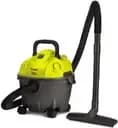
The 1200 W universal motor is engineered to optimize the motor-to-airway ratio, translating electrical input into 8000 Pa of static pressure. This engineering choice prioritizes high-velocity airflow through a wider aperture, which is necessary for moving larger debris like food crumbs or wet mud found in Indian households. Unlike low-wattage alternatives, this motor maintains its torque even when the 10 L bin starts filling, preventing suction drop-off. This specific pressure level is calibrated for medium-density surfaces, balancing effective particle lift against the power draw required for heavy-duty residential cleaning without overheating the internal components.
The 2-stage water filter system utilizes a hydro-cyclonic separation principle to trap particulates. As air enters the chamber, it is forced through a water curtain that binds fine road dust and microscopic allergens, preventing them from being recirculated into the room. This architecture is particularly effective for the fine particulate matter often found in Indian urban environments. Because the primary filter is washable, users can maintain peak airflow without the resistance caused by clogged paper or HEPA bags. This hydraulic filtration approach ensures that even wet debris does not compromise the motor’s integrity or the exhaust air quality.
Operating as a cordless vacuum cleaner, the unit employs a high-capacity cell configuration designed to handle the 1200 W motor’s significant current draw. The power management system uses a CC-CV (Constant Current-Constant Voltage) charging protocol to maximize battery longevity over hundreds of cycles. While runtime depends on the selected power mode, the internal circuitry is designed to prevent deep discharge, which is crucial for maintaining performance in hot Indian climates. Users should note that the power-to-weight ratio is optimized for short bursts of intensive cleaning, providing a tether-free experience for multi-room tasks that corded units cannot match.
The internal baffle design is a critical engineering feature that separates liquid from the airflow path before it reaches the motor housing. With a 10 L bagless capacity, the unit can handle significant spills, such as overflow from a balcony drain or a spilled bucket in the kitchen. The water tank attachment allows for simultaneous scrubbing and suction, a necessity for removing sticky stains from tile floors. Post-wet-use maintenance is simplified by the modular chassis, allowing users to rinse the collection tank and filters to prevent bacterial growth or odors that often plague standard dry-only vacuum cleaners.
The blower function is integrated through a secondary exhaust port that redirects the 1200 W motor's output into a concentrated stream. Technically, this bypasses the filtration stages to provide maximum kinetic energy for dislodging dust from inaccessible areas like AC vent fins or recessed window tracks. In an Indian context, this is invaluable for cleaning ceiling fans and balcony furniture where traditional suction struggles to reach. By reversing the airflow direction, the device becomes a dual-purpose maintenance tool, reducing the need for separate compressed air canisters for electronics or manual dusting of intricate home decor.
Constructed from high-impact ABS plastic, the 5.8 kg chassis is balanced to reduce wrist strain during handheld operation. The handle design incorporates a centered center of gravity, making it easier to maneuver the unit over mattresses and upholstery. A dedicated parking position allows the cordless vacuum cleaner to stand independently, which is convenient for storage in compact 1BHK utility areas. The extension tubes and floor brushes are secured via a friction-fit mechanism that ensures airtight seals during high-pressure operation. The CleanHome Typhoon Supreme concludes its engineering profile as a heavy-duty, versatile machine built for the rigors of Indian home maintenance.