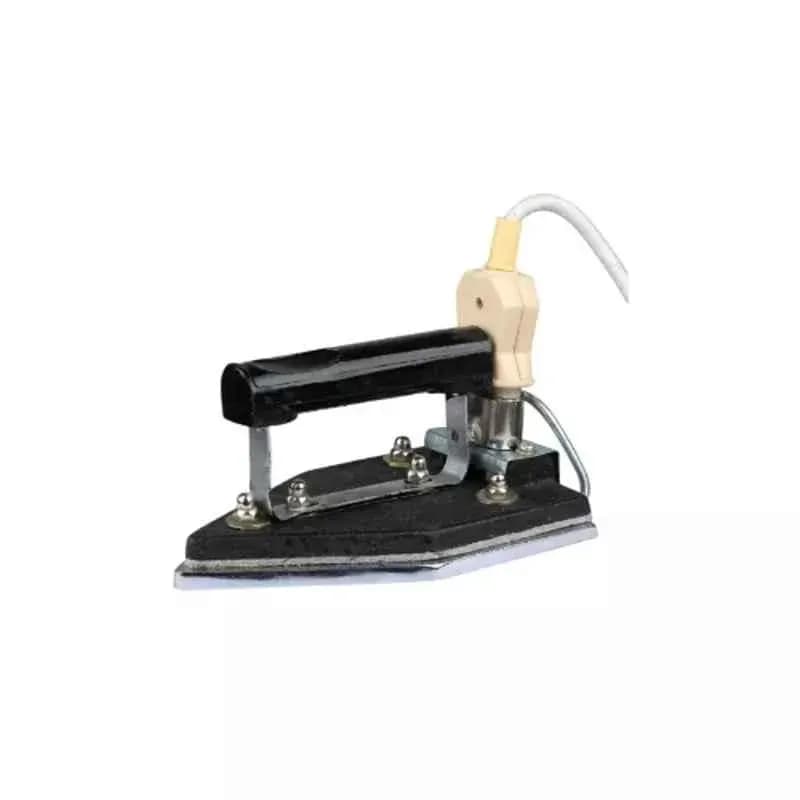
The engineering of the cast iron soleplate is central to this dry iron's performance. Unlike aluminum or non-stick coated plates, cast iron retains heat significantly longer, allowing for a more stable temperature profile during the pressing of thick cotton sarees. This material choice provides a natural glide that resists snagging on intricate Indian embroidery or heavy brass buttons found on traditional kurtas. The 750 wattage is calibrated to heat this dense plate efficiently, reaching operating temperatures for linen in under two minutes. This thermal efficiency reduces the frequency of the heating element cycling, extending the overall lifespan of the internal components and facilitating fast heat-up cycles.
Temperature regulation is managed via a high-tolerance manual dial mapped to three distinct fabric profiles: cotton, linen, and heavy fabrics. This mechanical thermostat is designed to withstand the high ambient temperatures of Indian summers while providing precise cut-offs for delicate fabrics like silk or polyester-blend office shirts. By avoiding digital components, the iron maintains a consistent heat-to-fabric ratio, which is essential for removing deep-set wrinkles in starched cotton garments. The tactile feedback of the dial allows users to switch between high-heat linen settings and lower-temp synthetic modes with confidence, ensuring no fabric scorching occurs during transitions within Indian mixed-fabric wardrobes.
The safety architecture is specifically hardened for the 220–240V Indian electrical grid. The integration of an ISI-certified thermal fuse acts as a secondary fail-safe, physically breaking the circuit if internal temperatures exceed safe limits due to external power surges. Furthermore, the overheat protection sensor monitors the soleplate temperature in real-time, preventing damage to both the dry iron and the garment. The auto shut-off mechanism is a critical feature for household safety, particularly in environments with children or frequent interruptions. These components work in unison to provide a stable operating environment, mitigating risks associated with unattended use or unpredictable household voltage spikes and unattended ironing incidents.
Ergonomically, the iron is designed to utilize its 5.5 weight to do the pressing work, requiring less downward pressure from the user's arm. The handle is contoured to provide a secure grip, distributing the weight evenly across the palm to prevent fatigue during long sessions involving multiple school uniforms. A 2 cord reach facilitates easy movement across the full length of an ironing board, preventing tangles that can interrupt the flow of work. This thoughtful design ensures that the physical weight becomes an advantage rather than a burden for the user. Ultimately, the 13.5.5kg 750W Brass Laundry Iron represents the overall buying conclusion for Indian households.