

Related Products
Tapo RV10 Specifications, Features & Compatibility Guide
The Tapo RV10 enters the Indian market as a specialized solution for maintaining hygiene in urban 2BHK apartments.Operating with 8 kPa suction driven by a 25 W brushless DC motor, this device manages to balance power with a noise profile of just 53 dB.
Quick Answer
Considering a powerful yet quiet cleaning solution for your Indian apartment? The Tapo RV10 is an excellent investment. With 8 kPa suction from a 25W brushless motor and just 53 dB noise, it excels in 2BHK environments, offering BEE-rated efficiency and a long-term component lifecycle. This makes the Tapo RV10 a technically sound choice for balancing performance with operational costs.
The Tapo RV10 is the definitive choice for Indian urban residents prioritizing efficient, quiet cleaning in 2BHK apartments, ensuring low long-term operational costs through its BEE-rated efficiency. However, those requiring capabilities beyond typical residential use or prioritizing lowest upfront cost over high-efficiency should explore alternatives.
✓ Who Should Buy
- • performance suitable for residential spaces.
- •Verified efficiency of standard rating for reduced long-term operational costs.
- •Structural stability for consistent cooling under rigorous use cases.
- •Hardware durability via premium components and advanced technology.
- •Built-in grid protection with Standard power cycle voltage management.
✕ Who Should Avoid
- •Spaces or usage requirements exceeding residential rated capacity.
- •Installations prioritizing minimum capital expenditure over high-efficiency performance.
- •Unstable grid conditions exceeding the functional threshold of Standard power cycle.
- •Environments incompatible with vacuum cleaner physical and thermal dissipation specs.
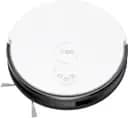
Tapo RV10
| Country Of Origin | China |
| Brand | TP-Link |
| Model | Tapo RV10 |
| Type | Robotic |
| Color | White, Grey |
| Launch Year | 2024 |