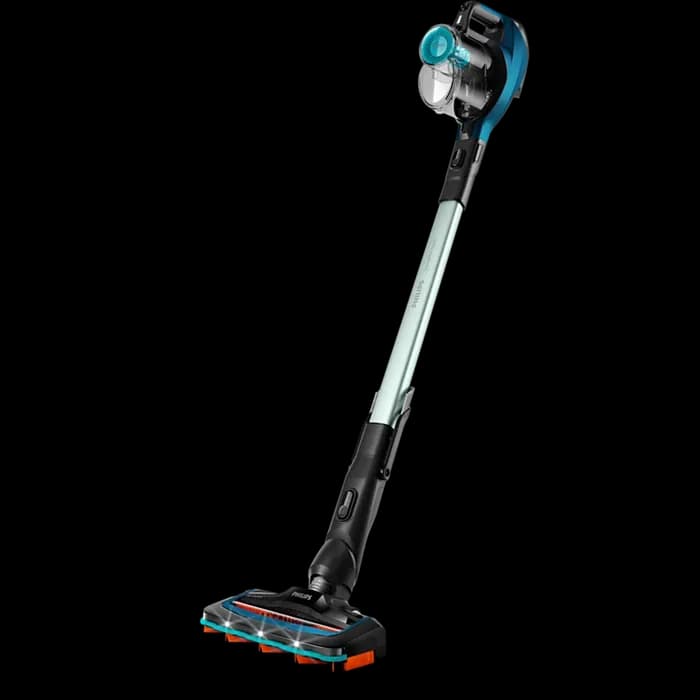
The pneumatic performance of this cordless handheld vacuum cleaner is driven by a 120 W motor optimized for high static pressure. By generating 6000 Pa of suction, the motor-to-airway ratio is calibrated to prioritize lift over sheer volume, making it effective for removing fine particulate matter from textured surfaces like car seats. Unlike industrial units, this motor focuses on localized debris extraction, balancing electrical draw with thermal management. For Indian users, this means the unit can pull road dust from footmats without overheating during its 20-minute cycle. It is engineered for precision tasks rather than continuous heavy-duty floor scrubbing.
The filtration architecture utilizes a 3-stage HEPA system designed to mitigate PM2.5 exposure in urban Indian households. The first stage involves a mesh pre-filter to catch larger debris like hair and crumbs, while the secondary layers utilize dense fiberglass media to trap 99.97% of particles down to 0.3 microns. Because the filter is washable, it maintains airflow efficiency over long-term use, even when exposed to oily kitchen soot or fine construction dust. This design ensures that the exhaust air is cleaner than the intake, which is critical for users with respiratory sensitivities or those cleaning enclosed car cabins.
Power is managed through a 7.4 V lithium-ion cell configuration that supports a 45-minute rapid charge cycle via CC-CV protocols. The battery management system is tuned to provide a flat discharge curve, ensuring the suction remains consistent until the final minute of the 20-minute runtime. This efficiency is necessary for Indian environments where voltage fluctuations might otherwise affect charging stability. The engineering trade-off for the lightweight 0.4 kg chassis is a smaller cell capacity, yet it provides enough watt-hours for typical spot-cleaning sessions. It represents a balanced approach to energy density and portability for quick household interventions.
Although this model is strictly for dry applications, the internal chassis includes a dedicated airflow path for the blower function located at the rear exhaust. By redirecting the 120 W motor's output, it creates a concentrated air stream capable of dislodging grime from recessed areas like sliding window tracks or computer heat sinks. The lack of a wet-extraction baffle saves internal space, allowing for the 0.18 L bagless bin to remain compact. Engineering this dual-purpose airflow path maximizes the utility of the brushless motor without adding mechanical complexity. It serves the specific Indian need for clearing dust from complex electronics.
The 0.18 L dust bin features a quick-release mechanism engineered for hygiene, allowing the user to dump contents without direct contact with the allergens. The bagless design utilizes a cyclonic separation principle to keep fine dust away from the HEPA filter for as long as possible. In a typical 2BHK Indian apartment, this bin size is adequate for one or two cleaning sessions of targeted areas like sofas or car interiors. The clear polycarbonate construction allows for instant visual monitoring of the fill level. This ensures that the motor never operates under the strain of a completely blocked intake path.
Constructing the chassis from high-grade ABS plastic allows the unit to maintain structural integrity while keeping the weight at a mere 0.4 kg. The ergonomic handle is positioned to align the center of gravity with the user's wrist, reducing fatigue during extended reaching for AC vents or high shelves. The friction-fit attachment system for multifunction nozzles ensures no air leakage, which preserves the 6000 Pa rating at the tip of the crevice tool. This meticulous focus on sealing and weight distribution makes the Car Vacuum Cleaner for Home and Car Cleaning Black a highly maneuverable tool for diverse household and automotive cleaning applications.