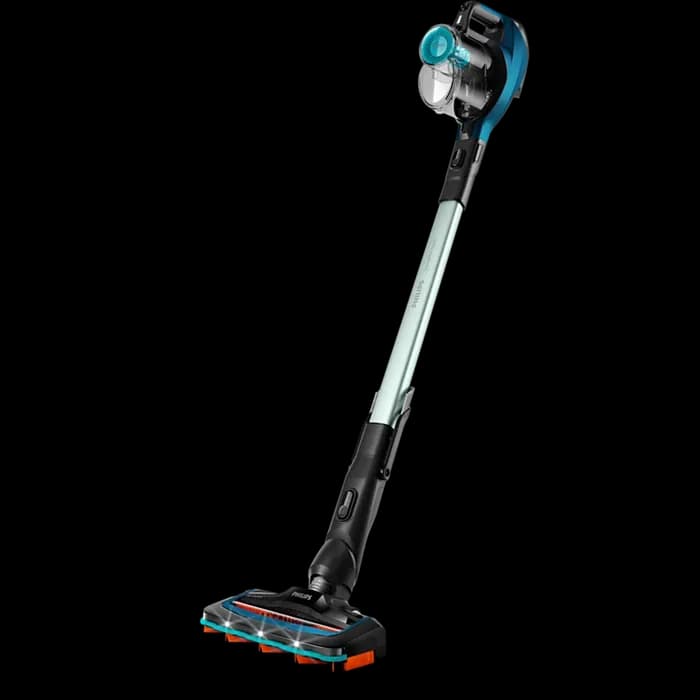
The 21000 Pa suction is generated by a high-speed 120 W brushless DC motor, which optimizes the motor-to-airway ratio for maximum static pressure. In a handheld format, achieving this level of suction requires precise impeller geometry to minimize turbulence. This high static pressure is particularly effective for pulling fine road dust from carpet fibers but results in a lower overall airflow volume compared to large canisters. Consequently, while it excels at concentrated spot cleaning and surface extraction on mattresses, it is less suited for large floor areas where high cubic feet per minute ratings are typically required for speed.
The filtration architecture utilizes a 3-stage HEPA system designed to manage the diverse particulate matter found in Indian urban environments. The initial mesh filter traps larger debris and hair, while the secondary layer pre-filters medium dust before the air reaches the HEPA element. This final stage is rated to capture particles as small as 0.3 microns, including pollen and dander. The washable construction of the filter is a critical engineering choice, as it allows users to maintain peak suction performance by preventing the microscopic pores from clogging permanently, thereby extending the motor's operational lifespan significantly.
Powering this device is a 7.4 V lithium-ion battery configuration designed for a 20-minute continuous runtime. The system employs CC-CV (Constant Current-Constant Voltage) charging protocols to ensure cell longevity over hundreds of cycles. During operation, the 120 W draw represents a high discharge rate for the battery size, which is why the 3-hour charging period is necessary to balance thermal stability with recharging speed. For Indian users, this means the device is optimized for burst cleaning sessions rather than prolonged hour-long deep cleaning, aligning with the typical needs of a 1BHK or 2BHK apartment.
The wet and dry separation mechanism utilizes an internal baffle design within the 0.18 L dust bin to prevent moisture from entering the motor housing. When liquid is ingested, the centrifugal force separates the heavier liquid droplets from the air stream, depositing them at the base of the transparent container. This design protects the internal electronics from corrosion and short circuits, though it requires the user to empty the bin immediately after wet use to prevent mold growth. This specific engineering allows for the safe cleanup of small spills or damp grime on kitchen counters and car mats.
Integrating a blower function alongside the suction port involves a dual-ventilation chassis design where the exhaust air is channeled through a specialized nozzle. This mechanism repurposes the high-velocity air expelled by the brushless motor to create a concentrated jet. In the Indian context, this is exceptionally useful for dislodging dust from AC vent fins or keyboard keys where physical brushes cannot reach. Unlike pure-suction models that might just smear oily grime, the blower function lifts particulates into the air where they can be subsequently vacuumed, providing a more comprehensive cleaning solution for delicate electronics.
At only 0.5 kg, the chassis is constructed from high-impact ABS plastic, providing a high strength-to-weight ratio that ensures durability without adding bulk. The ergonomic handle is positioned to align the center of gravity with the user's wrist, reducing the torque experienced during high-angle cleaning of ceiling fans or window frames. The parking position is stable, and the tool-less attachment switching system allows for rapid transitions between floor and upholstery tasks. This focus on lightweight engineering and user comfort defines the Long Battery Wireless Vacuum Cleaner as a premier choice for those prioritizing portability and ease of use.