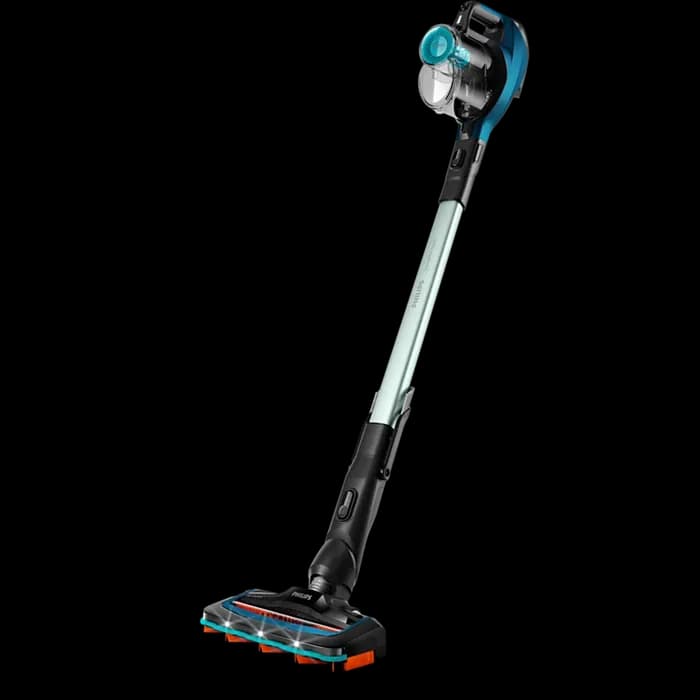
The engineering behind the 21000 Pa suction originates from a high-efficiency 120W brushless DC motor designed to minimize internal friction. Unlike brushed motors, this unit maintains a consistent torque-to-speed ratio, allowing the impeller to generate significant static pressure within a compact housing. This pressure is optimized for lifting dense particulates like sand or fine road dust common in Indian urban environments. However, the airflow-to-pressure trade-off means while it excels at high-resistance surfaces like carpets or upholstery, it is less suited for large-volume debris like spilled cereal, which requires higher CFM. This architecture prioritizes deep-tissue extraction over surface-area speed.
The filtration architecture utilizes a 3-stage HEPA system to ensure zero secondary pollution during operation. The primary stage involves a cyclonic separator that forces larger debris into the 0.45L bin, followed by a fine-mesh steel pre-filter to catch hair and lint. The final HEPA stage captures particles down to 0.3 microns, including pollen and fine soot from traffic exhaust. For Indian users, the washable construction of these filters is a critical engineering advantage, as it prevents the clogging issues typical of paper filters in humid or dusty climates. Regular rinsing restores the airflow path, maintaining the motor's cooling efficiency.
Powering this device is a high-density lithium-ion battery system configured for a 20-minute continuous discharge cycle. The internal cell arrangement uses a CC-CV (Constant Current-Constant Voltage) charging protocol via a 3-hour recharge cycle to preserve battery chemistry longevity. In a typical Indian 1BHK or 2BHK, 20 minutes is the sweet spot for spot cleaning, though the motor draw is substantial to maintain peak suction. To maximize the battery life, users should avoid complete depletion, utilizing the intelligent cut-off circuit that prevents over-discharging, ensuring the cells remain healthy over hundreds of charge cycles for long-term reliability.
The wet and dry separation mechanism employs a physical baffle system within the 0.45L bagless container to prevent moisture from entering the motor housing. When vacuuming small liquid spills or damp kitchen waste, the air-water separator traps fluids at the base while allowing air to bypass through the upper HEPA assembly. It is engineered for minor mishaps rather than flooded floors, making it ideal for cleaning up tea spills or wet mud. Post-use maintenance is vital; users must empty the bin and dry the filters immediately to prevent bacterial growth and maintain the structural integrity of the internal seals.
A secondary exhaust port enables the blower function, converting the motor's high-speed output into a concentrated air stream. This technical feature is particularly effective for cleaning intricate Indian woodwork, AC vent louvers, or computer keyboards where suction alone cannot reach deep crevices. By attaching the air blast nozzle, the unit dislodges stuck dust, which can then be suctioned using the standard primary intake. This dual-path airflow engineering maximizes the utility of the 120W motor, offering a more comprehensive cleaning solution than suction-only handhelds that struggle with hidden dust in complex geometries and narrow gaps.
Constructing the chassis from high-grade ABS plastic allows the unit to maintain a low weight of 0.5 kg without compromising structural rigidity. The ergonomic handle is balanced around the center of gravity, reducing wrist strain during extended overhead use on ceiling fans or curtains. The integrated parking position and compact footprint allow it to be stored in small Indian apartment cupboards or car glove boxes. Every component, from the exhaust nozzle to the brush attachments, is designed for quick-snap connectivity to minimize downtime between tasks. Ultimately, the Portable Handheld Mini Design for Car Interior and Home Use represents a triumph of miniaturized power engineering.