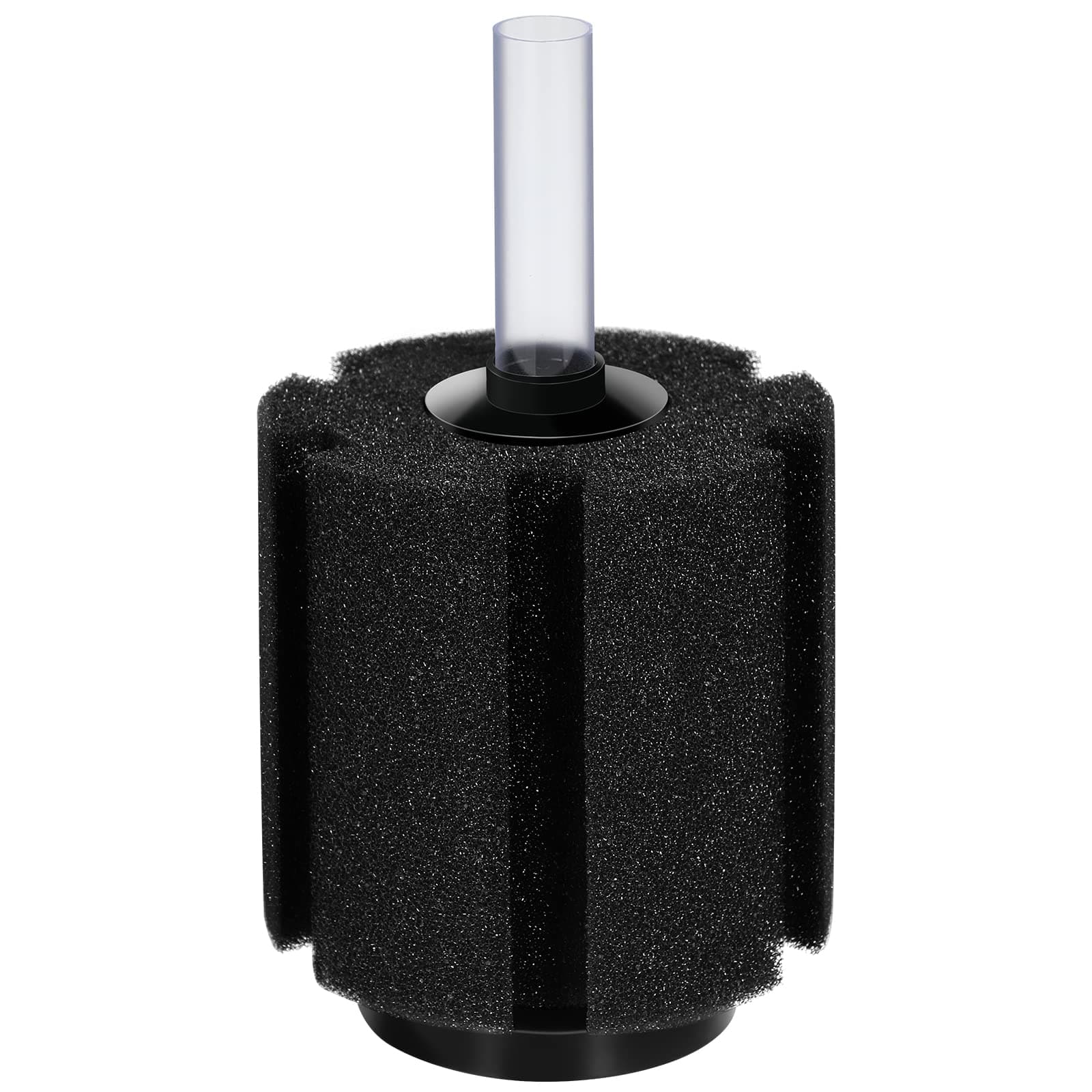
The Betta Compact Filter's operational efficacy stems from a well-integrated design focused on fundamental aquatic life support. Its submersible pump module, rated at 400 LPH with a power draw of only 5W (220-240V, 50Hz), demonstrates an impressive power-to-flow ratio for its class. The utilization of a metal shaft impeller significantly enhances durability and longevity compared to ceramic alternatives, particularly in freshwater applications, contributing to its low noise profile. The adjustable flow rate mechanism is critical, allowing hobbyists to tailor water circulation to specific biotope requirements, preventing excessive current stress on delicate species or disruptive flow in planted layouts.
Filtration is executed via a logical 2-stage process. The primary mechanical stage, facilitated by the included foam sponge, efficiently captures suspended particulates, detritus, and uneaten food, preventing turbidity and reducing the organic load. Following this, the included biological media (supporting both foam and ceramic types) provides a high-surface-area substrate for beneficial nitrifying bacteria. These bacteria are indispensable for converting toxic ammonia and nitrites into less harmful nitrates, maintaining the nitrogen cycle's stability. While specific media volume isn't disclosed, the compact form factor implies sufficient capacity for the recommended 20-60L tanks, promoting adequate biological colonization given appropriate maintenance. The lack of self-priming is typical for smaller internal units, requiring submergence before power application. Overall, the system's design ensures a healthy turnover rate for the specified tank volume (e.g., 400 LPH for a 60L tank yields over 6 tank turnovers per hour, exceeding typical recommendations for robust filtration). Overheat protection and CE/RoHS certifications underscore a commitment to operational safety and environmental compliance.