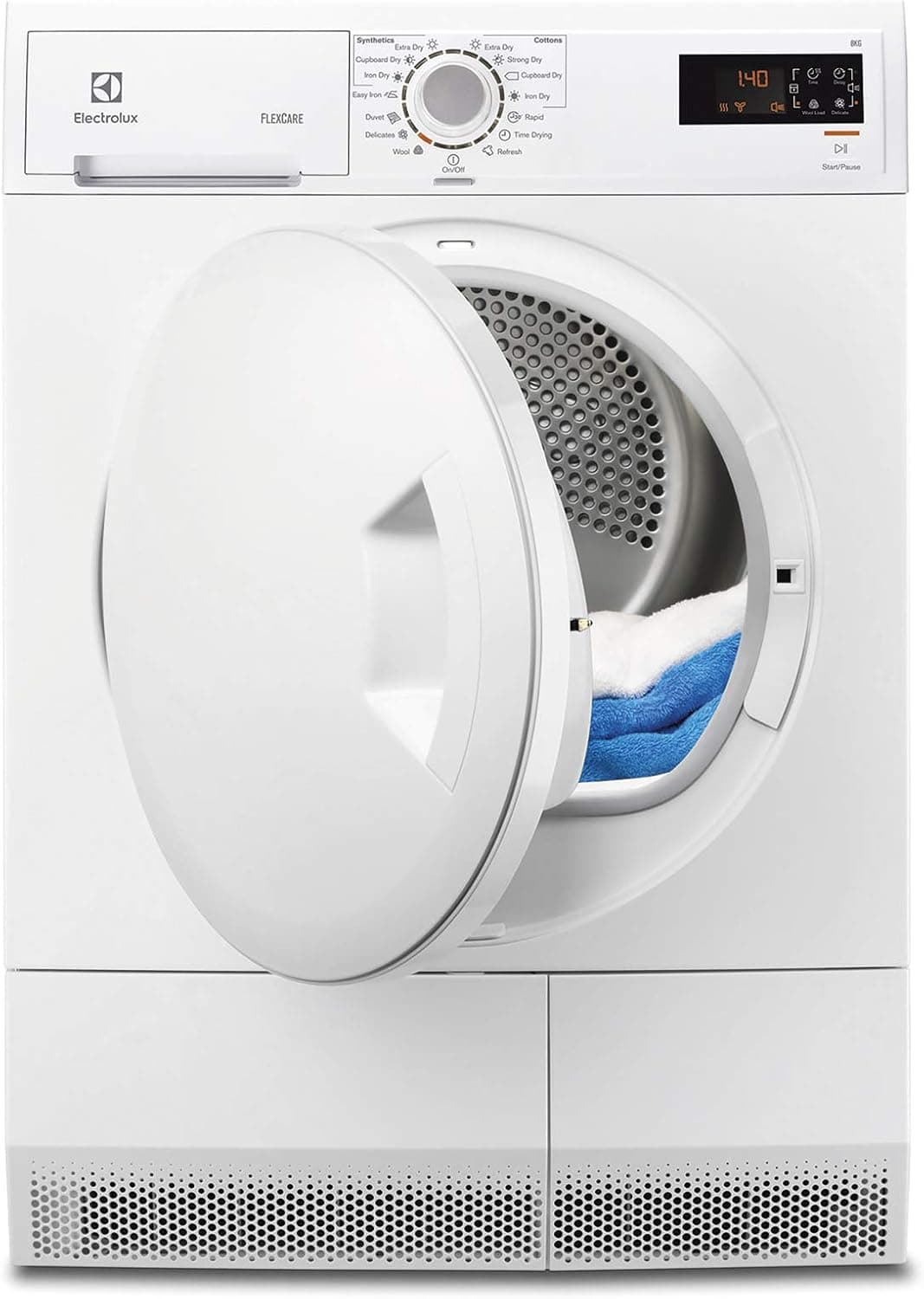
The Whirlpool W11311545 functions as a conventional vented clothes dryer, a robust and proven drying technology. Its operational principle involves a resistance heating element that elevates the temperature of ambient air, which is then circulated through the drum to evaporate moisture from garments. Concurrently, an integrated exhaust fan expels this moisture-laden air directly outside through a dedicated duct. This system necessitates an adequately sized and clear external vent path for optimal performance, minimizing drying times, and preventing excessive humidity buildup within the indoor environment. The unit's electrical configuration is specified as 230V input voltage at 50Hz frequency, indicating its engineering for consistent and reliable power delivery within regions adhering to these specific grid standards. The absence of an explicit 'drying_technology' beyond 'Vented' confirms its adherence to a direct thermal drying process, distinct from advanced condenser or heat pump systems. While detailed drum material and volume specifications are 'N/A', the front-load configuration inherently implies a horizontally oriented drum designed for continuous tumbling, which is fundamental for uniform exposure of garments to heated airflow. A critical engineering component is the integrated lint filter, which efficiently captures textile fibers, thereby safeguarding the exhaust system from blockages, preserving airflow efficiency, and significantly reducing potential fire risks. A notable design characteristic is the absence of a moisture sensor (`moisture_sensor: false`) and automatic dry cycles (`auto_dry: false`). This means the W11311545 relies on manual or time-based cycle selection. Users must actively manage drying duration to prevent over-drying, which can lead to fabric damage and unnecessary energy consumption, or under-drying, requiring additional cycles. Consequently, specific energy efficiency ratings are not provided, as energy usage is predominantly dictated by user discretion and cycle duration rather than automated optimization algorithms. Safety is paramount, with the unit featuring integrated overheat protection, a vital safeguard that autonomously interrupts power to the heating element if internal temperatures exceed predefined safe operating limits. A secure door lock mechanism is also incorporated, preventing unintended opening of the drum during operation. The inclusion of adjustable legs, despite the absence of advanced anti-vibration systems, allows for precise leveling of the appliance, which is crucial for minimizing mechanical stress, reducing operational noise, and extending the lifespan of internal components by ensuring balanced rotation.