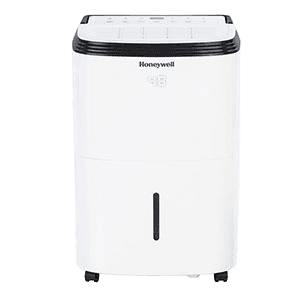
The moisture removal process in the TP30AWKNR utilizes a refrigeration cycle where the rotary compressor circulates R-32 to chill the evaporator coils. As warm, moisture-laden air from an Indian monsoon environment is drawn over these coils, it hits the dew point, causing water to condense and collect in the tank. This model is rated at 23 pints/day (~10.9 L/day), a metric specifically tuned for high-performance extraction in smaller volumes. In India's typical ambient temperatures of 30 to 40 degrees Celsius, the compressor must work harder to maintain the temperature gradient. The rotary design is inherently more efficient than reciprocating alternatives in these conditions, ensuring that the latent heat of vaporization is managed effectively without excessive energy consumption.
The use of R-32 refrigerant in the TP30AWKNR offers superior heat transfer coefficients compared to older R-410A systems, which is vital during intense Indian summers. This refrigerant operates at higher pressures but provides higher cooling capacity per unit of volume, allowing the internal heat exchangers to remain compact while maintaining high extraction rates. In coastal regions where the air is not only humid but also carries a high thermal load, the chemical stability of R-32 ensures the unit maintains its performance curve without degradation. The thermodynamic properties of this gas allow the refrigeration cycle to reach the required coil temperature faster, reducing the startup latency of the dehumidification process and providing immediate relief from seaside apartments.
Precision humidity control is achieved through an integrated digital humidistat in the TP30AWKNR, which monitors the surrounding air and compares it to the user’s desired setpoint. The 30% to 90% range is essential for Indian use cases, where a server room might require a strict 45% RH while a residential bedroom in Chennai is comfortable at 55% RH. There is a programmed latency between the sensor reading and compressor activation to prevent short-cycling, which preserves the motor’s lifespan. This electronic sensing is far more accurate than mechanical dial-based systems, ensuring that the unit does not over-dry the air, which can be just as damaging to wooden musical instruments or antique furniture as excessive moisture would be.
Thermal management is supported by an auto-defrost mechanism, a feature that becomes critical in Indian hill stations like Shimla, Ooty, or Munnar where temperatures can drop significantly at night. When ambient air falls below 41°F, frost can accumulate on the evaporator coils, insulating them and blocking airflow. The system detects this buildup and temporarily pauses the compressor while keeping the fan running to melt the ice using room air. This prevents the mechanical strain that would otherwise occur if the system continued to run in a frozen state. For users in North India who face cold, damp winters, this functionality ensures the unit remains operational and efficient regardless of the seasonal fluctuations in temperature or moisture levels.
The air circuit of this unit is powered by a 2-speed fan delivering 116 CFM, ensuring that air within a 1000 sq. ft. (~93 m²) space is circulated frequently through the refrigeration system. With a 7-pint reservoir capacity, the unit can operate for several hours in high-humidity conditions before the auto shut-off triggers. However, for unattended operation during the heavy monsoons in Goa or Mumbai, the continuous drain port allows for direct plumbing to a floor drain. This eliminates the need for manual intervention, which is particularly useful for basement storage or holiday homes. The balance between air velocity and coil contact time is optimized to maximize the moisture pull while keeping the noise profile manageable.
Structural integrity is maintained by a 13.56 kg chassis mounted on durable caster wheels, allowing for relocation between rooms in a typical Indian apartment. Maintenance is focused on the washable dust filter, which protects the internal coils from the particulate matter common in urban Indian environments. Regular cleaning of this filter is the primary requirement for maintaining the 116 CFM airflow and ensuring the compressor does not overheat due to restricted intake. The long-term reliability of the system is predicated on these simple maintenance steps rather than complex mechanical servicing. As a result, the TP30AWKNR stands as a durable engineering solution for managing the persistent humidity challenges faced by modern households across the various climatic zones of India.