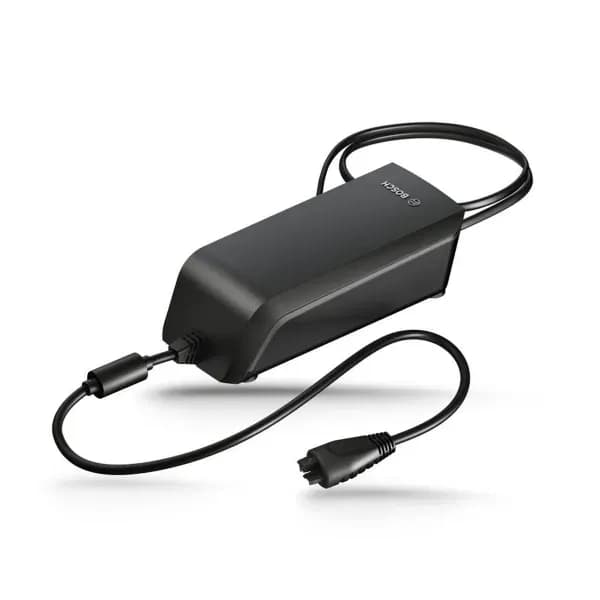
The Bosch BCS250 charger represents a robust and optimized power delivery solution for Bosch eBike System 2 Li-Ion batteries. Its electrical architecture is designed around a single-phase 220V-240V AC input at 50/60 Hz, delivering a precisely regulated 42V DC output. This fixed output voltage is critical for charging 36V nominal Li-Ion battery packs, aligning with the typical 4.2V/cell charging requirement across a 10-cell series configuration (10S). The maximum output current is specified at 6A, translating to 252W of rated power. A key engineering detail is the intelligent current limiting to 4A (168W) when connected to PowerPack 300 and Classic+ Line batteries, showcasing a system-aware design that prevents overstressing smaller or older battery chemistries, thus extending their lifespan.
The charging algorithm employed is a standard yet highly effective 2-stage Constant Current / Constant Voltage (CC/CV) profile. In the Constant Current (CC) phase, the charger delivers a steady 6A (or 4A) to rapidly bring the battery to a significant State of Charge. Once the battery voltage reaches approximately 42V, the charger transitions to the Constant Voltage (CV) phase, where it maintains 42V while gradually reducing the current until the battery reaches its full 100% SOC. This methodology is paramount for safely and efficiently charging Li-Ion cells without overcharging or premature degradation.
Thermal management in the BCS250 is achieved passively through its sealed, ventless flame-retardant plastic enclosure. This fan-less design contributes to silent operation and inherent dust resistance, making it suitable for various indoor environments. While specific operating temperature ranges are not provided, the passive cooling suggests careful internal component selection and layout to dissipate heat effectively, preventing thermal runaway without active air circulation.
Protection features are comprehensive and critical for battery and user safety. The unit incorporates over-voltage, under-voltage, over-current, short-circuit, and over-temperature protections. These integrated safeguards actively monitor input and output parameters, automatically disconnecting or regulating power to prevent hazardous conditions like cell damage from excessive voltage, thermal stress from overcurrent, or fire risks from short circuits. While not featuring reverse polarity or surge protection, the existing suite covers primary electrical fault scenarios, reinforcing the charger's reliability and compliance with CE safety standards, further supported by its electrical isolation design.