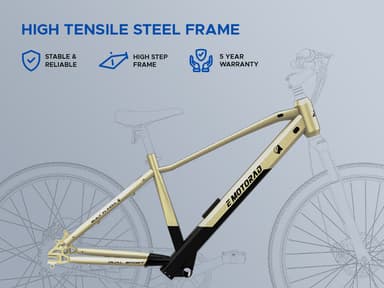
The EMotorad Dope's design reflects a focused engineering approach towards a reliable and accessible recreational electric cycle. The **frame structural integrity** is predicated on a High Tensile Steel diamond frame, which provides a rigid and durable chassis, well-suited for the intended 'Kids / Recreational' application and supporting its 80 kg maximum payload. This material choice offers a robust foundation while maintaining cost-efficiency, ensuring longevity for its target demographic.
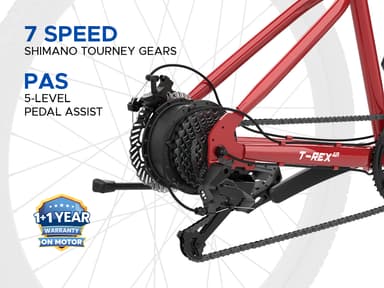
The **drivetrain architecture** centers on a 250W BLDC rear hub motor. As a non-geared motor, its power delivery is direct and consistent, suitable for flat to moderately inclined terrains. The Hall sensor integration ensures efficient commutation and smooth motor operation. The absence of a torque sensor means power assist is based on pedal rotation (cadence) rather than rider input force, simplifying the control logic and making it user-friendly for novice riders, though it may offer less nuanced assistance than torque-sensing systems. The three pedal assist levels coupled with throttle support provide versatile riding options for varying energy expenditure preferences.
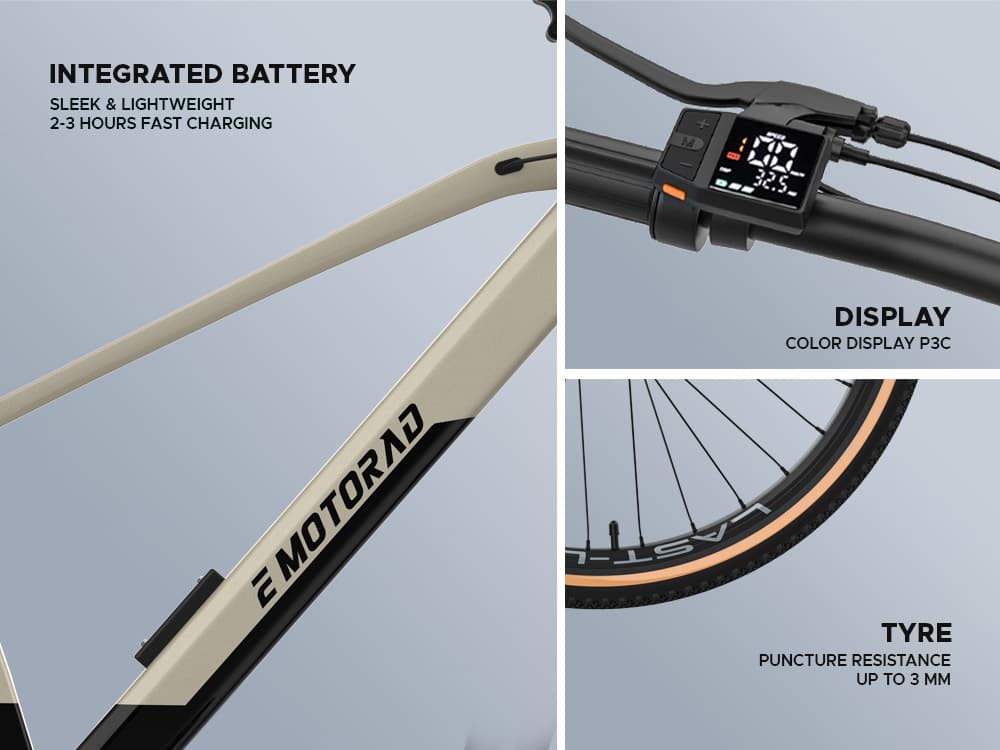
From an **electronics and battery management** perspective, the 36V, 5.2Ah (187.2Wh) Lithium-Ion battery is a core component. Its downtube mounting optimizes the center of gravity for improved handling dynamics, while its removable nature facilitates convenient charging and enhanced security. The integrated Battery Management System (BMS) is a critical safety and performance element, actively managing cell balancing and providing comprehensive protection protocols (over-voltage, under-voltage, over-current, short-circuit, over-temperature, and deep discharge). This ensures the battery's longevity, operational safety, and overall system reliability, paramount for a consumer-grade EV. Thermal management relies on passive cooling for the battery and air cooling for the motor, which are appropriate and efficient for this power output and application range.
The **range efficiency** of 22 km (PAS) and 20 km (Throttle) from a 187.2Wh battery translates to an average consumption of approximately 8.5 to 9.3 Wh/km. This efficiency is commendable for a recreational e-cycle, indicating well-tuned motor and controller interaction, allowing for adequate ride times within its target application without requiring a significantly larger battery capacity, which would add weight and cost. The rapid 2-3 hour charging time further enhances its practicality.
**Braking system dynamics** are handled by front and rear disc brakes. This choice offers superior stopping power and consistent performance compared to traditional rim brakes, especially beneficial in varying weather conditions or when unexpected stops are required. The inclusion of a motor cut-off safety feature, which disengages power upon brake activation, is a fundamental safety interlock ensuring immediate power cessation and preventing unintended propulsion during braking maneuvers, thereby augmenting rider control and safety, particularly for younger or less experienced riders.
Finally, the **suspension and wheel architecture** contribute significantly to ride quality. The 80mm travel front suspension fork effectively mitigates shocks from uneven surfaces, enhancing rider comfort and control on light trails or broken urban pavement. The 24-inch wheels, built with double-wall aluminum alloy rims, provide a robust and lightweight rotating assembly, while the Nylon/Tubed tires offer a good balance of grip and durability for general recreational use.