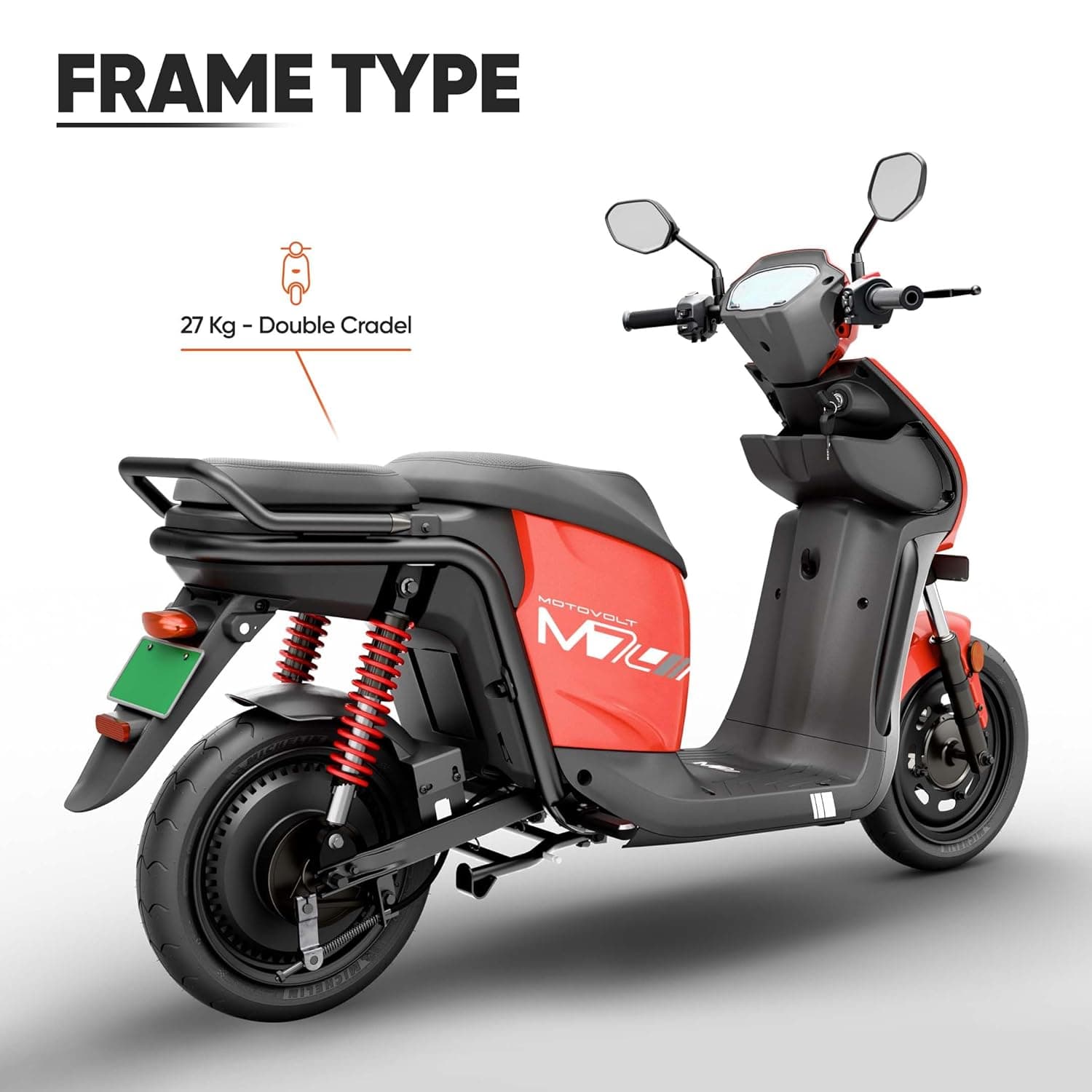
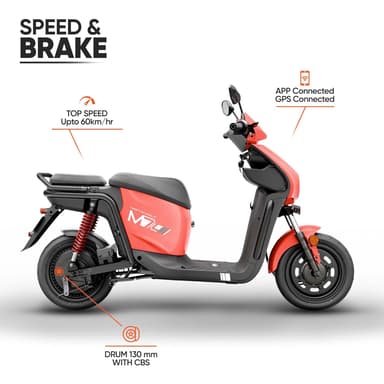
The Motovolt M7 Lite exhibits a well-considered engineering approach, beginning with its foundational 'MUSe Platform' Moped-Style Step-Through frame constructed from High Strength Steel. This design choice provides a low center of gravity and excellent torsional rigidity, crucial for managing the vehicle's approx. 100 kg weight and its substantial 180 kg payload capacity. The integration of full suspension, comprising a front telescopic fork and rear spring-loaded system, is vital for attenuating road irregularities common in urban environments, thereby improving rider comfort and vehicle dynamics, especially at the 60 km/h maximum speed.
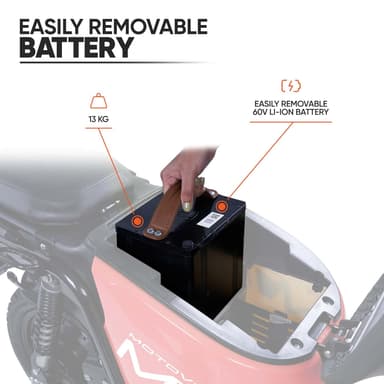
At the core of its propulsion system is a 2500W Brushless DC (BLDC) rear hub motor. This direct-drive configuration, characterized by 120Nm of peak torque, offers immediate power delivery and high efficiency, translating into responsive acceleration. The single-speed, throttle-supported drivetrain simplifies operation and minimizes mechanical losses. The energy storage solution, a 48V, 1.5 kWh (1500Wh) Lithium Iron Phosphate (LFP) battery, is a strategic choice for its superior thermal stability, extended cycle life, and inherent safety advantages compared to other lithium-ion chemistries. The inclusion of a Battery Management System (BMS) with cell balancing and comprehensive protection features (over-voltage, under-voltage, over-current, short-circuit, over-temperature, deep discharge) ensures optimal battery health and operational reliability. The IDC range of 73 km, coupled with the 1.5 kWh capacity, implies an energy consumption rate of approximately 20.5 Wh/km, indicating reasonable efficiency for its power output and speed capabilities.
The braking architecture, featuring a front disc and rear drum brake setup, is complemented by regenerative braking, actively recovering kinetic energy to extend range and reduce wear on mechanical components. The motor cutoff on brake application enhances safety and control. Tubeless tires on steel/alloy rims provide resilience against punctures, contributing to reliability. Furthermore, the M7 Lite's advanced electronics suite, including a digital instrument cluster, Bluetooth connectivity, integrated GPS, OTA firmware updates, and cloud-based monitoring via the Motovolt App, represents a significant engineering effort in vehicle diagnostics, user interface, and overall smart mobility integration. This sophisticated ecosystem provides remote diagnostics, ride history access, and alert notifications, aligning with modern EV expectations for connectivity and user empowerment. Overall, the M7 Lite demonstrates a robust and intelligent engineering synthesis for its intended urban application.