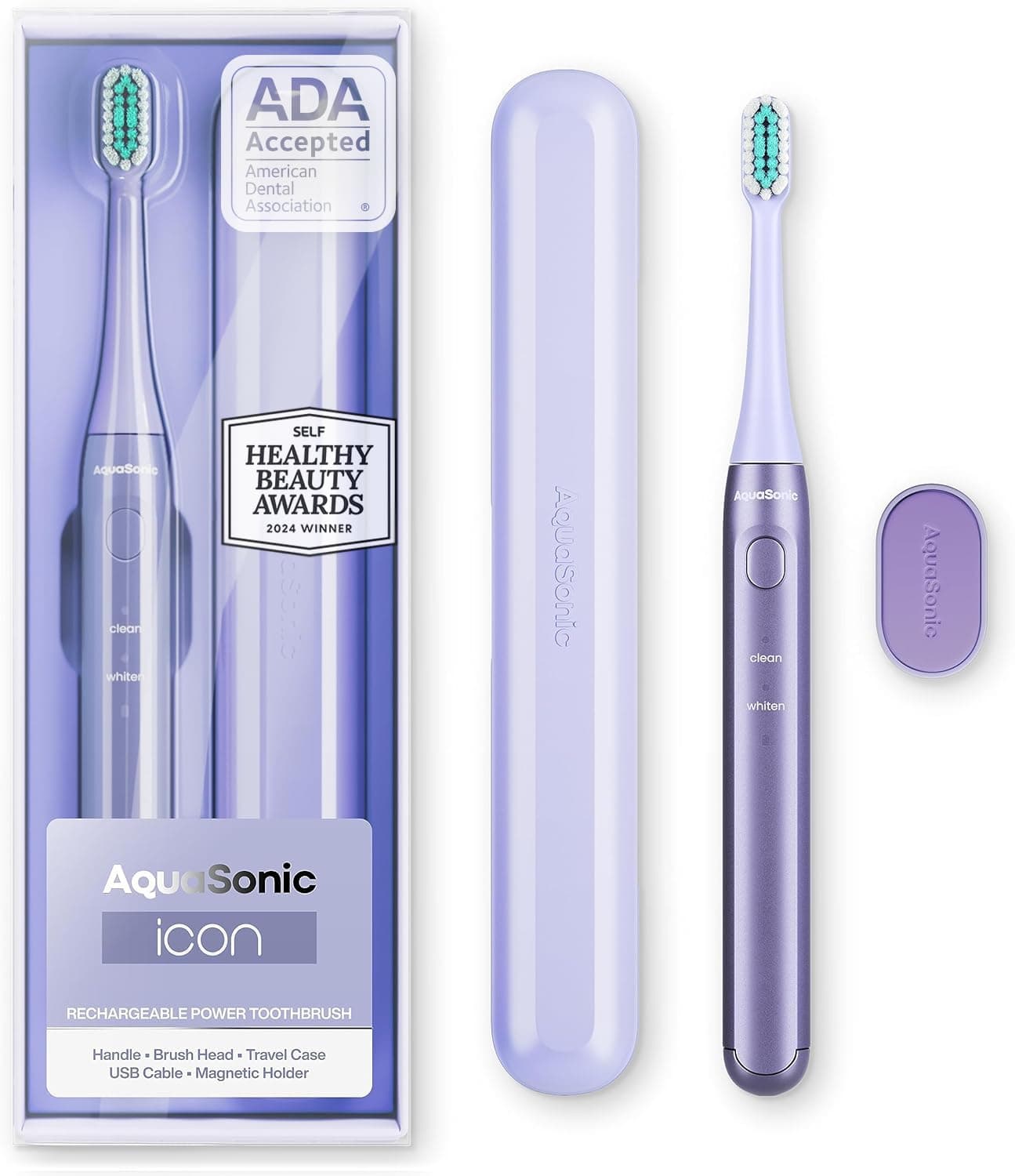
The Aquasonic Kids Electric Toothbrush Set employs a high-frequency sonic motor capable of generating 31,000 vibrations per minute, a critical technical specification for effective plaque disruption. This motor's architecture is designed to create hydrodynamic forces, driving fluid (saliva and toothpaste slurry) into interproximal spaces and along the gingival margin, where conventional bristles may not reach. The 'oscillation mode' specified, in conjunction with the sonic motor, indicates a sophisticated bristle movement pattern that combines high-frequency micro-vibrations with a defined lateral or sweeping motion, optimizing coverage and debris removal, distinct from pure rotary oscillation. The 'Soft nylon bristles' on a 'Compact Oval' head are mechanically calibrated to minimize abrasive potential while maximizing surface contact for plaque shear.
Technical safety and user guidance are integrated through a precise 2-minute auto shut-off timer and a QuadPacer, ensuring adherence to recommended brushing protocols and promoting uniform oral coverage. The 'Soft Start Technology' is an electromechanical design choice to gradually ramp up the motor's amplitude, mitigating initial sensory shock for children. With an 'IPX7' waterproof rating, the internal electronic components and motor assembly are sealed against water ingress, allowing for complete submersion and easy sanitation, thus extending device longevity in a moisture-prone environment. The power system is a 'Built-in rechargeable' battery, offering cordless operation and environmental sealing.
However, a notable engineering decision is the 'replaceable brush head: false' specification. This implies that the brush head is permanently affixed, requiring the replacement of the entire unit once the bristles wear, typically every 3 months. This design choice impacts sustainability and long-term user cost. The absence of a pressure sensor, while common in simpler children's models, means users must rely on tactile feedback to prevent excessive force, potentially leading to gingival abrasion if not properly supervised. The 'Moderate' plaque removal efficiency, while superior to manual, suggests the vibrational amplitude or bristle configuration is optimized more for gentleness than aggressive plaque biofilm disruption, which is appropriate for pediatric application but a technical trade-off.