

Related Products
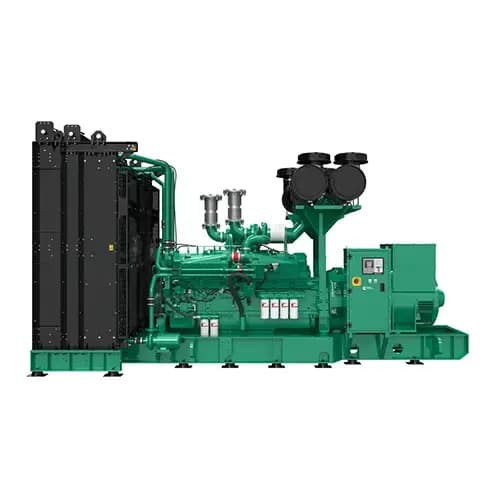
Cummins 1760 kVA Silent Diesel Generator (C1760D5) India
The Cummins C1760D5 is a powerhouse industrial diesel generator designed to tackle the most demanding power requirements in the Indian landscape. Delivering a rated power of 1760 kVA (approx. 1408 kW at a 0.8 power factor) and a maximum surge capacity of 1936 kVA, this DG set is engineered for high-availability sectors. In India, where grid reliability from DISCOMs like MSEDCL, BESCOM, or TNEB can falter during peak summer months or scheduled load shedding, this unit ensures a zero-gap power transition. It features the legendary 16-cylinder KTA50-G3 turbocharged engine, built at Cummins’ world-class facilities in Pune. This three-phase 415V AC output system is essential for heavy industrial motors, large-scale HVAC systems, and sophisticated data center racks that cannot afford even a millisecond of voltage drop. The generator is fully CPCB-II compliant, ensuring it meets India’s strict emission and noise regulations with a silent canopy producing only 75 dB at 1 meter. Safety is paramount, featuring earth leakage protection, over-temperature shutdown, and emergency stop controls. With a massive 1600L fuel tank and a consumption rate of 192 L/hr at full load, it offers over 8 hours of continuous operation, making it a reliable asset for hospitals, large commercial hubs, and manufacturing plants across Tier-1 and Tier-2 cities. The water-cooled 50.3L displacement engine is built to withstand high Indian ambient temperatures, while the brushless alternator with Class H insulation ensures long-term electrical reliability. Buying a Cummins unit in India means access to an extensive service network, ensuring that maintenance and spare parts are always within reach for mission-critical operations.
Quick Answer
Yes, for any Indian business where an hour of power cut costs lakhs of rupees, the Cummins C1760D5 is a high-value investment due to its low downtime, Pune-based service support, and high resale value.
In India, the silent canopy (75 dB) is the preferred choice for this kVA range because it complies with CPCB-II laws, allowing for installation near occupied buildings, whereas open-frame models are strictly limited to remote industrial outposts.
✓ Who Should Buy
- •This generator is primarily purchased by industrial plant managers, data center operators, large hospitals, and facility managers for high-rise commercial complexes who require multi-megawatt backup power.
✕ Who Should Avoid
- •Spaces or usage requirements exceeding residential rated capacity.
- •Installations prioritizing minimum capital expenditure over high-efficiency performance.
- •Unstable grid conditions exceeding the functional threshold of Standard power cycle.
- •Environments incompatible with generators physical and thermal dissipation specs.