

Related Products
Eon LX Specifications, Features & Compatibility Guide
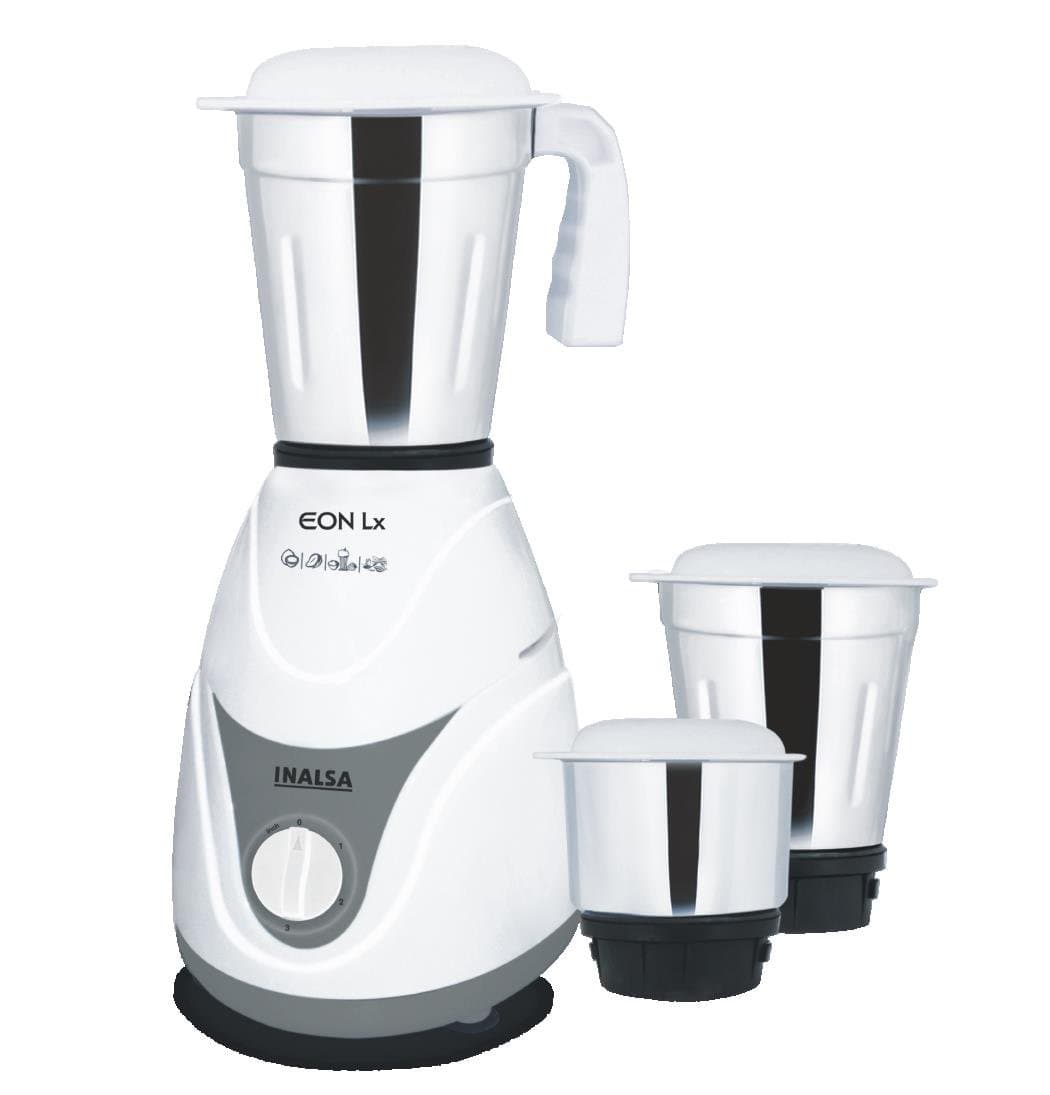
The Inalsa Eon LX 550 W 3-jar mixer grinder delivers efficient performance with its 18000 RPM motor designed for high-speed grinding tasks.This 3 jar mixer grinder simplifies wet grinding for dosa and idli batter while managing dry spice grinding for masalas with ease.
Quick Answer
Yes, the Inalsa Eon LX 550 W is an excellent purchase for most Indian households seeking reliable performance. Its 18000 RPM motor ensures efficient grinding of wet and dry ingredients, from idli batter to tough spices, without issues. With BEE-rated efficiency, it balances powerful operation with reduced long-term running costs, making it a smart, durable kitchen investment.
Choose the Inalsa Eon LX for its consistent, BEE-rated efficiency in residential Indian kitchens, effortlessly handling everyday grinding from masalas to batters. Skip it if your needs surpass typical home use or if initial low cost trumps long-term performance and efficiency benefits.
✓ Who Should Buy
- • performance suitable for residential spaces.
- •Verified efficiency of standard rating for reduced long-term operational costs.
- •Structural stability for consistent cleaning under rigorous use cases.
- •Hardware durability via premium components and advanced technology.
- •Built-in grid protection with Standard power cycle voltage management.
✕ Who Should Avoid
- •Spaces or usage requirements exceeding residential rated capacity.
- •Installations prioritizing minimum capital expenditure over high-efficiency performance.
- •Unstable grid conditions exceeding the functional threshold of Standard power cycle.
- •Environments incompatible with mixers physical and thermal dissipation specs.
| Country Of Origin | India |
| Brand | Inalsa |
| Model | Eon LX |
| Type | Mixer Grinder |
| Color | White/Grey |
| Launch Year | 2023 |