

Related Products
MyMix Specifications, Features & Compatibility Guide
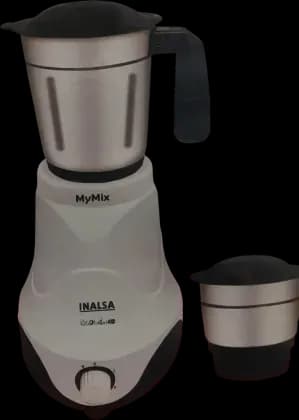
The Inalsa MyMix 550 W 2-jar mixer grinder delivers consistent performance with its high-torque 18000 RPM motor designed for rapid food preparation.
Quick Answer
You should buy the Inalsa MyMix 550 W mixer grinder if you need a high-performance unit for daily Indian cooking. Its 18000 RPM motor efficiently handles both wet grinding for idli/dosa and dry spice preparation, making it ideal for diverse culinary tasks. Verified BEE efficiency translates to lower long-term operational costs, and its robust design ensures durability for consistent use in a typical Indian household.
The Inalsa MyMix 550 W is an excellent fit for residential users seeking a high-efficiency mixer grinder for daily Indian cuisine. Avoid if your usage demands exceed typical home capacity or if initial capital expenditure trumps long-term power savings from its BEE-rated performance.
✓ Who Should Buy
- • performance suitable for residential spaces.
- •Verified efficiency of standard rating for reduced long-term operational costs.
- •Structural stability for consistent cleaning under rigorous use cases.
- •Hardware durability via premium components and advanced technology.
- •Built-in grid protection with Standard power cycle voltage management.
✕ Who Should Avoid
- •Spaces or usage requirements exceeding residential rated capacity.
- •Installations prioritizing minimum capital expenditure over high-efficiency performance.
- •Unstable grid conditions exceeding the functional threshold of Standard power cycle.
- •Environments incompatible with mixers physical and thermal dissipation specs.
| Country Of Origin | India |
| Brand | Inalsa |
| Model | MyMix |
| Type | Mixer Grinder |
| Color | White/Blue |
| Launch Year | 2023 |