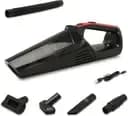
The suction pressure in this device is generated by a 120W universal motor spinning at high RPMs to create a vacuum of 5000 Pa. In engineering terms, this suction level represents the static pressure capability of the unit, which is optimized for lifting loose particles from upholstery and hard surfaces. While 5000 Pa is lower than heavy-duty corded canisters, the motor-to-airway ratio is tuned to maximize airflow velocity through the narrow attachments. This ensures that even heavy particles like sand or food crumbs are accelerated into the 0.35 L dust bin. The balance between motor power and battery draw allows for consistent performance throughout the 22-minute operating cycle.
The filtration architecture utilizes a 1-stage HEPA system that serves as both the primary barrier and the fine particle trapper. This high-efficiency particulate air filter is designed to intercept 99.97% of particles as small as 0.3 microns, including common Indian pollutants like road dust and construction soot. Because the filter is washable, the airflow resistance caused by dust accumulation can be mitigated by regular rinsing under tap water. This engineering choice is vital for Indian conditions where high dust density can quickly clog disposable filters. The bagless assembly ensures that centrifugal force keeps larger debris away from the HEPA surface to maintain suction.
Powering the 120W motor is a lithium-ion battery array designed for a 22-minute continuous runtime. The 7.4V system employs a CC-CV (Constant Current-Constant Voltage) charging protocol to ensure the cells reach their full capacity safely over a 3-hour charging window. For Indian users, this runtime is sufficient for targeted cleaning of a car interior or a large sofa set. The motor controller is calibrated to provide a flat discharge curve, meaning the suction does not significantly drop as the battery depletes. Users should avoid complete discharge to extend the life of the cells, given the high current draw of the 120W universal motor.
Since this is a dry-only unit, the internal airflow path is optimized for maximum static pressure without the turbulence-inducing baffles required in wet-dry models. The 0.35 L bagless bin utilizes a cyclonic separation principle to keep fine dust away from the HEPA filter for as long as possible. This dry-specific engineering ensures that the 120W motor does not suffer from moisture-induced corrosion, which is a common failure point in budget hybrid cleaners. For Indian households, this focus on dry performance means better extraction of fine road dust and flour-like particles from kitchen shelves. The absence of a wet-valve also allows for a more compact and lightweight 0.5 kg chassis.
While the unit does not include a blower function, it compensates with specialized attachments like the flat mouth nozzle and brush. These tools are engineered to concentrate the 5000 Pa of suction into a high-velocity stream, which is technically more effective for lifting dust from AC vents and computer keyboards than a low-pressure blower would be. The brush attachment uses soft nylon bristles to agitate dust without scratching delicate electronics or polished furniture surfaces. This mechanical agitation is crucial for cleaning the deep grime often found in window tracks and balcony door sliders in urban Indian apartments. The design prioritizes intake velocity over exhaust output for superior debris collection.
The chassis is constructed from high-grade ABS plastic, achieving a total weight of just 0.5 kg. This lightweight engineering reduces user fatigue during extended cleaning sessions of AC vents or high shelves. The ergonomic handle is positioned to align the center of gravity with the user's wrist, providing better control when navigating tight spots. While the device lacks a warranty, its simplified internal layout with fewer moving parts minimizes potential failure points. The compact footprint makes it easy to store in utility closets or under car seats. Ultimately, the 120W Hand held provides a specialized, high-density cleaning solution for modern urban Indian households.