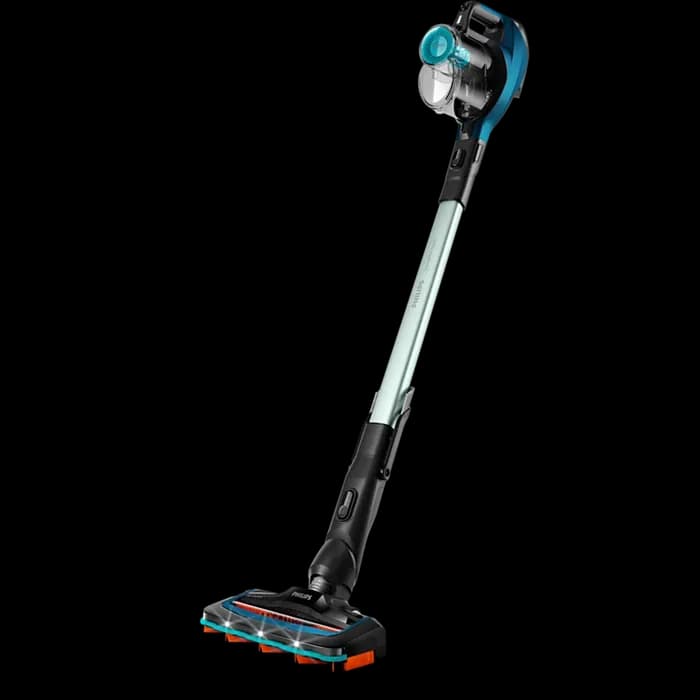
The 120W brushless DC motor is engineered to spin at high RPMs, creating a pressure differential that generates 21000 Pa of static suction. This high suction-to-power ratio is achieved by minimizing internal air resistance through a streamlined airway design. While large corded canisters prioritize high airflow for wide floors, this cordless handheld vacuum cleaner optimizes static pressure to pull debris from narrow gaps and textile fibers. This makes the device particularly effective for heavy particles like sand or metal shavings, though the compact motor size means it is best utilized for targeted spot cleaning rather than entire floor surfaces.
The filtration architecture employs a 3-stage HEPA system designed to capture particles as small as 0.3 microns. The first stage involves a primary mesh to catch larger debris like hair and lint, while the secondary cyclonic stage separates heavier dust from the air stream. The final HEPA stage ensures that fine PM2.5 particles are trapped before air is exhausted back into the room. Because Indian homes face high levels of ambient road dust, the washable construction of these filters is vital for maintaining performance. Rinsing the filter prevents the 21000 Pa suction from dropping due to particulate clogging over time.
Power management is handled by a lithium-ion battery array designed for consistent discharge throughout the 20-minute runtime. The 120W motor draws significant current, necessitating a sophisticated thermal management system to prevent overheating during continuous use. Charging utilizes a CC-CV protocol over a 3-hour period to maximize battery longevity. For Indian users, this runtime is sufficient for cleaning a car interior or a 2BHK sofa set in one session. It is advisable to allow the unit to cool before initiating the charging cycle to ensure the battery cells maintain their chemistry and capacity over several years of frequent usage.
The wet and dry separation mechanism is designed with an internal baffle that prevents liquid from entering the motor housing during light spill recovery. While the 0.18 L bagless dust bin is compact, it is partitioned to manage small amounts of liquid alongside dry debris. Users must ensure the bin is emptied and the internal components are dried thoroughly after vacuuming liquids to prevent mold growth or odor. This dual-functionality is particularly useful in Indian kitchens for cleaning spilled tea or wet food crumbs, provided the volume does not exceed the internal safety threshold of the collection chamber.
Unlike standard vacuum cleaners, this model includes a blower function that reverses the airflow to dislodge dust from areas where suction cannot reach. The technical mechanism redirects the high-speed exhaust air through a narrow nozzle, creating a concentrated stream for cleaning delicate electronics or AC vent fins. In the context of Indian homes, this is an essential tool for clearing dust from window tracks and balcony door sliders where fine silt accumulates daily. By using the blower before the suction mode, users can bring hidden debris to the surface for more effective removal, maximizing the utility of the device.
The chassis is constructed from high-impact ABS plastic, contributing to the light 0.5 kg weight without sacrificing structural integrity. This ergonomic design focuses on a balanced center of gravity, reducing wrist strain during extended overhead cleaning of ceiling fans or curtain rods. The parking position and compact footprint allow it to be stored in kitchen drawers or car glove compartments easily. The internal seals are precision-fitted to prevent vacuum leaks, ensuring that the motor power is translated directly into cleaning performance. Ultimately, the 21000pa High Power Suction Household Small Vacuum Cleaner Air Pump offers a robust mechanical solution for modern urban maintenance needs.