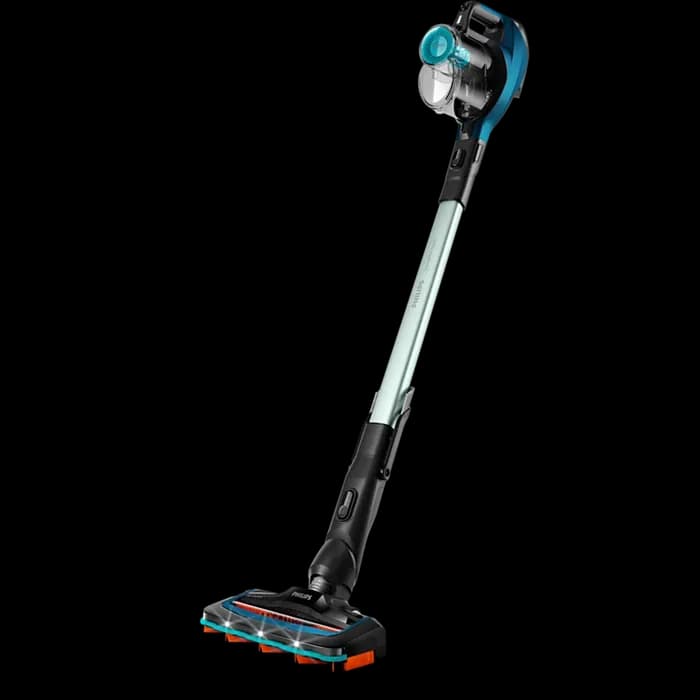
The suction architecture of this unit relies on a 180 W copper universal motor designed to balance torque with energy efficiency. By optimizing the motor-to-airway ratio, the engineering team has achieved a consistent 4500 Pa of pressure, which is specifically tuned for surface-level debris rather than deep carpet extraction. In the context of Indian road dust, which is often heavy and granular, the static pressure generated is sufficient to lift particles from hard surfaces and car mats without overheating the internal components. This specific power rating ensures that the device maintains performance throughout the discharge cycle without significant airflow drops.
The filtration system utilizes a 1-stage HEPA arrangement that is critical for managing the fine PM2.5 particles prevalent in Indian metropolitan areas. This washable filter is designed to trap dander, pollen, and microscopic dust, preventing the motor from exhausting allergens back into the breathing zone. By using a single-stage high-efficiency particulate air design, the unit maintains a high airflow rate while protecting the internal copper motor from abrasive grit. For users in dusty environments like Delhi or Mumbai, the ability to wash and reuse the filter is a vital cost-saving feature that prevents the suction degradation typically seen in non-HEPA models.
Power management is handled by a 7.4 V cell configuration that supports a runtime of up to 45 minutes, a rarity in the sub-1kg category. The system employs a CC-CV charging protocol via a 3.6-hour cycle, which helps preserve the lithium-ion chemistry against the heat fluctuations common in Indian summers. The engineering trade-off here favors extended duration over extreme peak suction, making it more practical for cleaning a full car interior or multiple pieces of furniture on a single charge. Users should note that the efficiency of the power draw is maximized when the filter is kept clean, ensuring consistent voltage to the motor.
Although this unit is categorized for dry use, its internal housing features a baffle design that prevents dust from migrating toward the motor cooling vents. The bagless dust collection system is designed for quick emptying, catering to the high-volume dust loads often encountered in Indian 1BHK and 2BHK apartments. While it lacks a wet-separation mechanism, the seal integrity around the dust cup ensures that fine soot from incense or kitchen grime does not leak into the internal circuitry. This mechanical isolation is essential for the long-term durability of the 180 W motor, especially when used in high-humidity coastal regions.
The blower function is a standout technical feature that differentiates this model from suction-only portables. It works by redirecting the motor's exhaust through a concentrated nozzle, creating a high-velocity air stream capable of dislodging grime from AC vents or keyboard switches. In an Indian context, this is particularly useful for cleaning ceiling fan hubs or window tracks where suction brushes cannot reach. The transition between vacuuming and blowing is seamless, reflecting a chassis design that prioritizes multi-functional utility. This dual-path airflow engineering maximizes the utility of the 180 W motor beyond simple debris collection.
Constructed from high-grade ABS plastic, the chassis weighs only 0.5 kg, ensuring that the center of gravity sits directly under the handle for better ergonomics. This design reduces wrist strain during extended sessions, such as cleaning overhead AC filters or deep sofa crevices. The handle is textured to provide a secure grip even in humid conditions, while the overall compact footprint allows for easy storage in a car glove box or kitchen drawer. Every attachment, from the brush to the flat lance, is engineered for a friction-fit that maintains airtight integrity, concluding that the 2 in 1 Car Vacuum Cleaner pack of 5 is a robust solution.