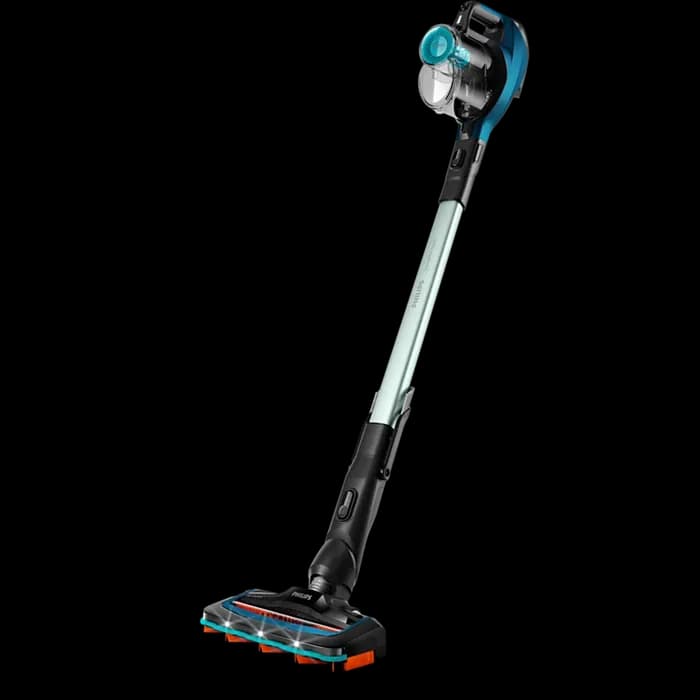
The suction profile of this unit is driven by a 700 W universal motor designed to produce 14 Pa of static pressure. In the context of handheld engineering, this involves a carefully calibrated motor-to-airway ratio that prioritizes high-velocity airflow over extreme vacuum pressure. This design allows the machine to lift fine particulate matter like silica dust without the thermal overhead typical of larger, higher-wattage motors. By optimizing the internal fan blade pitch, the engineering team has managed to keep the unit at a manageable 1.8 kg while maintaining consistent suction. It is particularly effective for non-porous surface maintenance across urban Indian homes.
The filtration architecture centers on a 1-stage WASHABLE_HEPA_FILTER system that is crucial for maintaining air quality indoors. This single-stage filter is engineered to capture microscopic particles including pet dander and pollen, which are prevalent in Indian cities. The washable nature of the filter is a specific nod to the high-dust environment of India, allowing users to restore suction power by simply rinsing the element under a tap. This eliminates the need for expensive replacement filters, making the maintenance cycle highly cost-effective for daily users. The seal integrity around the filter housing prevents bypass air from re-entering the living space.
The power system utilizes a battery configuration that supports a 30-minute continuous runtime, which is a significant feat for a 700 W motor. Charging is managed via a CC-CV (Constant Current-Constant Voltage) protocol, requiring 3-4 hours for a full cycle from depletion. This duration reflects the balance between battery longevity and rapid availability. For Indian users, this means the device can handle a full car interior or a living room sofa set on a single charge. The engineering focus here is on steady voltage discharge to ensure suction does not drop as the battery nears its final five percent of capacity.
The 0.6 L bagless dust bin is designed with a cyclonic separation logic, even within its compact 1-stage system. By forcing air into a vortex upon entry, heavier debris is pushed toward the outer walls of the bin, preventing it from clogging the HEPA filter prematurely. This design is particularly beneficial when dealing with larger debris like food crumbs or loose carpet fibers. The translucent material of the bin allows for immediate visual confirmation of the fill level, which is essential given the 85 dB noise level indicates high-performance air movement. Emptying is a simple one-click process for hygienic disposal.
In terms of versatility, the 3-in-1 architecture replaces the need for separate tools for floors, upholstery, and crevices. The detachable wand converts the unit from a floor-capable cleaner to a tight-space specialist in seconds. This mechanical flexibility is achieved through a friction-fit locking system that maintains an airtight seal across all attachments. While it lacks a blower, the suction pathway is optimized to maintain the 14 Pa pressure regardless of the attachment used. This ensures that even at the end of the crevice tool, the velocity is high enough to dislodge grime from sliding window tracks and keyboard gaps.
The chassis is constructed from high-impact ABS plastic, providing a balance between durability and the 1.8 kg lightweight requirement. The ergonomic handle is positioned to align the center of gravity with the user's wrist, reducing the torque felt during overhead cleaning of fans or curtains. This structural design makes the unit accessible to elderly users or those with wrist strain issues common in heavy cleaning tasks. Every component, from the floor brush to the motor housing, is built to withstand the humid conditions of coastal India. Ultimately, the 3 in 1 Design for Versatile Cleaning,Lightweight Body for Easy Cleaning excels through thoughtful, focused industrial design.