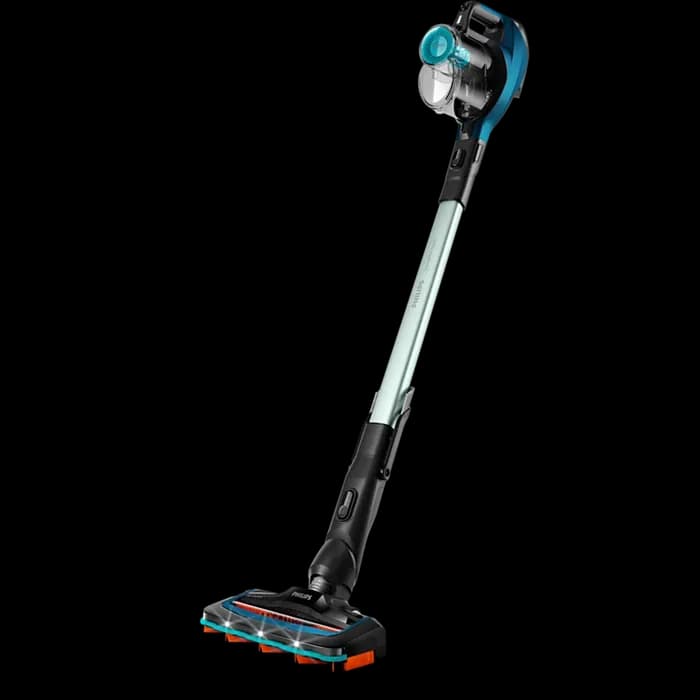
The suction pressure of 7000 Pa is generated via a high-speed brushless DC motor, designed to balance static pressure and airflow volume. In an engineering context, this pressure level is specifically tuned for surface-level debris removal on hard floors like marble and wood. Unlike high-wattage corded units that rely on raw power, this device uses a streamlined airway path to minimize vacuum loss. This makes it ideal for lifting road dust and hair, though it may struggle with deep-pile carpet extraction. The motor-to-airway ratio ensures that the unit maintains consistent performance throughout the discharge cycle of the lithium-ion battery cells.
The filtration architecture utilizes a 2-stage HEPA system that serves as a critical barrier against PM2.5 particles. The primary stage captures larger debris such as hair and grit, while the secondary HEPA element traps microscopic allergens as small as 0.3 microns. Because the filter is washable, Indian users can maintain high airflow even in dusty environments without frequent part replacements. This design is essential for households with pets, as it prevents the characteristic 'dusty smell' associated with non-HEPA vacuums. The sealed system ensures that captured dust is directed straight into the 2.5 L bagged self-emptying station.
Powering this unit is a multi-cell battery pack that provides up to 180 min (Quiet Mode) of runtime. The engineering team employed a CC-CV (Constant Current-Constant Voltage) charging protocol to manage the approx. 4 hours recharge cycle, which helps in extending the overall lifecycle of the battery in hot Indian climates. The discharge rate is carefully regulated to prevent thermal throttling, ensuring that suction does not drop as the battery nears depletion. For typical Indian use cases like car detailing or sofa cleaning, this runtime allows for deep-cleaning sessions that would normally require a corded appliance, offering significant mechanical freedom.
The wet and dry separation mechanism is built around a dedicated baffle design that prevents liquid ingress into the motor housing. With a mopping pad attachment, the device transitions from a suction tool to a hard-floor maintenance system. The internal fluid management ensures that moisture is localized to the mopping cloth rather than the main dust path. This is particularly effective for cleaning sticky spills on kitchen tiles or muddy footprints in the foyer during the monsoon. Users must ensure the moisture-sensitive components are dried post-use to maintain the integrity of the 2-stage HEPA filter system.
The accessory suite, including side brushes and a cleaning tool, is engineered for edge-to-edge cleaning performance. The side brushes rotate to flick dust from wall corners and furniture legs into the central suction path. The noise level is dampened to 72 dB through internal acoustic foam and a precision-balanced motor, making it quieter than traditional Indian upright vacuums. These attachments are constructed from high-density ABS plastic to withstand the mechanical stress of daily use. Each component is designed for quick-release, allowing for fast transitions between floor mopping and handheld upholstery cleaning tasks without tools.
Structurally, the chassis is balanced at 3.5 kg to provide enough downward pressure for effective mopping while remaining maneuverable for handheld car cleaning. The ergonomic handle design reduces wrist strain during extended 180-minute sessions. The integration of a 2.5 L self-emptying bagged system is the standout engineering choice, as it removes the messiest part of vacuum ownership—manual bin emptying. By automating the transfer of dust to a sealed bag, the system minimizes allergen exposure for the user. Ultimately, the auto bin turbo represents a thoughtful integration of high-capacity storage and cordless mobility for the modern consumer.