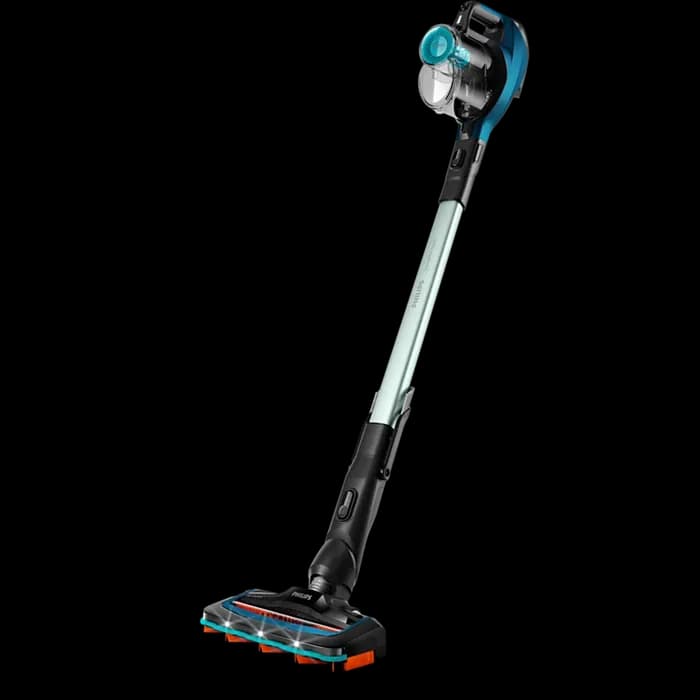
The suction engineering of this device relies on a 120 W brushless DC motor designed to maximize static pressure. By spinning at high RPMs within a tight internal housing, it generates a vacuum of 21000 Pa. This specific engineering choice prioritizes lift over high-volume airflow, making it exceptionally efficient at pulling heavy particles like road grit or fine sand from car floor mats. In the Indian context, where fine dust is pervasive, this high static pressure ensures that debris is pulled from the depths of fabric weaves rather than just surface-level sweeping. This motor-to-airway ratio is optimized for targeted heavy-duty tasks.
The filtration architecture utilizes a 3-stage HEPA system to ensure exhaust air remains clean. The first stage consists of a coarse mesh to catch hair and large debris, followed by a middle foam layer that protects the HEPA element. The final HEPA stage is rated to capture microscopic particles including PM2.5 and common allergens found in urban Indian households. Because the entire assembly is washable, users can maintain peak suction performance without the recurring cost of replacement filters. This is vital for maintaining the 21000 Pa efficiency when dealing with oily kitchen soot or fine construction dust.
Powering the unit is a lithium-ion battery system configured for a 20-minute continuous runtime. The 120 W motor draw is balanced against cell capacity to provide a consistent discharge curve, ensuring suction does not drop significantly as the battery depletes. Charging is managed via a CC-CV protocol taking approximately 3 hours to reach full capacity. For Indian users, this runtime is ideal for a single-session cleaning of a car interior or a living room sofa set. The battery management system includes thermal protection to prevent overheating during high-intensity use in warmer tropical climates common in Indian cities.
The wet and dry separation mechanism is engineered with an internal baffle system that redirects liquid flow away from the motor intake. While the 0.18 L bin is primarily designed for dry debris, the moisture-resistant seals allow it to safely ingest small liquid spills, such as spilled tea or condensation from AC vents. This versatility is crucial for car maintenance where beverage spills are common. However, the compact bin size requires immediate emptying after wet use to prevent moisture from reaching the secondary filter layers. This dual-capability engineering adds a layer of protection against accidental motor failure during multi-purpose cleaning.
The blower function is a mechanical bypass that reverses the airflow path, exiting through a specialized air blast nozzle. This is not a software-simulated feature but a physical architectural shift that focuses the 120 W motor output into a high-velocity stream. In Indian households, this is specifically effective for clearing dust from window tracks, sliding door channels, and deep within computer keyboards where suction heads cannot reach. By utilizing the same motor for both suction and blowing, the engineering provides a 2-in-1 tool profile without increasing the overall 0.5 kg weight of the chassis, maximizing mechanical efficiency.
Constructed from high-impact ABS plastic, the chassis is designed for durability while maintaining a low mass of 0.5 kg. The ergonomic handle is positioned to align the center of gravity with the user's wrist, reducing fatigue during extended overhead tasks like cleaning ceiling fan edges or high AC vents. The nozzle attachments, including the long suction tube and brush, use a friction-fit seal to maintain the integrity of the vacuum seal. Every component in the Cordless 3 in 1 Car Vacuum Cleaner with Blower Battery is designed to sustain high-pressure performance in a portable frame, ensuring long-term structural reliability for the consumer.