The suction pressure engineering of this unit is centered on an optimized 60 W high speed motor that generates 18,000 Pa of static lift. Unlike high-wattage corded motors that rely on brute force, this system utilizes a precision-balanced impeller to maximize the motor-to-airway ratio. This configuration creates high velocity at the nozzle head, which is ideal for lifting fine silty dust common in Indian cities without excessive power draw. The balance between static pressure and airflow ensures that the motor remains cool during the massive 297-minute runtime, effectively extending the service life of internal components compared to less efficient designs.
The filtration architecture employs a 3-stage-stage HIGH_EFFICIENCY_FILTER system designed specifically for microscopic particulates. The first stage uses a mesh shroud for large debris, the second involves a foam layer for mid-sized dust, and the final stage captures PM2.5 particles that trigger allergies. Because the entire assembly is washable, it prevents the bacterial growth often found in non-washable filters used in humid Indian coastal climates. This engineering choice prioritizes air quality and operational cost-efficiency, ensuring the unit maintains maximum airflow even after months of daily use in pet-heavy environments without requiring expensive proprietary replacements.
The battery and power system is engineered with a high-capacity cell configuration that supports a 297-minute continuous discharge. Utilizing a CC-CV (Constant Current-Constant Voltage) charging protocol, the system takes 5.5 hours to reach full capacity, which manages heat dissipation effectively to prevent lithium-ion degradation. For Indian users, this means the device can handle massive floor areas or repeated spot-cleaning sessions without hitting low-voltage cut-offs. The power management firmware regulates the 60 W draw to ensure consistent suction torque even as the battery percentage drops, providing linear performance throughout the cleaning cycle for better user predictability.
For wet and dry operations, the unit features a sophisticated separation mechanism within the Ozmo roller mop assembly. This baffle design prevents moisture from entering the 60 W motor housing, utilizing a gravity-fed water control system to dampen the roller without saturating the internal electronics. The 300 ml onboard bin is partitioned to prevent cross-contamination between dry dust and damp debris. Post-wet-use maintenance is simplified by the modular construction, allowing users to rinse the mop components quickly. This engineering ensures that the unit remains hygienic and free from the musty odors typically associated with hybrid cleaning appliances.
The inclusion of the Zerotangle 3.0 spiral brush reflects a mechanical solution to the common problem of long hair and fiber entanglement. The brush features specifically angled bristles and a dual-comb design that directs hair straight into the suction path rather than allowing it to wrap around the roller. This is particularly effective for Indian homes where long hair and carpet fibers frequently cause motor stalls in standard vacuums. By reducing mechanical resistance on the roller, the motor maintains higher RPMs, contributing to the overall efficiency of the 18,000 Pa suction and ensuring the pet hair tool functions at peak performance.
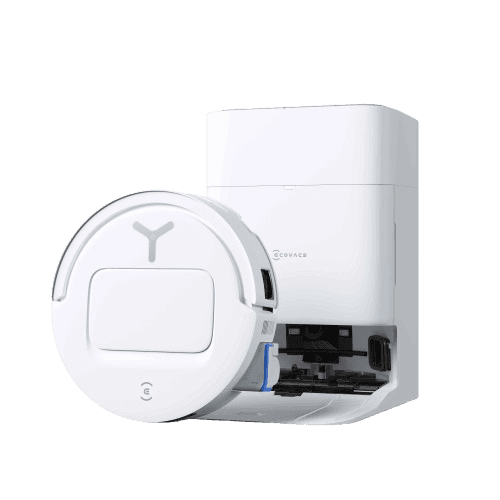
The chassis is constructed from high-grade ABS, balancing durability with a manageable 4.5 kg weight for a station-based system. The handle design and weight distribution are optimized for ergonomic movement across hard tiles and carpets, reducing wrist fatigue during manual spot-cleaning tasks. The integrated parking position at the OMNI station allows for seamless auto-emptying into the 3 L bag, minimizing user contact with allergens. Every structural joint is sealed to prevent suction leakage, ensuring that the deebot t80 omni operates as a closed-loop system for maximum hygiene and engineering reliability in demanding household environments.