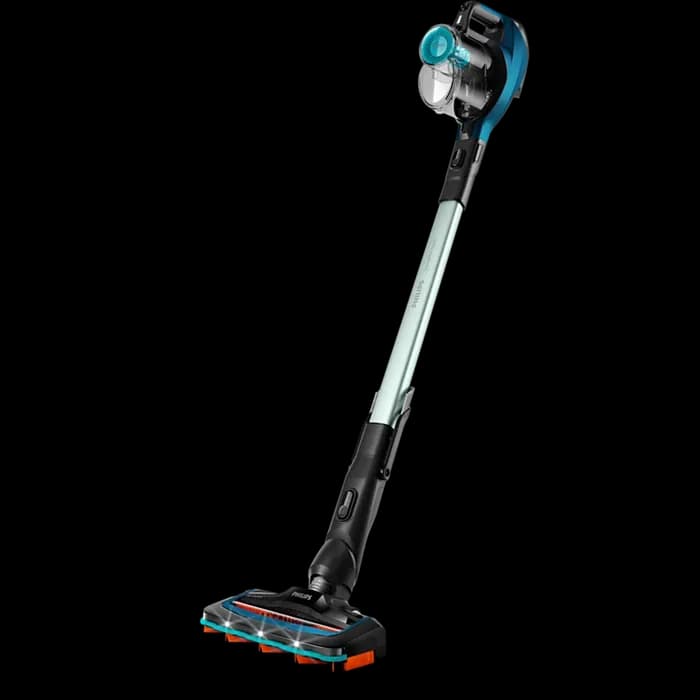
The suction pressure engineering of this unit relies on a high-speed 70 W DC motor designed to optimize static pressure within a compact 0.4 kg frame. By achieving 3000 Pa, the engineering team has balanced motor-to-airway ratios to ensure the velocity of air remains high enough to lift dense road dust and pet hair without overheating the internal circuitry. This suction level is specifically tuned for surface-level debris on non-porous and semi-porous materials like keyboards and sofa fabrics. While it lacks the high static pressure required for deep-pile carpet extraction, it excels in tasks where rapid airflow and portability are prioritized over sheer industrial-grade bulk.
The filtration architecture utilizes a 2-stage HEPA system that serves as the primary defense against fine particulate matter common in Indian cities. The first stage involves a mesh barrier that captures larger debris like hair and food crumbs, preventing the internal HEPA media from clogging prematurely. The second stage consists of a high-efficiency particulate air filter that traps 99.97% of particles as small as 0.3 microns, including dander and pollen. Because the construction is washable, the airflow remains unrestricted over time, provided the user performs regular maintenance. This design choice is critical for maintaining consistent suction performance in high-dust environments.
Powering this device is a battery system configured to provide a 25-minute runtime from a single 4.5-hour charge cycle. The 12V cell configuration utilizes CC-CV charging protocols to ensure battery longevity and prevent thermal runaway during the Indian summer. The 70 W motor draw is carefully managed by an internal controller that regulates power delivery as the battery voltage drops, ensuring that cleaning effectiveness does not sharply decline halfway through a session. For the typical 1BHK or 2BHK user, this runtime-to-power ratio is optimized for spot cleaning rather than continuous flooring duties, necessitating a disciplined charging habit.
The wet and dry separation mechanism is engineered with a specialized baffle design located before the 1 L bagged compartment. This internal geometry creates a vortex that separates liquid droplets and heavy debris from the primary airstream, directing them into the storage zone while protecting the motor from moisture ingress. This feature is particularly useful for cleaning up spilled tea or wet kitchen spills on granite countertops. However, users must ensure the bag and filter are thoroughly dried after wet use to prevent mold growth and maintain the structural integrity of the HEPA media, which is sensitive to prolonged dampness.
The inclusion of a dedicated pet hair tool and crevice nozzle expands the utility of the vacuum beyond simple suction. The pet hair tool uses mechanical agitation to lift stubborn fibers from velvet or linen upholstery, allowing the 3000 Pa suction to pull them into the bin. The crevice nozzle is designed with a narrow aperture to increase localized air velocity, making it capable of extracting grime from deep within AC vents or sliding window tracks. These attachments are constructed from reinforced ABS plastic, ensuring they do not crack or deform under the mechanical stresses of daily household cleaning in varied Indian climates.
From an ergonomic perspective, the chassis is crafted from high-impact ABS, keeping the total weight at a remarkable 0.4 kg. The handle design follows a neutral-grip geometry to reduce musculoskeletal strain on the forearm during overhead cleaning of fans or high shelves. The parking position is stable, and the balance point is centered over the motor housing to provide a weightless feel during operation. This focus on industrial design and physical ease of use concludes that the Dura Clean 3000PA is a technically sound investment for users who prioritize mobility and targeted cleaning power for modern Indian living spaces.