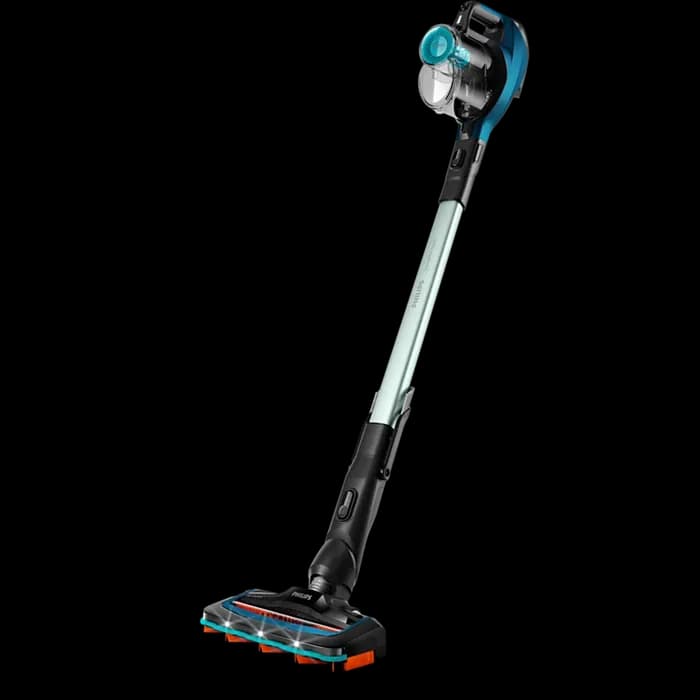
The suction engineering of this cordless handheld vacuum cleaner relies on an 800 W motor designed to optimize the motor-to-airway ratio. By generating 8000 Pa of static pressure, the unit creates a localized vacuum seal against surfaces, which is essential for lifting fine silica dust common in Indian cities. The engineering trade-off prioritizes high-velocity airflow over extreme vacuum depth, making it ideal for surface-level debris and fabric extraction. This pressure level ensures that heavy particles are accelerated into the dust chamber without clogging the intake path, maintaining efficiency throughout the 10-15 minute operating window.
Filtration architecture utilizes a single-stage BAG_FILTER system that acts as both a primary debris catcher and a fine particle barrier. The bag's fabric density is calibrated to capture common household allergens and dander while maintaining enough porosity to allow high-volume exhaust. For the Indian context, where dust loads are significantly higher than in European markets, this washable bag construction is vital. It prevents the rapid motor overheating that often occurs in cyclonic systems when fine road dust bypasses substandard filters, ensuring the internal components remain protected from abrasive grit during daily use.
The power system is engineered for high-current discharge to support the 800 W draw within a compact form factor. While the 10-15 minute runtime may seem limited, it is a deliberate engineering choice to maximize suction pressure without adding the weight of a larger battery array. This CC-CV charging compatible logic ensures that the lithium cells are protected against voltage spikes, which is a common concern in Indian residential electrical grids. Users benefit from a consistent power curve where the suction remains steady until the battery reached its lower voltage cutoff point.
Dust management is handled by a 0.8 L bagged chamber, designed to provide a physical barrier between the motor and the collected waste. Unlike bagless models that can leak fine dust during the emptying process, the bagged system ensures that allergens remain contained, which is a significant advantage for mattress and upholstery cleaning. The airflow within the chamber is designed to compress the dust towards the rear of the bag, preventing premature suction loss as the bag fills. This mechanical separation ensures the motor receives clean cooling air even when the bag is near capacity.
Unique to this model is the integrated blower function, which redirects the motor's exhaust through a specialized blower adapter. This technical mechanism converts the 800 W output into a high-speed air jet, capable of clearing grime from AC vent fins and deep-seated dust from mechanical keyboards. In Indian households, where dust often cakes onto surfaces due to high humidity, the ability to blast air into tight crevices before vacuuming provides a two-step cleaning solution that pure-suction models cannot match. This dual-path airflow design maximizes the utility of the internal turbine.
The chassis is constructed from high-grade ABS plastic, achieving a lightweight 1.7 kg profile that reduces wrist strain during overhead cleaning of fans or curtains. The handle design follows ergonomic principles that place the center of gravity directly over the palm, enhancing maneuverability in the tight spaces of a car interior. The inclusion of a parking position and a compact attachment storage system reflects a design focus on the space constraints of urban apartments. Ultimately, the easy clean nxt is engineered as a precision tool for targeted, high-intensity cleaning tasks that demand mobility and power.