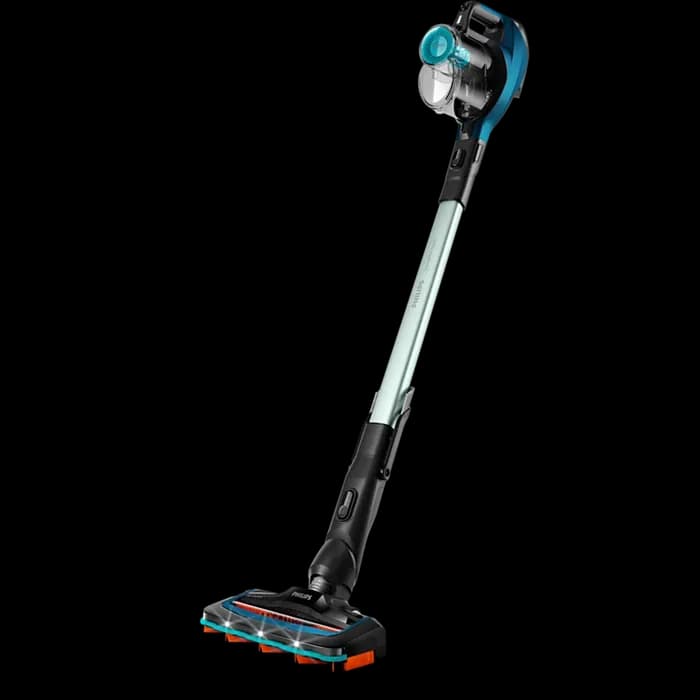
The suction pressure of 8000 Pa is generated by a high-speed 120 W dc motor that optimizes the motor-to-airway ratio for peak static pressure. This configuration prioritizes the lift of heavier particulates like grit and spilled food over sheer air volume, making it effective for localized spot cleaning. While the static pressure is sufficient for surface-level debris on upholstery and car mats, the 120W draw is balanced to prevent overheating during continuous use. This specific engineering choice ensures that the motor maintains a consistent vacuum seal against surfaces, which is critical for extracting fine road dust from textile fibers in Indian environments.
Filtration architecture is centered on a 1-stage HEPA system designed to capture microscopic particles as small as 0.3 microns. Unlike multi-stage systems that increase bulk, this streamlined design uses a high-density pleated media that captures pet dander, pollen, and dust mites effectively. The washable construction is particularly relevant for Indian users facing high daily dust loads, as it allows for the restoration of airflow through simple water rinsing. By maintaining a clean filter, users ensure that the motor does not undergo unnecessary strain, thereby extending the operational lifespan of the internal components and maintaining filtration efficiency over time.
Power management is handled by a 12 V cell configuration that utilizes a CC-CV charging protocol via a 2-hour rapid charger. This system balances a 30-minute runtime against a high motor draw, providing a stable voltage curve that prevents suction drop-off as the battery depletes. For the Indian user, this runtime is sufficient for cleaning a car interior or sanitizing furniture in a standard 2BHK. The lithium chemistry is shielded by a thermal protection circuit, ensuring safety during the high ambient temperatures common in the region. This engineering approach focuses on maximizing power density within a compact, lightweight 0.45 kg chassis.
The wet and dry separation mechanism employs a physical baffle design within the 1 L bagless container to prevent moisture from entering the motor housing. While the total bin capacity is 1 liter, the effective liquid limit is lower to ensure motor protection during spills. Post-wet-use maintenance is critical; the washable HEPA filter and the dust bin must be fully dried to prevent mildew and maintain suction integrity. This dual-purpose engineering allows the device to transition from dry dusting of AC vents to clearing liquid spills on kitchen countertops, providing a hybrid utility that reduces the need for multiple cleaning tools.
Specific attention has been given to the tool interface, where the pet hair tool utilizes friction-based agitation to lift stubborn fibers. Unlike motorized brushes that require more power, this passive tool leverages the 8000 Pa suction to pull hair directly into the bin. This is highly effective for cleaning fine pet hair from sofas or car upholstery without the mechanical complexity of rotating parts. The lack of a blower function is compensated by the concentrated airflow of the crevice tool, which is engineered to dislodge dust from keyboards and narrow gaps through high-velocity intake, focusing strictly on debris extraction rather than redistribution.
The chassis is constructed from high-impact ABS plastic, achieving a total weight of only 0.45 kg. This lightweight build utilizes an ergonomic handle design that places the center of gravity near the palm, reducing wrist fatigue during overhead cleaning of curtain rods or AC vents. The parking position and compact dimensions allow for easy storage in car glove compartments or kitchen drawers. Every structural component is engineered to withstand the vibrations of the 120W motor while maintaining a sealed air path for maximum vacuum efficiency. Consequently, the EV 125 represents a refined balance of portable ergonomics and localized power for targeted household maintenance.