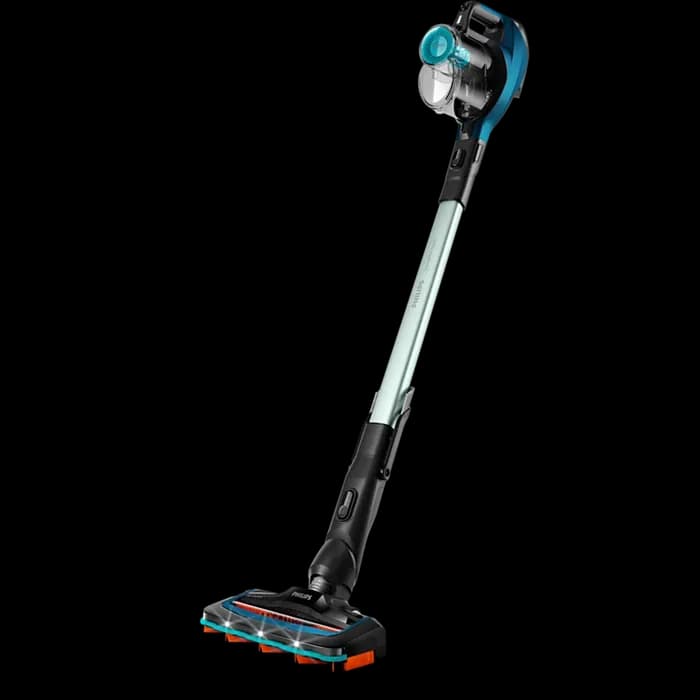
The 8000 Pa suction pressure is generated by a high-speed 120 W DC motor designed for optimal power-to-weight performance. This motor configuration focuses on creating high static pressure within a compact airway, allowing the unit to lift dense particles like sand and pet hair from soft surfaces. While it lacks the raw volume of larger corded units, the 8000 Pa rating is strategically balanced to prevent the nozzle from sealing too tightly against fabric, which would stall the motor. This engineering choice ensures continuous airflow, making it highly effective for upholstery and car interiors where debris is often trapped within textile fibers.
The 1-stage HEPA filtration system is engineered to capture 99.97% of particulates as small as 0.3 microns. In the context of Indian environments, this is critical for managing fine road dust and seasonal pollen. The filter’s housing is designed for tool-less removal, facilitating easy cleaning. Because the HEPA material is washable, it maintains its structural integrity after multiple rinses, preventing the performance degradation often seen in paper-based filters. This architecture reduces the total cost of ownership by eliminating the need for frequent filter replacements while ensuring that exhausted air remains clean and free of microscopic allergens.
Power management is handled by a lithium-ion battery pack that supports a 30-minute runtime, sufficient for cleaning a car interior or all soft surfaces in a 2BHK. The system utilizes a 2-hour fast-charging cycle with a Constant Current-Constant Voltage charging protocol to maximize cell longevity. Engineering the motor to draw exactly 120 W allows for a discharge rate that balances suction force with thermal stability. Indian users should note that the 30-minute window is continuous; however, the absence of a memory effect in the battery allows for short bursts of cleaning without degrading the total capacity over time.
The wet and dry separation mechanism utilizes a dedicated internal baffle system that diverts liquids away from the electrical components of the 120 W motor. When used to pick up spills, the air-liquid mixture enters the 1 L bin where centrifugal force separates the heavier liquid droplets. The chassis is sealed to prevent moisture ingress into the battery compartment. After wet use, the bagless bin and the washable filter must be completely dried to maintain hygroscopic balance. This engineering ensures that the device can handle common household accidents, such as spilled milk or tea, without the risk of short-circuiting.
Although the unit lacks a dedicated blower function, the airflow is optimized for concentrated suction through its specialized attachments. The crevice tool is engineered with a narrowed aperture to increase air velocity, making it capable of extracting grime from deep keyboard wells or AC vent slats. The brush tool uses nylon bristles to agitate dust on delicate surfaces like mattresses and car dashboards, allowing the 8000 Pa suction to capture loosened debris immediately. This focus on mechanical agitation combined with high-velocity airflow ensures that the device performs efficiently on diverse textures, from hard cement floors to plush carpets.
At just 0.45 kg, the chassis is constructed from high-impact ABS plastic, providing a balance of durability and extreme lightness. The handle is ergonomically positioned to align the center of gravity with the user’s wrist, reducing fatigue during extended cleaning sessions on vertical surfaces like curtains or high shelves. The 1 L bagless bin features a transparent window to monitor debris levels, and the one-touch release mechanism allows for hygienic disposal. Every component of the EV 242 is designed to minimize user effort while maximizing cleaning reach in cramped spaces. This design ensures the unit remains a practical tool for daily maintenance.