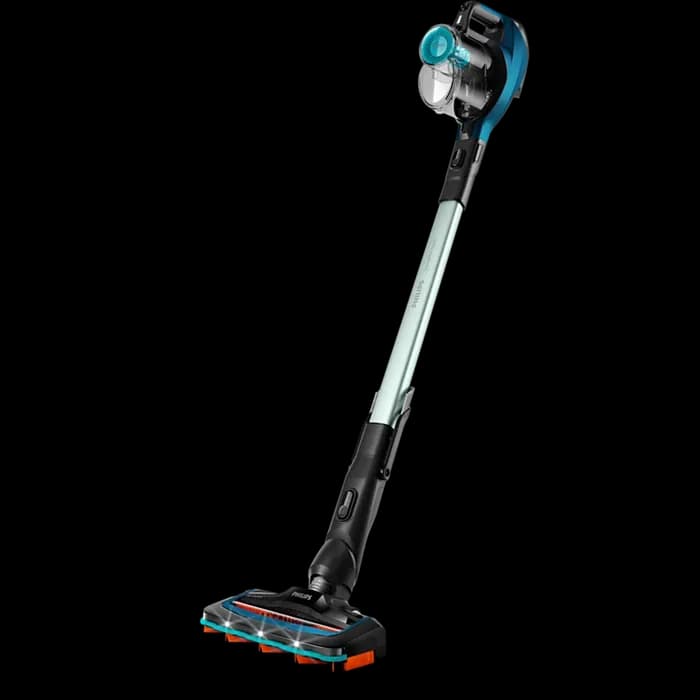
The 8000 Pa suction is generated by a high-torque 120 W DC motor specifically calibrated for high static pressure over raw air volume. This motor-to-airway ratio is optimized for surface-level extraction rather than deep-pile carpet agitation. In a handheld form factor, this engineering choice ensures that the vacuum can pull fine road dust from upholstery and keyboards without excessive battery drain. While it lacks the raw CFM of a corded canister, the focused suction path through the crevice tool provides enough velocity to lift heavier debris like dry mud or small stones commonly found in car footwells across Indian cities.
The 1-stage HEPA filtration architecture uses a high-density pleated media designed to capture 99.9% of particles as small as 0.3 microns. Unlike multi-cyclonic systems that add bulk, this single-stage filter maintains the device's 0.45 kg lightweight profile while effectively trapping pet dander and fine PM2.5 particles prevalent in urban Indian homes. The washable construction is a critical engineering feature for the local market, as it allows users to rinse away oily soot and sticky dust that typically clogs disposable filters. Regular washing maintains the 8000 Pa airflow efficiency and extends the motor's operational lifespan by preventing back-pressure buildup.
Powering the 120 W motor is a multi-cell lithium-ion configuration providing a 30 min runtime, which is balanced against a 2 hr charging cycle. The battery management system utilizes a CC-CV (Constant Current-Constant Voltage) charging protocol to prevent cell degradation in high-ambient temperature conditions found in India. This 30-minute window is sufficient for spot-cleaning a 2BHK apartment or a full SUV interior. The engineering trade-off here favors rapid deployment and mobility over the hour-long runtimes of heavier, more expensive stick vacuums. For Indian users, this means the device is always ready for quick spills or morning dusting routines.
The wet and dry separation mechanism employs a mechanical baffle system within the 1 L dust bin to prevent liquid ingress into the motor housing. When vacuuming damp spills from a sofa or kitchen counter, the air path is diverted to allow liquids to settle at the bottom of the transparent bin while the 120 W motor remains shielded by a moisture-resistant barrier. Users must adhere to the maximum liquid line to avoid turbulence-induced bypass. Post-use maintenance is essential; the bin must be emptied and dried to prevent bacterial growth and odor, ensuring the unit remains hygienic for daily household tasks.
The mechanical design of the pet hair tool utilizes a specific nozzle geometry to create a localized vortex, increasing the effective pick-up area for stubborn fur and fibers. Unlike motorized brush heads that require complex electrical linkages, this passive tool relies on the 8000 Pa suction and friction to lift hair from mattresses and carpets. This simplified engineering reduces mechanical failure points and keeps the unit's weight low. The crevice tool is similarly optimized for high-velocity air intake, making it particularly effective for extracting grime from deep within AC vent slats or sliding window tracks common in Indian construction.
Constructed from high-impact ABS plastic, the chassis is designed to withstand the rigors of daily use while maintaining a 0.45 kg weight. The ergonomic handle is positioned to align the center of gravity with the user's wrist, reducing fatigue during extended 30-minute cleaning sessions. The 1 L bagless bin features a quick-release latch for hygienic disposal of road dust and allergens directly into the waste bin. This refined physical design, combined with the 120 W motor's thermal protection circuitry, establishes the EV 245 as a reliable tool for consistent performance in challenging environments across the Indian subcontinent.