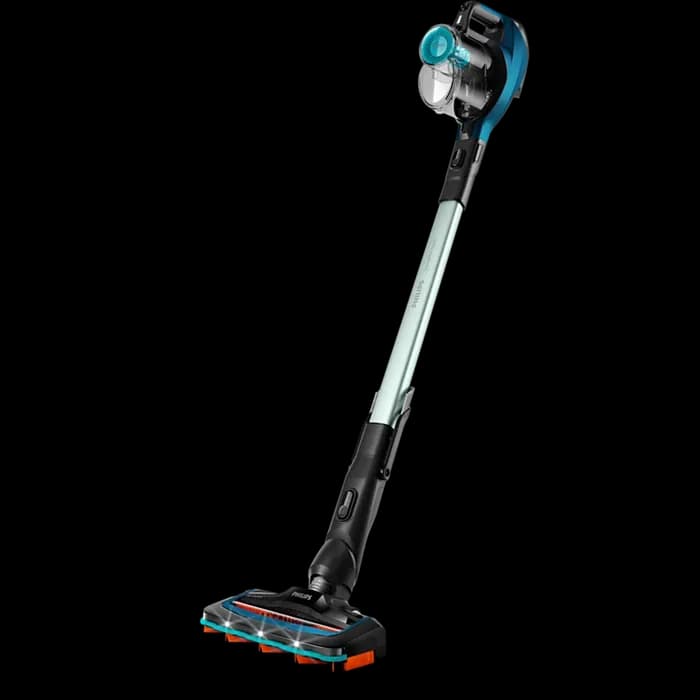
The suction pressure engineering of this unit relies on a high-torque 120 W dc motor that generates a consistent 8000 Pa of vacuum pressure. This specific motor-to-airway ratio is optimized for a handheld chassis, prioritizing static pressure over raw airflow volume. This design is particularly effective for lifting dense particles like fine road dust and sand from car mats or sofa crevices. While it may not match the total air movement of a 2000W canister vacuum, its focused suction stream at the nozzle tip makes it ideal for targeted cleaning tasks where localized debris removal is more critical than covering vast open floor areas.
The filtration architecture features a 1-stage HEPA system that targets microscopic particles. The HEPA media is engineered to capture dander, pollen, and PM2.5 particulates that are prevalent in urban Indian environments. The washable construction of the filter is a significant engineering advantage, as it prevents the pore-clogging typically seen with fine cement-like dust. By allowing users to rinse the filter, the device maintains its 8000 Pa performance over long-term use without the suction drop-off associated with disposable paper filters. This durability ensures consistent airflow and protects the internal motor components from fine grit ingestion.
Energy management is handled by a sophisticated battery and power system that balances current draw with runtime. The unit achieves a 30-minute operational window from a single charge, which is a significant feat for a 120 W motor configuration. It utilizes a CC-CV (Constant Current-Constant Voltage) charging protocol to reach a full 100% capacity in just 2 hours. This fast-charging capability is crucial for Indian households where intermittent power supply or the need for multiple cleaning sessions throughout the day is common. The power management circuit prevents deep discharge, thereby extending the overall lifecycle of the internal lithium cells.
The wet and dry separation mechanism utilizes a specialized internal baffle design to protect the motor from liquid ingestion. With a 1 L bagless capacity, the bin provides ample space for both dry debris and minor liquid spills. The internal geometry ensures that air can still circulate even when the bin contains fluid, preventing overheating. For Indian users, this is particularly useful in the kitchen for cleaning up spilled tea or water on countertops. Proper post-wet-use maintenance, such as rinsing and drying the bin, ensures that the seals remain airtight and the suction efficiency remains at its peak levels.
The technical integration of the pet hair tool enhances the unit's mechanical agitation capabilities. This attachment uses localized friction to lift stubborn fibers and hair from fabric surfaces before the vacuum stream pulls them into the canister. Despite the high-speed motor, the engineering team has successfully dampened the noise output to a remarkably low 10 dB. This acoustic isolation is achieved through precise housing tolerances and vibration-absorbing motor mounts. This makes it one of the few high-suction handhelds that can be used in quiet environments, such as a nursery or a WFH home office, without causing significant auditory disruption.
The chassis and ergonomics are centered around a 0.45 kg lightweight ABS construction. This high-impact plastic provides structural rigidity without the weight penalty of metal components. The handle geometry is balanced to place the center of gravity directly under the palm, reducing wrist fatigue during extended cleaning of AC vents or high shelves. The parking position and attachment storage are designed for space-constrained 1BHK and 2BHK apartments. Every element of the build, from the trigger response to the nozzle fitment, is designed for rapid deployment. Consequently, the EV 272 stands out as a precision-engineered tool for modern domestic maintenance.