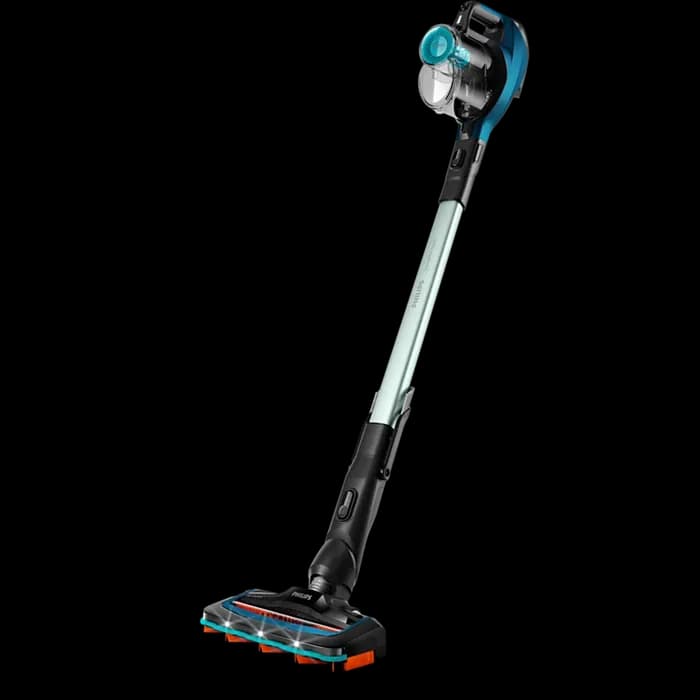
The suction pressure of 8000 Pa is derived from a high-speed 120 W DC motor designed for optimal static pressure. Engineers have tuned the motor-to-airway ratio to favor concentrated suction over massive volumetric airflow, which is critical for a handheld device. While this pressure level cannot compete with 2000W corded canisters for deep carpet extraction, it excels at lifting surface debris from dense fabrics and hard floors. The internal fan geometry is optimized to maintain consistent pressure even as the 1 L bin fills, preventing the common drop-off in performance seen in lower-wattage generic motors found in entry-level handhelds.
The filtration architecture employs a 1-stage HEPA system that focuses on capturing particulate matter as small as 0.3 microns. In the Indian environment, where fine PM2.5 dust is prevalent, this washable construction is vital for longevity and cost-effectiveness. Instead of requiring frequent replacement of expensive paper filters, the user can rinse the HEPA element to restore airflow. The seal around the filter housing is tight enough to prevent bypass leakage, ensuring that the air exhausted from the motor is cleaner than the ambient air it draws in, which is essential for households with allergy sufferers.
The power system utilizes a 12 V cell configuration that balances discharge rates with thermal management. Achieving a 30-minute runtime from a 2-hour charge indicates the use of high-density lithium cells and a CC-CV charging protocol. This prevents the cells from overheating during the fast-charge cycle, extending the overall battery lifespan. For Indian users, this runtime is sufficient for cleaning a car interior or all upholstered furniture in a standard apartment. The electronic control board manages power delivery to keep suction levels steady until the battery reaches its lower voltage threshold during use.
The wet and dry separation mechanism is built around a specialized baffle design within the 1 L dust bin. This internal geometry creates a vortex that separates liquids from the airflow, directing them to the bottom of the container while air moves through the upper HEPA section. To protect the 120 W motor, the device includes a moisture barrier that prevents liquid ingress into the electrical housing. After cleaning wet spills, it is imperative to wash and dry the bin and filter thoroughly to prevent mold growth, a maintenance step facilitated by the tool-free disassembly of the chassis.
The weight of 0.45 kg is achieved through the use of reinforced ABS plastic for the main chassis, providing a high strength-to-weight ratio. The ergonomic handle is positioned at the center of gravity to minimize the torque felt at the wrist during overhead cleaning of AC vents or high shelves. This weight distribution allows for precise control when using the crevice tool in tight corners. The absence of a blower function simplifies the internal ducting, allowing for a more direct air path that maximizes suction efficiency at the nozzle. This streamlined engineering makes the device highly maneuverable in cramped urban spaces.
Overall, the EV 294 demonstrates thoughtful engineering targeted at localized surface cleaning rather than whole-house floor scrubbing. The integration of a high-capacity 1 L bagless bin within a sub-half-kilogram frame is a notable design achievement that reduces user intervention during cleaning. Its noise level of 78 dB is within the standard range for high-rpm DC motors, remaining tolerable for indoor use. By prioritizing a quick recharge time and a washable filtration system, the manufacturer has addressed the primary pain points of Indian consumers. The EV 294 serves as a reliable secondary cleaning tool for high-traffic areas.