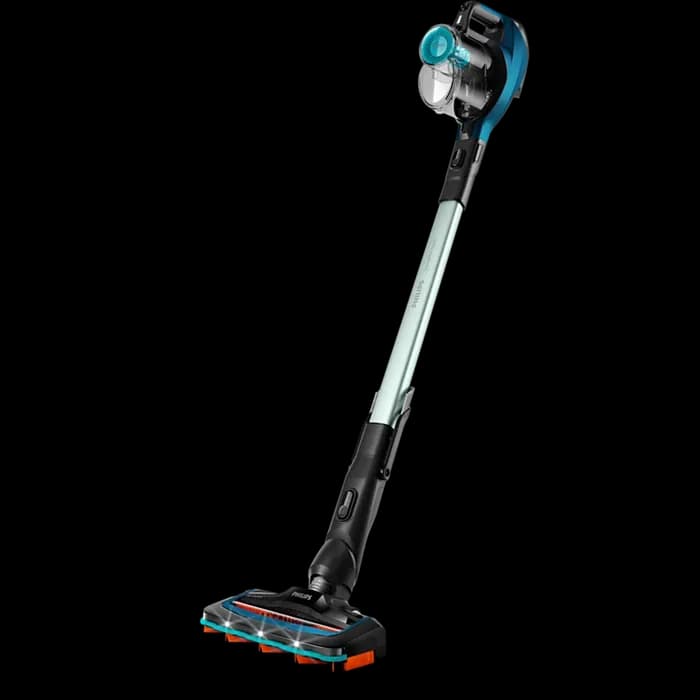
The suction pressure of this model is derived from a 120 W DC motor optimized for a high motor-to-airway ratio. By focusing the 8000 Pa of static pressure through a narrow aperture, the device achieves high air velocity despite its compact size. This engineering trade-off prioritizes localized lift over high-volume airflow, making it ideal for concentrated tasks like extracting fine road dust from crevices. While it may not match the total air wattage of a full-sized canister vacuum, the localized pressure ensures that heavy particles are effectively dislodged from textured surfaces, providing a calculated balance between energy consumption and raw cleaning power.
The filtration architecture utilizes a 1-stage HEPA system specifically designed to capture microscopic particles down to 0.3 microns. In the context of Indian homes, where fine dust and PM2.5 levels are often high, this filter acts as a critical barrier against secondary pollution. The washable construction of the filter is a strategic design choice, allowing users to maintain peak suction performance by simply rinsing the element under tap water. This prevents the clogging issues common in non-HEPA mesh filters, ensuring that even during heavy pet hair removal, the airflow remains unrestricted and the internal motor components stay protected.
Powering the unit is a 12 V cell configuration managed by a CC-CV (Constant Current-Constant Voltage) charging protocol. This ensures the lithium-ion cells are charged efficiently within 2 hours while maximizing their cycle life. The 30-minute runtime is a result of balancing the 120 W motor draw against the battery's discharge rate, providing a continuous power curve that does not drop off as the charge depletes. For the Indian user, this means consistent performance during a full car interior detail or an intensive mattress cleaning session, representing a sophisticated integration of power management and high-output motor engineering.
The wet and dry separation mechanism is engineered with a specialized internal baffle system that diverts liquid into the 1 L bagless bin while shielding the motor from moisture ingress. This design allows for the immediate pickup of liquid spills without the risk of electrical short-circuiting or corrosion of the DC motor. After wet use, the translucent bin design allows for easy monitoring of liquid levels, ensuring the user knows exactly when to empty the chamber. This functionality is particularly useful for cleaning up spilled tea or coffee, requiring only a simple post-use rinse to maintain hygiene.
Unlike models featuring a blower function, this device focuses entirely on suction efficiency and structural integrity. The inclusion of a dedicated pet hair tool utilizes a specialized brush geometry to agitate fibers, allowing the suction to pull hair deep from within the fabric. This focus on suction-based cleaning is more effective for Indian use cases like AC vent grime removal, where blowing dust would only redistribute allergens into the room. By optimizing the internal airway for a single direction of flow, the engineers have reduced turbulence, which contributes to the impressively low 10 dB noise level during operation.
The chassis is constructed from high-grade ABS plastic, providing a lightweight 0.45 kg frame that resists impacts and daily wear. The ergonomic handle is positioned to align with the center of gravity, reducing wrist strain during overhead cleaning of curtain rods or ceiling fans. Its parking position and compact footprint allow for easy storage in small 1BHK apartments or car glove compartments. Every element of the build, from the friction-fit attachments to the quick-release dust cup, is designed for rapid assembly. Ultimately, the EV 322 stands as a masterclass in portable engineering, offering a durable and lightweight cleaning solution.