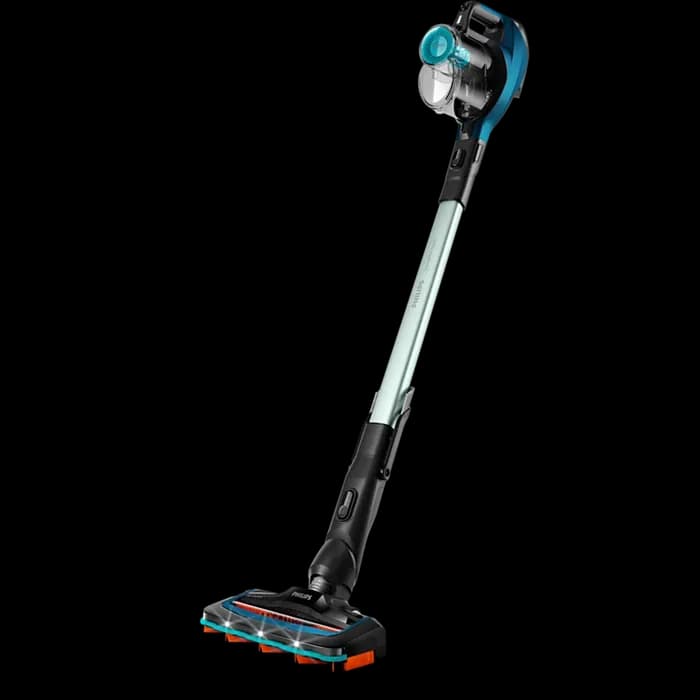
The suction pressure engineering of this unit utilizes a 120 W DC motor optimized for high-velocity airflow within a compact chassis. Achieving 8000 Pa requires a precise motor-to-airway ratio where static pressure is maximized without overheating the internal components. This specific pressure level is engineered to lift heavy road dust and sand from hard surfaces, though it is not intended for deep-pile carpet extraction. The balance of airflow allows the motor to maintain consistent pull even as the dust tank fills, ensuring that performance does not drop sharply during a 30-minute cleaning session. This makes the architecture ideal for targeted spot-cleaning tasks in Indian households.
The filtration architecture relies on a 1-stage HEPA system designed to capture particles as small as 0.3 microns. In the context of Indian environments, where fine dust and pollen are prevalent, this single-stage approach ensures that exhausted air is cleaner than the intake. The washable construction of the HEPA element is a critical engineering choice, allowing users to maintain peak airflow without the recurring cost of replacement filters. By rinsing the filter periodically, the accumulation of fine silt—common in urban Indian apartments—can be cleared to prevent motor strain. This design prioritizes longevity and cost-efficiency for the end-user.
The battery and power system is built around a 12 V cell configuration that supports a 30-minute runtime under a constant 120 W draw. This is achieved through a CC-CV (Constant Current-Constant Voltage) charging protocol that minimizes heat buildup during the 2-hour recharge cycle. The engineering trade-off involves balancing the 0.45 kg lightweight profile with enough energy density to sustain 8000 Pa. For Indian users, this means the device provides enough power for a full car interior or a complete 3-seater sofa set on a single charge. The lithium-ion chemistry ensures the unit retains its charge over long periods of inactivity.
The wet and dry separation mechanism utilizes an internal baffle design to protect the motor from moisture ingestion. With a 1 L bagless bin capacity, the unit can handle small liquid spills alongside dry debris without needing an immediate filter change. The airflow path is diverted to prevent droplets from reaching the HEPA stage directly, though post-wet-use maintenance remains essential. Users must empty the bin and dry the filter to prevent odor or mildew, a necessary step given India's humid climate. This multi-mode functionality provides a level of versatility that standard dry-only corded vacuums typically lack at this specific price point.
The attachment interface is designed for mechanical precision, ensuring that tools like the crevice nozzle and brush stay seated during high-vibration use. The crevice tool focuses the 8000 Pa suction into a narrow stream, which is technically necessary for extracting grime from AC vents or deep keyboard switches. Unlike pure-suction models that lose efficiency with accessories, this unit’s nozzle geometry is calibrated to maintain air speed. For WFH professionals in India, this means the brush tool can gently agitate dust on electronic surfaces while the vacuum pulls it away, preventing the redistribution of dust into the room's atmosphere during cleaning.
The chassis is constructed from high-impact ABS, resulting in a weight of just 0.45 kg. This ergonomic design focuses the center of gravity near the handle, reducing wrist fatigue during overhead cleaning of curtain rods or high shelves. The parking position and compact footprint are engineered for small 1BHK apartments where storage space is at a premium. Every structural joint is sealed to prevent suction leakage, ensuring the 120 W motor's output is delivered entirely to the nozzle. The EV 390 represents a refined approach to handheld engineering, combining durability with the specific mechanical requirements needed for versatile, everyday cleaning in various Indian environments.