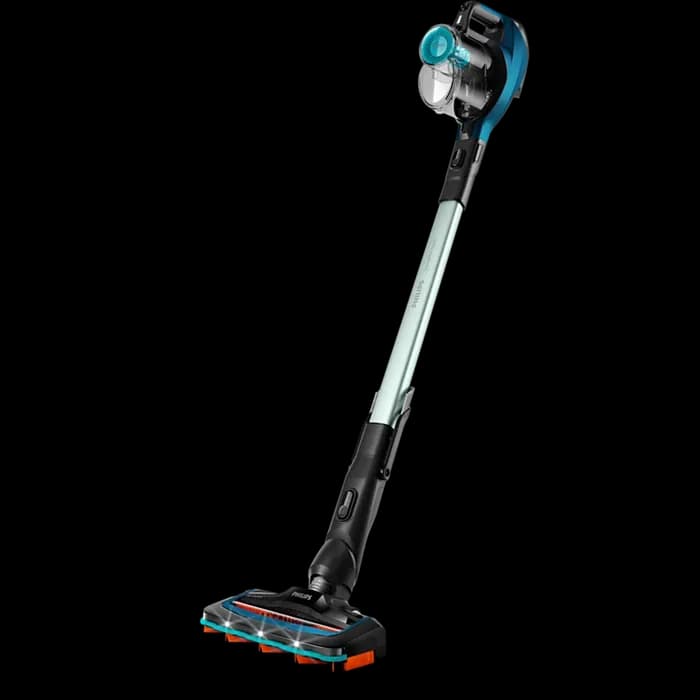
The suction pressure engineering of the motor relies on a high-speed 120 W DC configuration that optimizes the motor-to-airway ratio. By focusing on a tight seal within the nozzle assembly, the unit achieves 8000 Pa of static pressure, which is impressive for a 0.45 kg chassis. This pressure is specifically tuned to lift fine particulate matter common in Indian households, such as construction dust or outdoor pollutants. The engineering trade-off involves prioritizing high static pressure over massive airflow volume, which makes this specific model ideal for surface-level agitation on upholstery and car carpets rather than deep pile rug extraction.
The filtration architecture utilizes a 1-stage HEPA system designed to capture 99.97% of particles as small as 0.3 microns. Unlike multi-cyclonic systems that add significant weight, this single-stage design keeps the center of gravity near the handle for better maneuverability. The washable construction of the HEPA element is a critical engineering choice for the Indian market, where high ambient dust levels would otherwise clog disposable filters within weeks. By allowing the user to rinse the filter, the manufacturer ensures that the airflow remains unobstructed, preventing the 120 W motor from overheating during extended cleaning sessions.
The battery and power system is built around a 12 V cell configuration that utilizes CC-CV charging protocols to ensure cell longevity. The 30-minute runtime is achieved by balancing the current draw from the DC motor against the thermal limits of the battery pack. Engineering this balance is crucial because a higher draw would increase suction but deplete the battery in less than ten minutes. For Indian users, the 2-hour charging time represents a fast turnover rate, allowing the device to be ready for multiple cleaning cycles throughout the day, whether for a morning car sweep or an evening sofa dusting.
The wet and dry separation mechanism employs a physical baffle design within the 1-liter bagless bin to prevent liquid from entering the motor housing. This internal geometry forces incoming air to change direction rapidly, allowing heavier liquid droplets to drop into the collection chamber while air continues through the filter. While the 0.45L effective liquid capacity is modest, it is sufficient for common spills on hard surfaces. Engineering-wise, this dual-functionality requires the user to maintain the seals through regular cleaning, as dried grime from wet suction can eventually compromise the vacuum seal and reduce the total Pa output.
While this model does not include a blower function, the engineering focus has been redirected toward the efficiency of the suction attachments. The crevice tool and brush are designed with narrow apertures to maximize the 8000 Pa potential at the point of contact. This is particularly effective for cleaning AC vent grime and keyboard debris, where concentrated suction is more beneficial than broad airflow. By omitting the blower mechanical diverter, the engineers reduced the overall part count, which directly contributes to the ultra-light 0.45 kg weight, making it one of the most ergonomic units available for overhead or extended-reach cleaning.
The chassis and ergonomics are defined by a high-impact ABS construction that provides a high strength-to-weight ratio. The handle design follows an ergonomic curve that distributes the 0.45 kg weight across the palm, reducing wrist fatigue during the 30-minute runtime. There is no dedicated parking position, but the flat base of the dust bin allows it to sit securely on charging surfaces. The assembly of the bin to the motor housing uses a quick-release latch system engineered for thousands of cycles. Ultimately, the EV 396 represents a focused engineering effort to provide maximum suction density in a minimal, cost-efficient form factor.