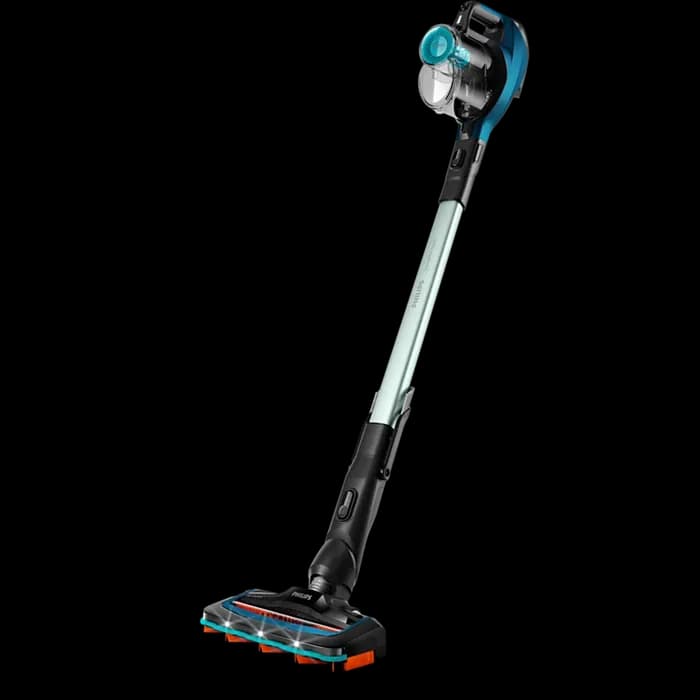
The 120 W DC motor inside this unit is engineered to maximize static pressure, achieving a calibrated 8000 Pa that targets heavy debris like sand and fine road dust. By optimizing the motor-to-airway ratio, the engineers have minimized the internal resistance that often plagues smaller handhelds. This specific suction level is ideal for surface-level extraction on hard floors and car upholstery where high airflow is less critical than concentrated pressure. However, users should note that this compact motor is designed for short, high-intensity bursts rather than the continuous high-volume airflow required for deep-pile carpet extraction.
The filtration architecture utilizes a 1-stage HEPA system that captures particles as small as 0.3 microns, preventing the exhaust from venting allergens back into the room. This washable construction is a critical engineering choice for the Indian climate, where high ambient humidity and fine dust can quickly clog standard paper filters. By allowing the user to rinse the filter, the device maintains its 8000 Pa peak performance over longer periods compared to non-washable systems. This mechanical durability ensures that the filtration efficiency does not degrade significantly after multiple uses in dusty environments.
Powering the system is a 12 V battery configuration that utilizes CC-CV charging protocols to ensure the cells reach full capacity in just 2 hours. The runtime of 30 minutes is achieved by balancing the current draw of the 120 W motor with the thermal limits of the battery housing. In the context of Indian electricity stability, the internal charging circuit is designed to handle minor voltage fluctuations during the recharge cycle. This power management system ensures that users get consistent suction levels throughout the discharge cycle rather than experiencing a drop in power as the battery deplees.
The wet and dry separation mechanism features an internal baffle design that protects the motor from liquid ingestion during spill cleanup. With a 1 L bagless bin capacity, the unit can handle significant volumes of fluid or dry waste before requiring a manual empty. Post-wet-use maintenance is simplified by the detachable bin design, which allows for quick rinsing to prevent bacterial growth or odors. This robust internal architecture makes the device a versatile tool for kitchens and bathrooms where liquid spills are frequent, provided the user cleans the bin immediately after use.
While the device lacks a dedicated blower function, its attachment ecosystem—specifically the crevice tool and brush—is engineered to focus suction for precision tasks like AC vent cleaning and keyboard maintenance. The 65 dB noise profile is achieved through acoustic dampening around the motor housing, making it significantly quieter than entry-level corded vacuum cleaners. This technical trade-off prioritizes user comfort in small apartment spaces while still providing the physical agitation needed to dislodge stubborn grime. The lack of a blower is compensated for by the high-velocity intake that pulls debris directly into the HEPA-sealed chamber.
Constructed from high-grade ABS plastic, the chassis weighs a mere 0.45 kg, which is a feat of structural engineering given the 1 L bin capacity. The handle design follows ergonomic principles that shift the center of gravity toward the wrist, reducing user fatigue during extended 30-minute cleaning sessions. The parking position and compact footprint allow for easy storage in tight spaces, such as car glove compartments or kitchen cabinets. Overall, the EV 403 demonstrates a high level of material efficiency and structural integrity, making it a durable choice for the rigors of daily Indian household cleaning.