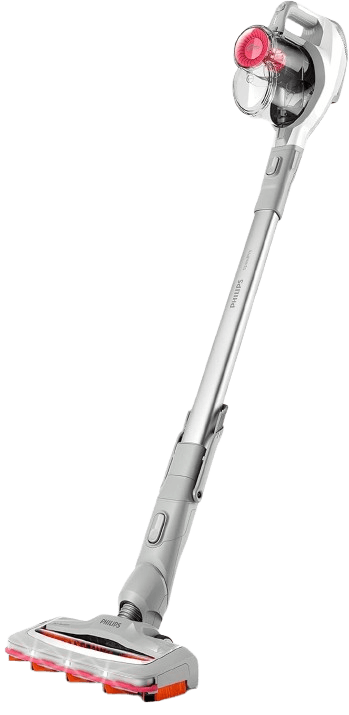
The suction pressure of 8000 Pa is generated by a high-efficiency motor optimized for high-velocity airflow. In engineering terms, this vacuum balances static pressure with a wide 180-degree nozzle to maximize the cleaning path on hard floors. While 8000 Pa is lower than heavy-duty corded units, the motor-to-airway ratio is tuned to ensure that fine road dust and hair are lifted without significant airflow resistance. This makes it ideal for surface-level cleaning in typical Indian households but less suited for deep-pile carpet extraction where higher static pressure would be required to overcome fiber density.
The filtration architecture utilizes a 7-stage-stage HEPA system designed to manage the high particulate matter levels found in Indian cities. The primary stages utilize cyclonic separation to remove larger debris, while the final washable HEPA element traps microscopic particles down to 0.3 microns. Engineering the filter to be washable is a critical cost-efficiency feature, as it prevents the pore-clogging typically seen with fine construction dust. This ensures the motor does not overheat due to restricted airflow, extending the mechanical lifespan of the internal components during frequent daily use cycles.
Powering the unit is an 18V battery system configured for a 30-minute discharge rate under standard load. The charging circuitry follows a CC-CV (Constant Current-Constant Voltage) protocol, requiring 5 hours for a full cycle to preserve lithium-ion cell chemistry. For Indian users, the 30-minute runtime is sufficient for targeted spot cleaning and furniture maintenance in a 2BHK apartment. However, the engineering trade-off for this portability is the recharge time, necessitating a planned cleaning schedule rather than continuous whole-house operation, which is a common characteristic of mid-range cordless systems.
The dust management system employs a 0.4 L bagless bin with a vertical baffle design to separate air from solid waste efficiently. This cyclonic action ensures that heavy particles fall to the bottom of the bin, preventing them from prematurely saturating the HEPA stages. The engineering focus here is on maintaining a clear airway even as the bin approaches its 0.4 L capacity. While this model does not feature wet/dry capabilities, the dry-seal gaskets around the bin assembly are tightly toleranced to prevent secondary dust leaks, which is essential for maintaining air quality indoors.
The attachment suite, featuring a 180-degree suction nozzle and a crevice tool, leverages mechanical leverage to enhance pickup. The 180-degree nozzle is engineered with side-suction channels that pull dust from corners and edges, compensating for the 8000 Pa ceiling. The integrated brush tool is particularly useful for Indian AC vents and WFH keyboard setups, where gentle agitation is needed to dislodge stuck grime before it is vacuumed. These tools are friction-fitted for durability, ensuring that no mechanical latches fail during the high-torque movements required when cleaning cramped car interiors or sofa crevices.
The chassis is constructed from high-grade ABS plastic to maintain a 2.79 kg total weight, balancing durability with user ergonomics. The center of gravity is positioned near the handle to reduce wrist strain during high-reach cleaning of ceiling fans or curtains. The parking position and wall-mount compatibility are designed for space-constrained Indian apartments, allowing the device to be stored and charged in narrow utility areas. Ultimately, the fc6723 01 represents a calculated engineering balance between weight, suction performance, and long-term maintenance costs for the domestic Indian consumer looking for a reliable daily tool.