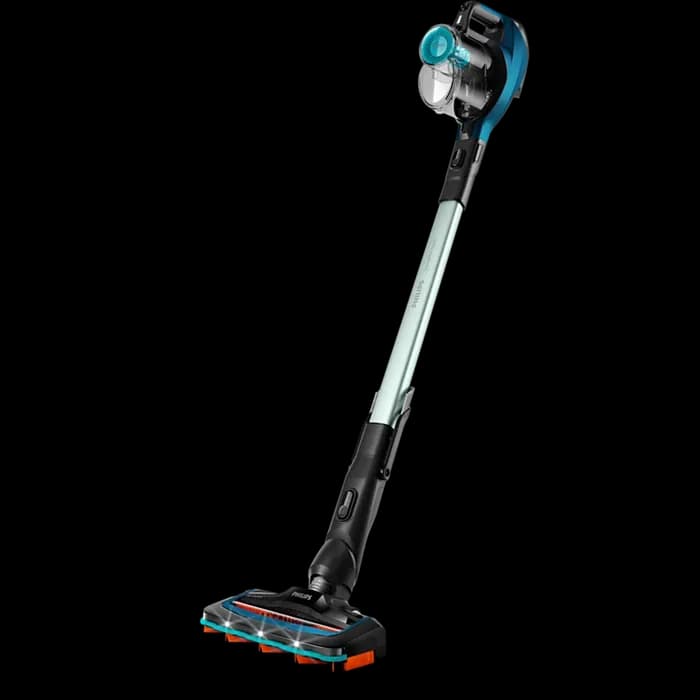
The suction pressure of this model is driven by a 220 W brushless DC motor, which optimizes the motor-to-airway ratio to achieve 24 KPa of static pressure. Unlike traditional brushed motors, this BLDC configuration reduces electromagnetic interference and thermal buildup, allowing the unit to maintain consistent airflow even as the 0.55 L bin fills. This pressure level is specifically calibrated to overcome the resistance of thick Indian rugs while remaining efficient enough to sustain a 50-minute runtime. The engineering focus here is on high-velocity air movement rather than raw wattage, making it ideal for fine particulate extraction from hard tiles and textured upholstery.
Filtration architecture consists of a 4-stage cyclonic system designed to maintain suction longevity. The primary cyclone separates large debris through centrifugal force, while subsequent stages utilize a high-density mesh and a sponge filter to capture finer dander and pollen. The final stage involves an exhaust filter that ensures air returned to the room is scrubbed of microscopic irritants. Because the entire filter assembly is washable, Indian users can maintain peak performance despite heavy exposure to outdoor pollution. This multi-layered approach prevents motor clogging, which is essential for maintaining the integrity of the high-speed brushless components over several years of use.
The power system utilizes a 22.2 V lithium-ion cell configuration managed by a CC-CV (Constant Current-Constant Voltage) charging protocol. This ensures the super-fast 4-hour recharge cycle does not degrade the battery chemistry through excessive heat. The 50-minute runtime in Low Mode is achieved through intelligent power distribution, where the motor draw is regulated based on the attachment's resistance. For practical Indian use, this allows for the cleaning of a standard 2BHK on a single charge. The power-to-weight ratio is optimized to ensure that the battery mass does not compromise the 2.14 kg ergonomic handling during overhead cleaning tasks.
While this model is strictly for dry debris, the internal air-flow barrier is engineered to protect the electrical housing from fine dust ingress. The 0.55 L bagless bin features a mechanical baffle that directs heavy grit to the bottom, preventing it from swirling near the filter intake. This separation mechanism is critical in India, where coarse sand and road dust can quickly saturate standard filters. By isolating the motor from the primary debris path, the engineering team has ensured that suction drop-off is minimized. Maintenance involves a simple one-touch release, ensuring that users do not come into contact with the captured pollutants.
The inclusion of the zerobend tool represents a significant mechanical advantage for ergonomic cleaning. This tool utilizes a geared hinge mechanism that allows the suction tube to pivot, enabling the floor head to reach under low-clearance furniture like beds and sofas without the user needing to crouch. This feature addresses a common pain point in Indian households where heavy wooden furniture is difficult to move. This additional mechanical flexibility, combined with the motorized floor brush's high-torque rotation, ensures that dust hidden in dark, hard-to-reach corners is effectively agitated and suctioned into the main chamber without loss of velocity.
Structurally, the chassis is constructed from high-impact ABS plastic, providing a lightweight yet rigid frame that weighs only 2.14 kg. The center of gravity is positioned near the handle, reducing wrist strain during extended sessions cleaning AC vents or high shelves. The parking position and wall-mount compatibility reflect a design intended for compact urban apartments where floor space is a premium. The modular connection points use reinforced gaskets to maintain an airtight seal, ensuring the full 24 KPa is delivered to the nozzle. Ultimately, the kordfree k20 supersilent represents a sophisticated blend of material science and airflow dynamics tailored for modern domestic environments.