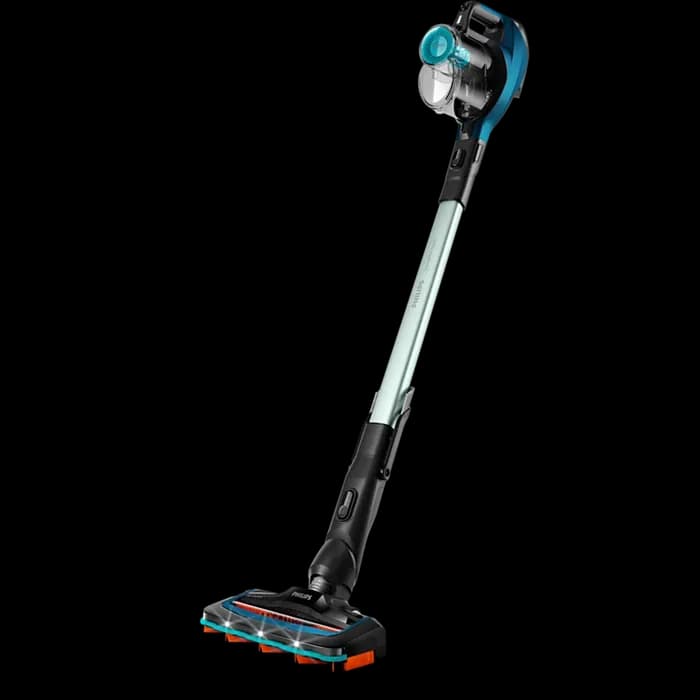
The engineering of the suction system relies on a high-speed 5W DC motor specifically geared to generate 6000 Pa of static pressure. Unlike high-wattage corded models that focus on massive air volume, this device concentrates its limited power on creating a narrow, high-velocity intake stream. This motor-to-airway ratio is optimized for surface-level debris like fine road dust and hair rather than deep carpet extraction. While the 5W rating seems modest, the internal impeller geometry is calibrated to maximize pressure at the nozzle interface, ensuring that the velocity remains high enough to lift dense particles without overheating the small-scale motor housing during operation.
The filtration architecture employs a 3-stage HEPA system designed for durability and particulate retention. The primary stage uses a coarse mesh to trap larger debris like crumbs or hair, protecting the sensitive inner layers. The second stage consists of a high-density foam that absorbs finer particles, while the final HEPA stage captures 99.97% of pollutants down to 0.3 microns. Because Indian environments are prone to high levels of PM2.5 and fine silt, the washable construction of this entire assembly is critical. It allows users to restore original airflow levels through simple tap-water cleaning, preventing the suction drop-off typical of disposable-filter handhelds.
Powering this unit is a multi-cell battery configuration designed for a 40-minute runtime, which is significantly higher than many competitors in the sub-0.5kg category. The system utilizes a CC-CV (Constant Current-Constant Voltage) charging protocol via its 3-hour charging cycle to preserve cell longevity. Engineering trade-offs involve balancing the 5W motor draw against the battery's discharge rate to ensure that suction does not taper off as the charge depletes. For the Indian user, this means the device maintains consistent performance from the first minute to the last, making it reliable for cleaning an entire car interior or a multi-room apartment’s furniture in a single session.
The wet and dry separation mechanism is integrated into the 2 L bagged dust capacity chamber, utilizing a series of internal baffles to divert liquid away from the motor's electrical components. When vacuuming spills from a kitchen floor or cement balcony, the air-water mixture enters a centrifugal chamber where the heavier liquid drops into the collection bag while the air continues through the filters. This bypass design is essential for preventing short circuits and motor corrosion. Users must ensure the 2 L bag is emptied and the filters are dried thoroughly after wet use to maintain the structural integrity of the internal moisture barriers.
Beyond suction, the inclusion of a blower function is achieved by utilizing the motor's exhaust stream and redirecting it through a specialized rear port. This technical implementation allows the device to clear debris from areas where the nozzle cannot reach, such as deep within AC vent fins or between the mechanical keys of a WFH laptop. In the Indian context, where fine dust settles into intricate crevices during the dry season, the blower provides a high-velocity air jet that dislodges stubborn grime. This dual-path airflow design maximizes the utility of the 5W motor, providing both extraction and displacement capabilities in one compact chassis.
The chassis is constructed from high-impact ABS plastic, contributing to the extremely low total weight of 0.35 kg. The ergonomic handle is positioned to align the center of gravity directly under the user's palm, reducing wrist fatigue during overhead tasks like cleaning ceiling corners or fan blades. The parking position and compact form factor make it easy to store in car glove compartments or kitchen drawers. Every component, from the nozzle attachments to the washable filter housing, is engineered for a friction-fit that minimizes air leaks. This precision assembly ensures the Lighting 120W provides a robust, lightweight cleaning solution for specific residential and automotive needs.