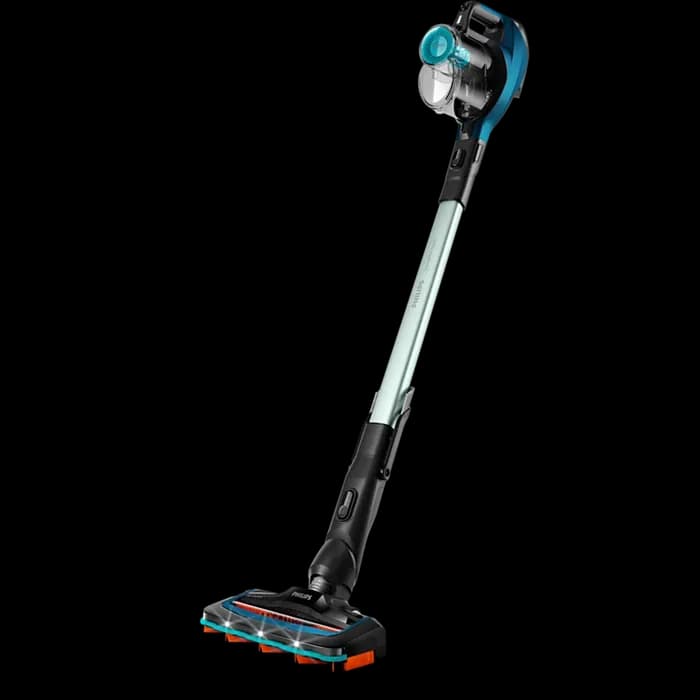
The engineering of the suction system focuses on maximizing static pressure through a 1000 W universal motor. While 5000 Pa might seem lower than industrial corded units, the internal airway design minimizes turbulence, ensuring that actual lift at the nozzle remains constant. This motor-to-airway ratio is tuned for high-volume debris collection rather than just high-velocity air movement. It excels at picking up heavier particles like road silt or grit from 2BHK balconies but is not intended for deep-pile shag carpets where 20,000 Pa would be required. This balance ensures the motor operates within safe thermal limits during extended runtimes.
The 2-stage HEPA filtration architecture is designed to handle the high particulate load typical of Indian environments. The first stage captures larger debris and hair, preventing premature clogging of the primary HEPA element. The second stage uses a high-efficiency particulate air membrane to trap microscopic dust as small as 0.3 microns. Because the filter is washable, users can maintain peak airflow without purchasing expensive replacement cartridges every month. This design is particularly beneficial for homes in high-pollution zones where fine silt accumulates daily on window sills and upholstery, requiring frequent and aggressive filtration passes.
Power management is handled by a battery system that facilitates a 40 min runtime, balanced against the 1000 W power draw of the motor. The system uses CC-CV charging protocols to ensure cell longevity, requiring a 5 hours charge time from a standard 240 V Indian wall outlet. The discharge curve is engineered to prevent a sudden drop in suction, maintaining the full 5000 Pa until the battery reaches its final 5% capacity. This stability is crucial for consistent cleaning of car interiors or large floor areas where an intermittent power drop would result in incomplete debris extraction.
The wet and dry separation mechanism utilizes a baffle design within the 15 L bagless container to prevent moisture from entering the motor housing. Unlike dry-only models, the internal seals are treated to resist humidity, allowing the vacuum to ingest liquid spills from kitchen tiles or bathroom floors safely. The large capacity ensures that the tank does not require frequent emptying during heavy cleaning tasks. Post-use maintenance is critical; users must rinse the tank to prevent odor buildup from stagnant liquids. This structural robustness allows the device to function reliably in diverse Indian domestic scenarios involving both dust and spills.
The attachment suite is engineered for specific surface tensions without relying on a blower function, which often scatters dust in indoor environments. The dry floor tool utilizes wide-bore apertures to prevent clogging from hair, while the sofa tool focuses on concentrated airflow for fabric penetration. The crevice tool and round brush are designed for high-velocity extraction in tight corners like sliding window tracks or AC vents. These tools leverage the 1000 W motor’s output to ensure that velocity at the tip compensates for the cordless nature of the device. Each attachment connects via friction-fit, ensuring no leaks during transitions.
Constructed from high-impact ABS, the 11 kg chassis is designed for durability in high-traffic Indian households. The weight distribution is centered low to provide stability during operation, preventing tips when the 15 L container is full. The handle is ergonomically positioned to allow for easy transport despite the unit’s substantial mass, while the parking position allows it to be stored upright in utility closets or under stairs. This material choice ensures resistance to the physical wear of daily use on hard flooring. Ultimately, the M 15 represents a shift towards heavy-duty cordless utility that prioritizes volume and durability over lightweight portability.